
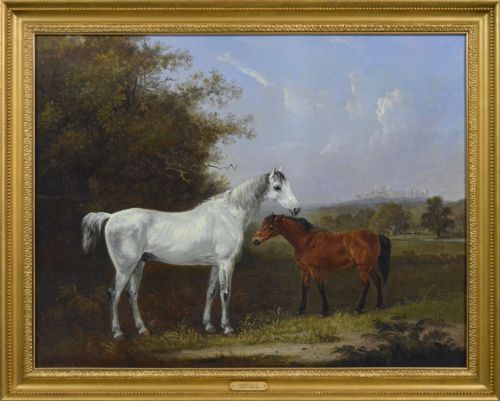




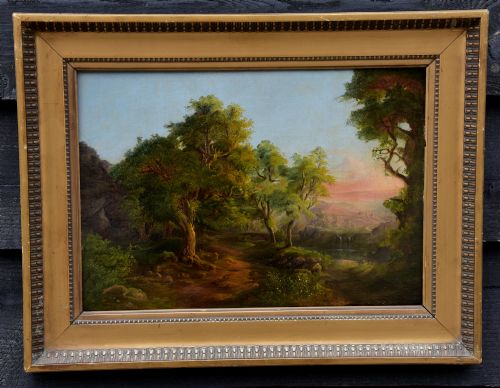
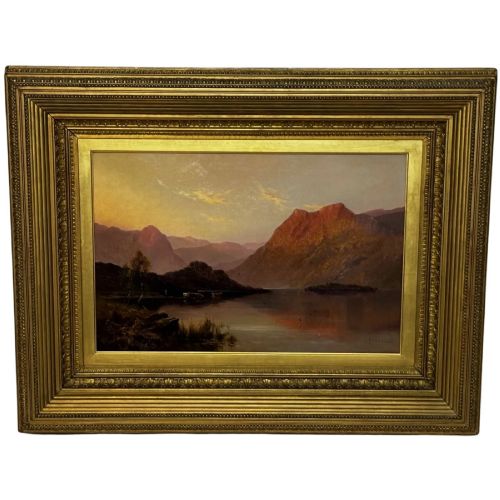
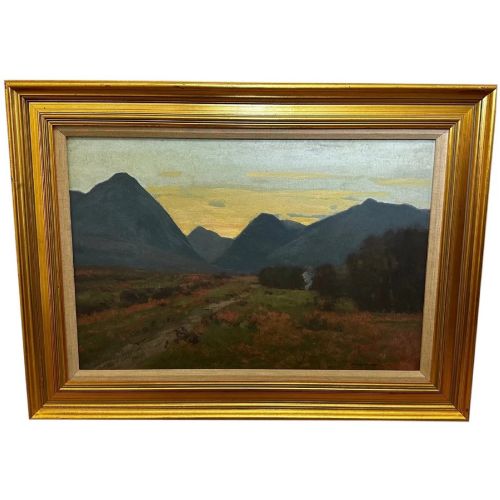


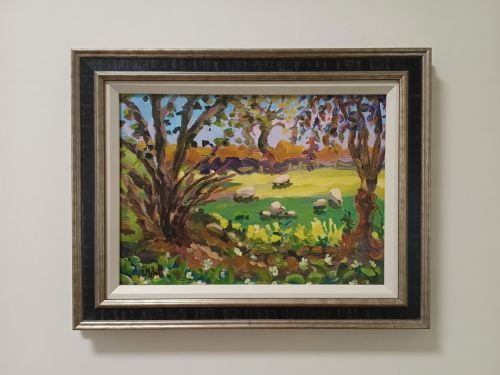
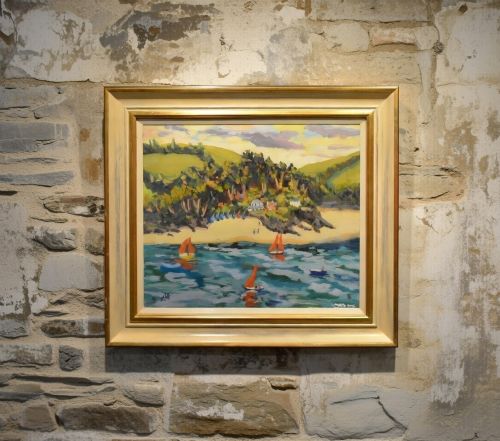
Original Oil Landscape Picture
An original oil landscape picture brings the outdoors inside through layered pigments and textured brushwork.
Original Oil Landscape Picture
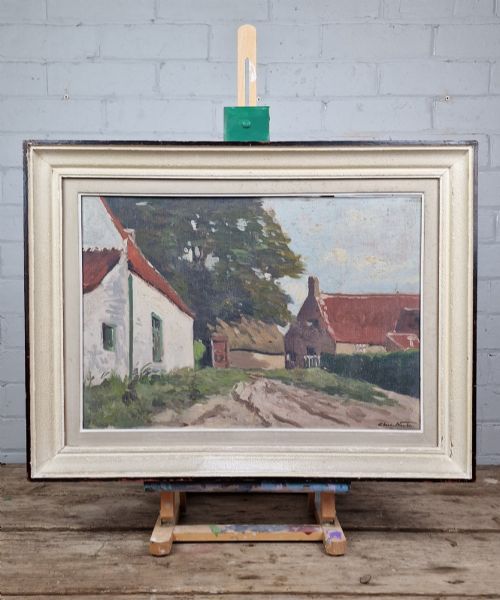
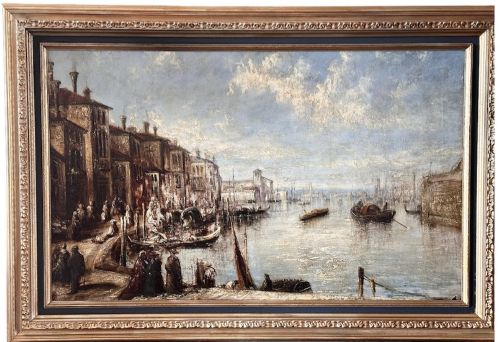
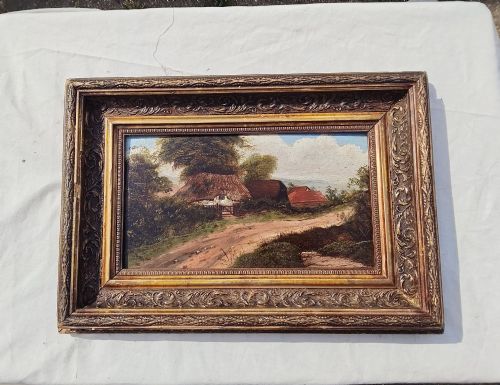
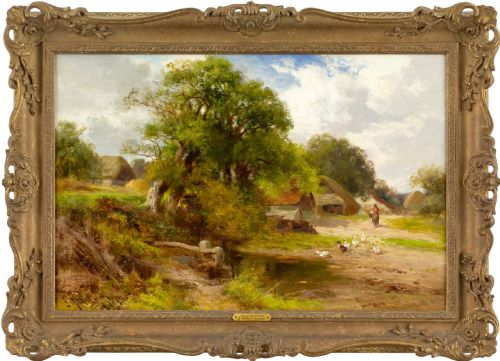
An original oil landscape picture captures rural views, coastal scenes, and pastoral settings rendered in oil paint. These works range from small panels depicting quiet rivers to larger canvases showing expansive valleys.
The selections available here stem from the nineteenth and twentieth centuries, encompassing Victorian, Edwardian, and mid-century movements. British and continental European schools dominate the pieces found on this page.
Subjects vary from rural farmyards and mountainous backdrops to maritime views and domestic animals grazing in fields. Many pieces retain their period frames constructed from wood and gesso.
How They Were Made
Artists applied oil paint using brushes and palette knives onto flexible canvas, prepared card, wooden panels, or board. This medium allowed painters to build thick impasto layers or smooth glazes that dried slowly.
Supports often received a preparatory ground layer of gesso to seal the wood or fabric before painting began. Finished works were frequently mounted inside decorative wooden frames, sometimes finished with gilt.
The listings span the Victorian era through the mid-twentieth century, featuring canvas, wood panels, and card.
What Varies in Quality
Skilled handling of light, atmospheric perspective, and natural tonal gradations elevates certain compositions above simpler student or amateur works. The confidence of the brushwork and the anatomical accuracy of figures or animals demonstrate the artist's training.
Condition plays a role in overall integrity, including the stability of the paint layer against the rigid board or flexible canvas. The presence of a period-appropriate gilt wood frame matching the age of the painting adds further context.
Kenneth Cozens·William H Myers·Alfred Fontville de Breanski Jr·George Houston·David Bates·Benjamin Barker of Bath·Charles Houben·Francis Moltino·John Horace Hooper·Lucy Pratt·Harald Foss·John Hodgson Lobley·Albert Rieger·Maud Raphael Jones·Joseph Farquharson·Charles Leslie·William Greaves·John Ferneley Senior·William George Tennick·Hubert Wellington·Charles Clair·Joan Gillchrest·Gyrth Russell
The Original Oil Landscape Picture Glossary
- Canvas
- A heavy woven fabric stretched across a wooden frame to serve as a painting surface. It provides a textured base that interacts with the applied oil pigments.
- Gesso
- A plaster mixture applied to wood panels or canvas to create a smooth, absorbent surface for painting. It prepares the raw material to receive oil layers.
- Impasto
- A technique where paint is laid onto a surface in very thick areas, making brush or palette knife strokes visible. This adds physical depth and texture to the scene.
- Panel
- A flat piece of wood used as a rigid support for painting instead of fabric. Panels were favoured for smaller works due to their stability.
- Gilt
- A thin layer of gold leaf or gold paint applied to wooden frames for decoration. It provides a bright metallic border around the artwork.
Original Oil Landscape Picture: Frequently Asked Questions
Can I hang these in direct sunlight?
Continuous exposure to strong sunlight causes pigments to fade and accelerates the degradation of canvas and wood. Placing works in indirect light protects the colours and preserves the medium.
Fluctuations in humidity and temperature also stress older materials over time. Stable indoor environments keep both the painting and its wooden frame secure.
What is an oil painting on board?
Board refers to a rigid flat support, such as millboard or compressed wood, used instead of stretched canvas. Artists often preferred boards for plein air painting because they fit easily into portable travel boxes.
These sturdy surfaces provide a firm resistance against the brush. Many nineteenth and twentieth-century works utilised board for its durability and convenience.
How do I date a landscape painting?
Signatures, artist registry records, and inscriptions on the reverse often provide specific creation years. Stylistic clues such as clothing styles on figures or the appearance of buildings help narrow down the decade.
The framing materials and construction techniques of the wooden stretcher or panel offer further historical markers. Comparing the handling to known dated works by the same school solidifies the timeline.