

Original Impasto Oil Painting
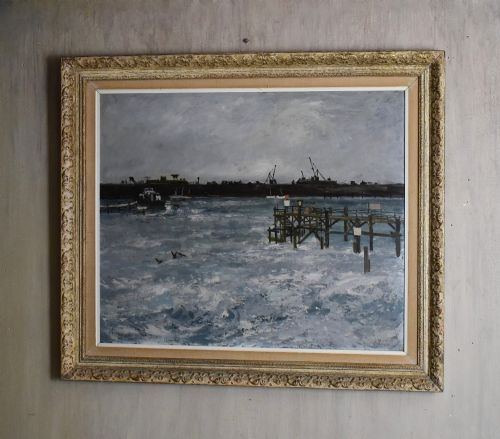
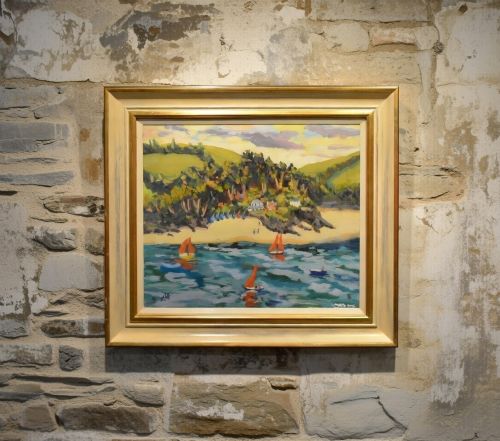
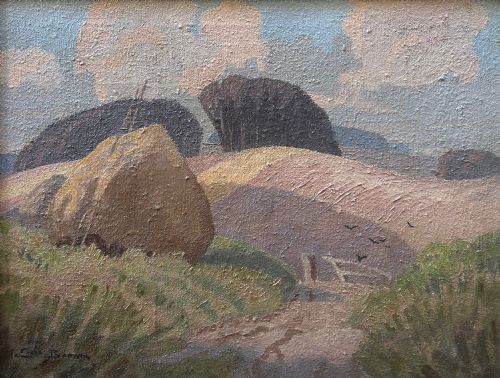
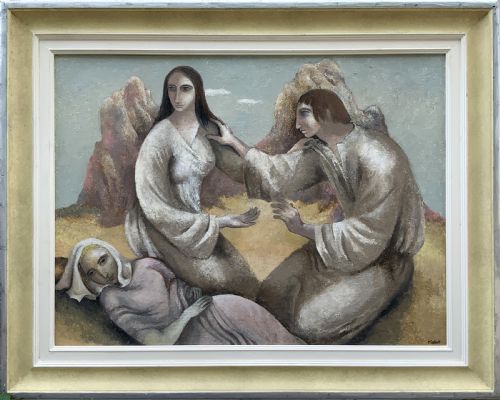
An original impasto oil painting brings tactile depth and rich surface texture to a wall through thick, raised layers of pigment.
Original Impasto Oil Painting
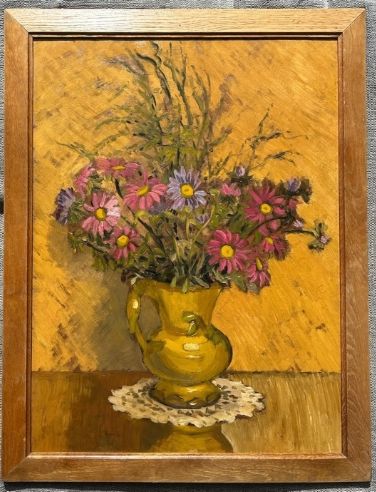
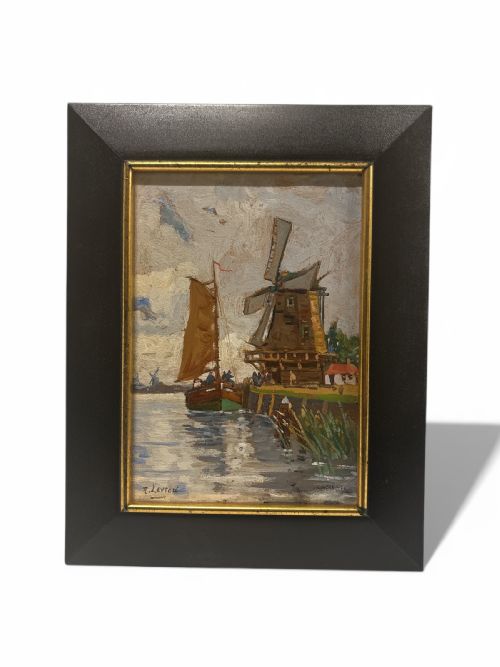
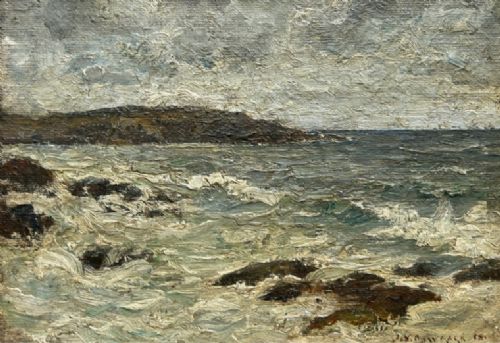
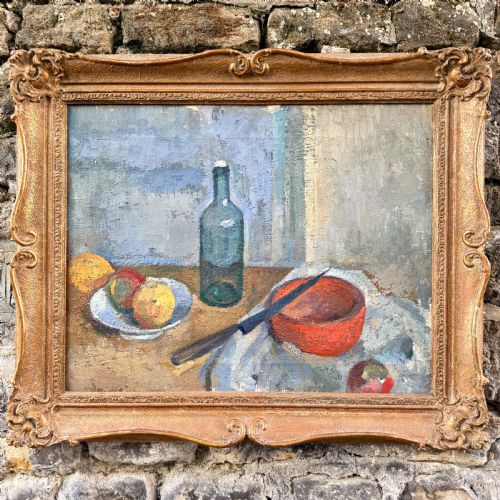
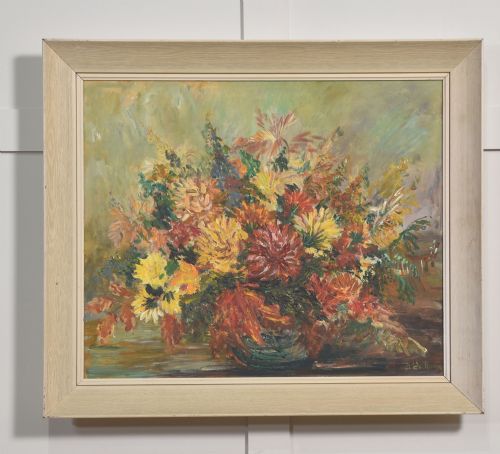
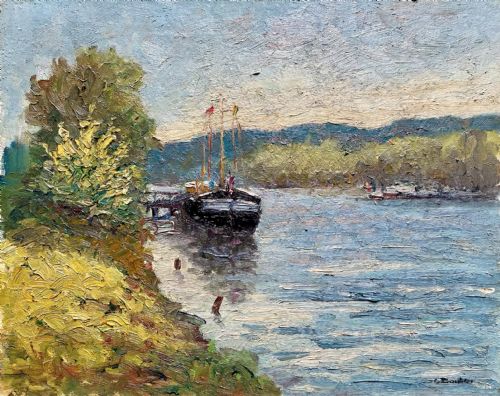
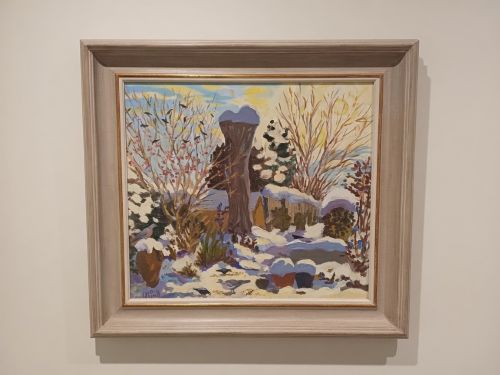
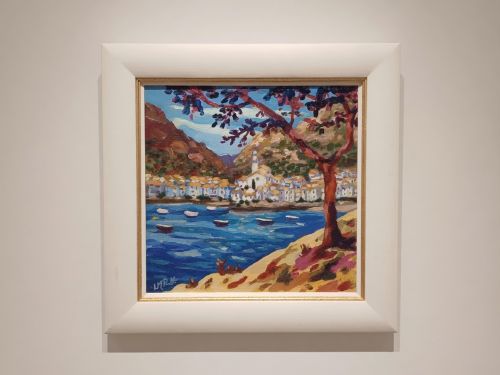
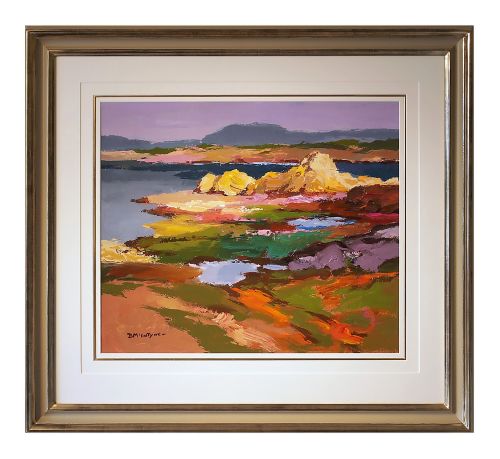
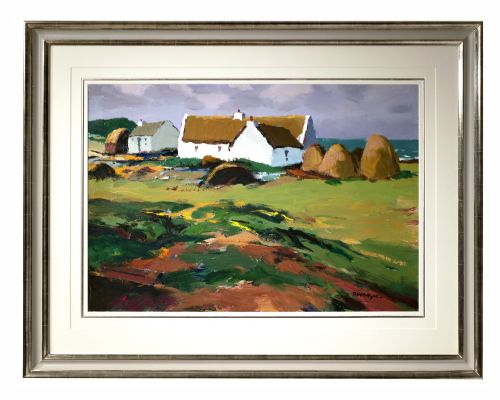
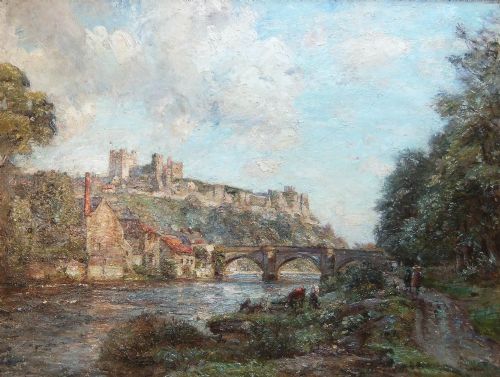
When you search for original impasto oil painting, you encounter works where pigment is applied thickly enough to stand proud of the support, capturing light and shadow across its physical ridges. The selections here span the nineteenth century through the mid-twentieth century, encompassing maritime scenes, rustic villages, still lifes and coastal landscapes. You are most likely to meet mid-century modernist and impressionist works executed on canvas or board, often reflecting British and French artistic movements.
The subjects range from quiet northern townscapes and harbour views to vibrant floral arrangements and intimate interiors. Artists deploy visible brushstrokes and palette knife marks to build form rather than blending everything flatly away. This sculptural approach to paint handling gives the surface an immediate presence, whether the subject is a French market square or a wind-swept estuary.
How they were made
Artists built these surfaces using oil paint applied heavily to woven canvas stretched over wooden frames or directly onto rigid wooden board. The pigment, rich in linseed or other drying oils, held its shape without slumping as it cured, preserving the direct tracks of bristle brushes and steel palette knives.
Frames played an integral structural and aesthetic role, frequently consisting of gilt wood that contained the dense weight of the paint layers. Preparation of the ground involved sealing wood or priming canvas with a stable base layer, ensuring the thick application of heavy oil paint adhered securely over decades.
Original Impasto Oil Painting Retail Price Guide 2026
Typical asking prices for original impasto oil painting among the pieces listed under this phrase on Sellingantiques today, from the lower quarter to the upper quarter. They describe what is for sale here now, not the wider market.
Some northern townscapes carry traces of genuine industrial soot mixed right into the twentieth-century pigment.
What varies in quality
Quality rests in the purposeful control of the heavy medium, where thick pigment defines light and form with conviction rather than accumulating as mere bulk. A strong composition maintains structural clarity beneath the heavy application, so the thickest passages enhance the subject rather than obscuring it.
The integration of the palette work into the whole surface distinguishes accomplished pieces from simpler decorative works. Mastery appears when the direction of each knife stroke or brush ridge reinforces the movement of water, the slope of a roof or the contour of a vase.
Kenneth Cozens·Lilian Colbourn·Donald McIntyre·Helen Layfield Bradley·Jean-Baptiste Olive
The Original Impasto Oil Painting Glossary
- Impasto
- Paint applied thickly to a canvas or board, standing out in relief from the surface so that the marks of the brush or palette knife remain visible.
- Palette knife
- A blunt tool with a flexible steel blade used by artists to mix pigments or apply thick slabs of paint directly to the surface.
- Post-Impressionism
- An artistic movement following impressionism that explored emotion and structure through bold colours and defined forms.
- Stretcher
- A wooden framework upon which canvas is stretched tightly before painting begins.
- Gilt
- A thin layer of gold leaf applied to wooden framing to provide a decorative metallic finish.
Original Impasto Oil Painting: Frequently Asked Questions
How do I hang a heavy impasto painting safely?
Because thick oil paint adds substantial weight to the canvas and wooden support, secure fixings screwed directly into wall studs provide the safest foundation for display.
Traditional brass wire and sturdy D-rings attached to the wooden frame distribute this weight evenly across the hanging point.
How do I clean thick oil paint surfaces?
Dust accumulates easily on the raised ridges of impasto work, requiring very gentle removal with a soft, dry artist's brush or feather duster.
Avoid using water, damp cloths or chemical solvents on the dry oil skin, as moisture can damage both the pigment and the underlying ground.
What is the difference between canvas and board supports?
Canvas provides a flexible woven textile surface that yields slightly under pressure, mounted over a wooden stretcher frame.
Board offers a rigid, inflexible backing made of wood or composite material, which supports heavy paint applications without risk of sagging.
How can I tell a mid-century piece from an earlier work?
Mid-century pieces often display looser brushwork, brighter palettes and modernist spatial arrangements influenced by post-impressionist developments.
Earlier works from the nineteenth or early twentieth centuries typically adhere to more traditional tonal ranges and restrained compositional structures.