




Original French Watercolour
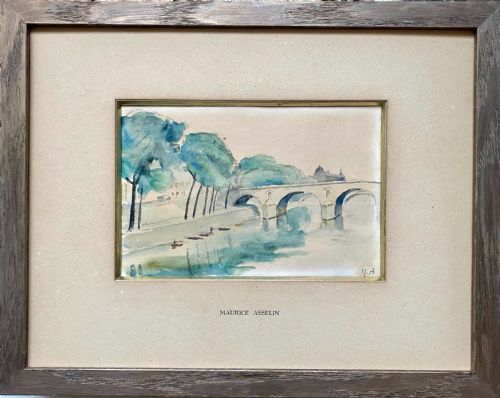
Original french watercolour paintings capture the shifting light and architectural charm of the continent through fluid pigments on paper.
Original French Watercolour
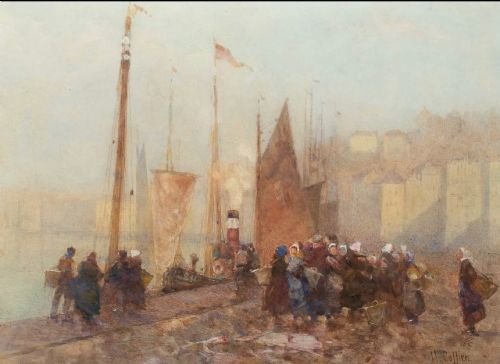
Original french watercolour pieces encompass a broad range of subjects including coastal landscapes, bustling town markets, intimate portraits, and architectural studies.
The selections span from nineteenth century Romantic and Victorian depictions through to early twentieth century Post-Impressionist and Mid-Century Modern compositions.
Buyers regularly encounter framed works on paper, mixed media drawings incorporating ink or gouache, and delicate botanical or design studies.
How They Were Made
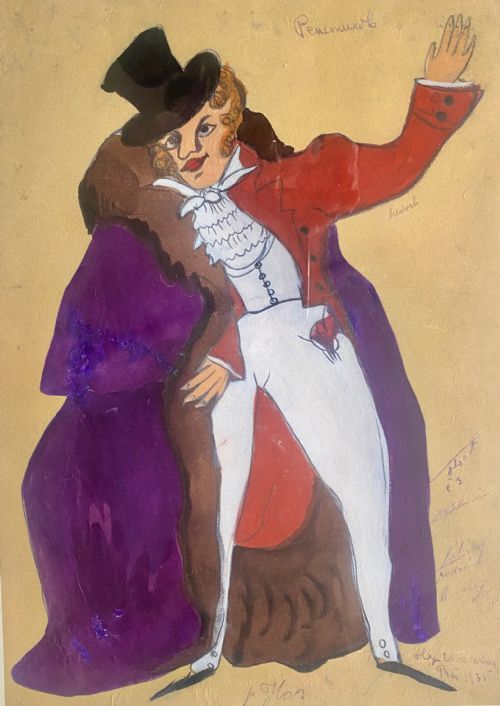
Artists relied primarily on watercolour pigments applied to various grades of paper, often supported by ink line work, bodycolour, or gouache to build opacity and texture.
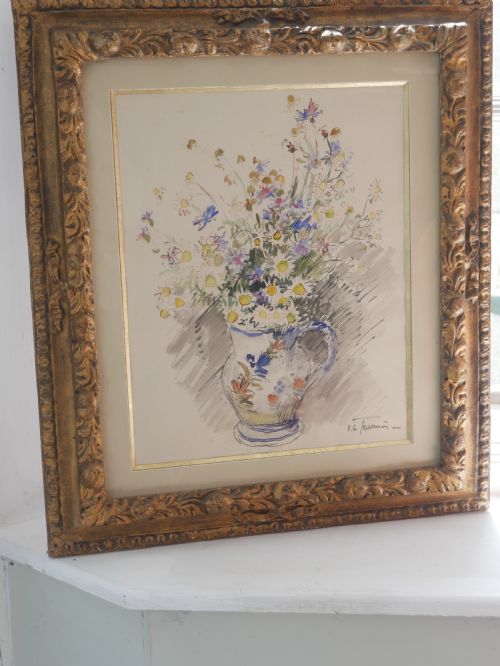
Finished works were typically mounted beneath glass within wooden frames, sometimes featuring gilded wood or giltwood mouldings that complement the delicate tones of the medium.
Original French Watercolour Retail Price Guide 2026
Typical asking prices for original french watercolour among the pieces listed under this phrase on Sellingantiques today, from the lower quarter to the upper quarter. They describe what is for sale here now, not the wider market.
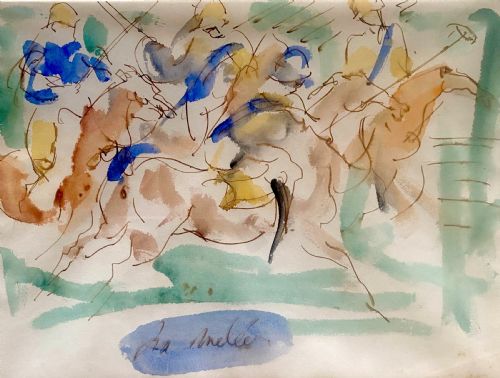
Several pieces capture charming everyday moments, including mules, cab rides in Paris, and equestrian scenes in the French countryside.
What Varies in Quality
Quality rests upon the sureness of the brushwork, the handling of light and atmosphere, and the strength of the composition rather than the mere age of the piece.
Works by recognised artists or those retaining clear signatures and archival provenance stand apart from anonymous sketches through distinctive stylistic confidence.
Th. Thibault·Hector Caffieri·Henry de Waroquier·Albert Ludovici Jnr·Gen Paul·Olga Choumansky·Gaston Cornil·William Lee Hankey·Henri Joseph Harpinies·Joseph W. Milliken·Noel Harry Leaver·Irene Lagut·Maurice Asselin·Kees van Dongen·Yves Brayer·Paul-Louis Barruel·Charles Eyres Simmons·Lamorna Birch·Elisabeth Vigee Le Brun·Keeley Halswelle·Thomas Colman Dibdin·Mary Evelina Kindon·George Bryant Campion·Arthur Kemp Tebby·Jean Betourne
The Original French Watercolour Glossary
- Watercolour
- A painting method in which the paints are made of pigments suspended in a water-based solution. This medium allows for luminous washes and transparent layers.
- Gouache
- A water-based paint consisting of pigment and other inert materials designed to be opaque. It is frequently combined with watercolour to add solid highlights.
- Giltwood
- Wood that has been treated with gold leaf or a gold-coloured finish. It is commonly found on traditional frames enclosing nineteenth-century works.
- Mixed media
- An artwork utilising more than one medium or material. Examples include combining ink, coloured pencil, and watercolour on a single sheet of paper.
- Belle Epoque
- A period of French history dating to the late nineteenth and early twentieth centuries characterised by optimism and flourishing arts.
Original French Watercolour: Frequently Asked Questions
What subjects appear in these watercolours?
The subjects range widely across French scenery and culture, including Normandy coastal views, Parisian street scenes, equine pursuits, and floral still lifes.
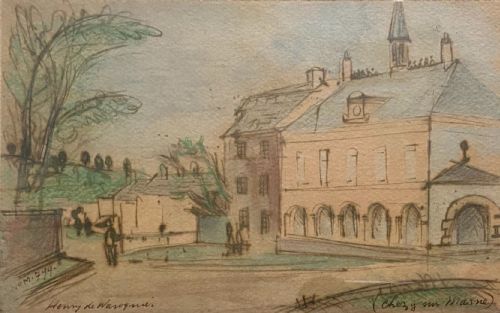
Artists also recorded architectural landmarks, quiet village squares, and intimate figure studies across different decades.
How should I frame and display works on paper?
Watercolours require protection behind glass to shield the delicate pigments from atmospheric moisture, dust, and handling damage.
Displaying them away from direct sunlight prevents the watercolour washes and inks from fading over time.
How do I identify the period of a painting?
Dating relies on stylistic clues such as the transition from nineteenth-century academic realism towards early twentieth-century avant-garde movements.
Signatures, framing materials, and artist biographies recorded on the reverse often help narrow down the exact decade of creation.
What is the difference between watercolour and gouache?
Watercolour relies on transparent washes where the white of the paper illuminates the pigments from beneath.
Gouache includes an added white pigment component that creates an opaque finish, allowing artists to layer light colours over dark areas.