




Original Charcoal Figure Drawing
An original charcoal figure drawing captures the human form through direct monochrome lines, offering collectors immediate intimacy with the artist's hand.
Original Charcoal Figure Drawing
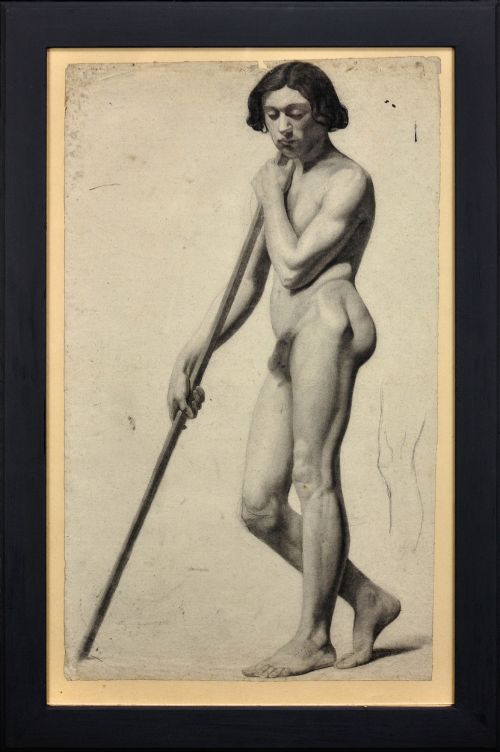
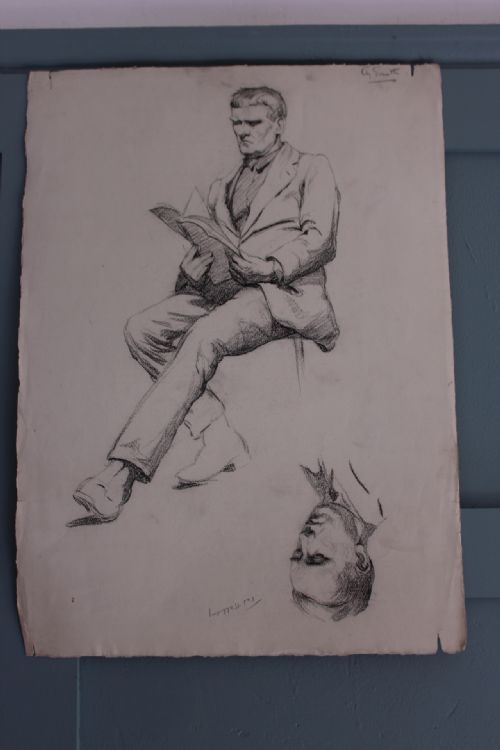
An original charcoal figure drawing centres on depictions of the human body, spanning academic life studies, portraits and expressive nudes. When searching for an original charcoal figure drawing, buyers encounter works ranging from nineteenth-century academic realism to twentieth-century modernism.
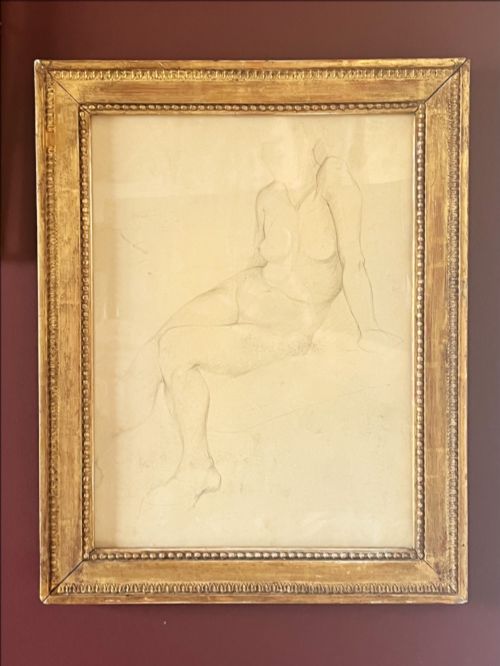
The selections on this page incorporate framed artworks, wall art and standalone drawings executed on various types of paper. Pieces date from the eighteenth century through to the mid-twentieth century, reflecting changing artistic approaches to the human figure across multiple decades.
Materials and execution
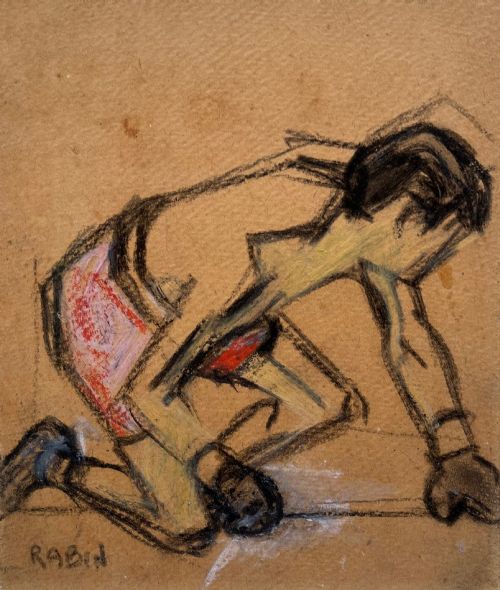
Artists executed these works primarily using charcoal, graphite, chalk and pastel applied to paper, toned paper and occasionally lithographic surfaces. These dry media allowed draughtsmen to build dense shadows, subtle tonal gradations and sharp contour lines in a single session or through layered studies.
Many of these drawings are housed behind glass within wooden frames, occasionally retaining antique gilt mouldings that complement the period of the artwork. The combination of friable drawing materials and protective framing preserves the delicate carbon and pigment particles on the paper surface.
Several subjects were caught mid-daydream, proving that even nineteenth-century models struggled to stay awake during long studio poses.
Factors determining quality
Quality in an original charcoal figure drawing rests upon the draughtsman's anatomical understanding, line confidence and ability to convey volume and light. Works displaying secure handling of musculature, posture and proportion stand apart from routine academic exercises.
The sophistication of the composition and the expressive depth of the portraiture further distinguish superior examples. Provenance and the integration of secondary media like chalk or pastel to enhance highlights also elevate the status of a drawing.
Samuel Rabin·Henry Arthur Roberts·Demetrios Galanis·Winifred Eugene Ballard·John Hoppner·Frank Dobson·Sonia Lawson·Francis O A Haviland·George Richmond·Francis Dodd·Cecil CP Lawson·Jacob Kramer
The Original Charcoal Figure Drawing Glossary
- Academic Realism
- A style of painting and drawing produced under the influence of European academies of art, prioritising precise anatomical accuracy and classical proportions.
- Deux Crayon
- A drawing technique utilising two distinct coloured crayons or chalks, typically black and red or white, on toned paper to create depth and highlight.
- Toned Paper
- Paper that possesses a natural tint or colour rather than a stark white finish, allowing artists to work up both dark shadows and white highlights effectively.
- Life Study
- A drawing or painting executed directly from a live model, serving as a foundational exercise for figurative artists.
- Cubism
- An early twentieth-century avant-garde art style that revolutionized European painting and sculpture, breaking subjects down into faceted geometric shapes.
Original Charcoal Figure Drawing: Frequently Asked Questions
How do I care for a charcoal drawing?
Keep charcoal works behind glass to prevent the friable medium from smudging or lifting off the paper surface over time.
Position the framed artwork away from direct sunlight and damp environments to protect both the paper support and the dry media.
What is an academic life study?
An academic life study is a detailed drawing of a human model produced within a formal training structure to master anatomy and proportion.
These pieces often focus heavily on musculature, lighting and shadow to demonstrate the artist's technical proficiency.
How do I identify the period of a drawing?
Examine the framing materials, the paper type and the stylistic conventions employed by the artist to narrow down the era.
Signatures, dates inscribed on the reverse and recorded artist biographies also help establish the exact timeline of creation.
Are these drawings unique works?
Every piece listed under this search phrase is an original, hand-drawn work rather than a mechanical reproduction or print.
Artists applied charcoal and chalk directly to the sheet, meaning no identical duplicate of the composition exists.