



Gilt Framed Charcoal Drawing
These gilt framed charcoal drawing pieces bring expressive portraiture and landscape studies into a room, framed in gold leaf to catch the evening light.
Gilt Framed Charcoal Drawing
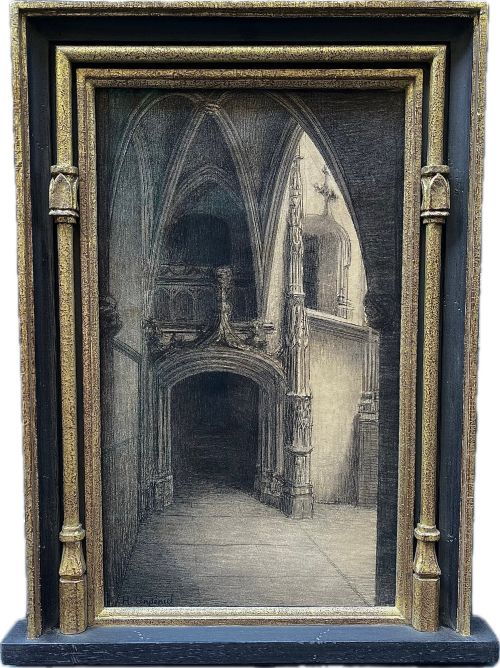
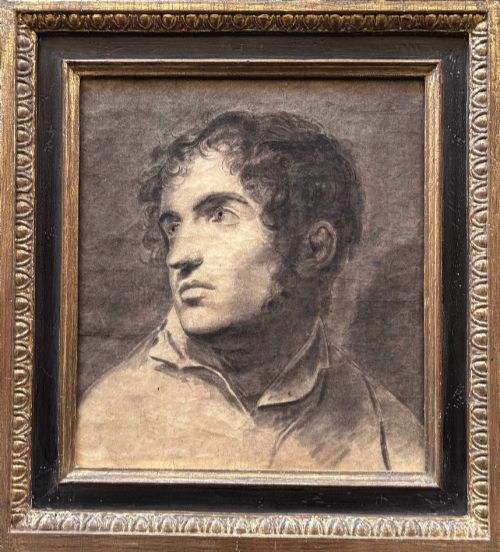
A gilt framed charcoal drawing brings together sensitive monochrome draughtsmanship and ornate gilded moulding, often captured on paper with deep tonal contrast. These works range from academic life studies and portraiture to architectural sketches like Gothic church scenes.
The pieces seen here span multiple eras, including the eighteenth century, nineteenth century, and early twentieth century. Buyers encounter French School portraits, Scottish artist works, and Victorian academic realism alongside older carved Florentine frames.
Forms vary from framed fine art and charcoal portrait drawings to mixed media pieces incorporating pencil, pastel, and watercolour. Each object relies on the contrast between the dark charcoal mark and the reflective gilt wood or ebonised wood surround.
How they were made
Artists drew directly onto paper using charcoal and graphite, sometimes combining these mediums with pastel or watercolour to build depth and shadow. These works rely on the absorbent quality of paper to hold the dense black carbon marks of the charcoal.
The framing involves carved wood or giltwood, frequently finished with gold leaf applied over a gesso base. Ebonised wood elements occasionally appear alongside the gilt framing to heighten the contrast of the artwork within.
Gilt Framed Charcoal Drawing Retail Price Guide 2026
Typical asking prices for gilt framed charcoal drawing among the pieces listed under this phrase on Sellingantiques today, from the lower quarter to the upper quarter. They describe what is for sale here now, not the wider market.
Listings span from the 18th century to the 1960s, featuring paper, charcoal, glass, giltwood, and graphite across academic realism and landscape styles.
What varies in quality
Quality rests in the sureness of the draughtsmanship and the preservation of the charcoal marks across the paper surface. Stronger works display confident handling of shadow and expression, whereas lesser examples show hesitation or blurring.
The integrity and originality of the surrounding frame also shape the piece. Hand-carved Florentine frames or period giltwood mouldings that retain their original gilding elevate the entire object far above later replacements.
Henri Charles Angéniol·J D Fergusson·Reginald G. Eves·Robin Watt
The Gilt Framed Charcoal Drawing Glossary
- Charcoal
- An organic drawing material made from burnt wood, yielding deep black lines that smudge easily and require glass protection. It allows for rich tonal gradation and rapid sketching.
- Giltwood
- Wood that has been coated with a thin layer of gold leaf or gold paint. This technique brightens domestic interiors by reflecting candle or window light.
- Academic Realism
- A style of painting and drawing produced under the influence of European academies of art. It emphasises precise anatomical accuracy and careful observation.
- Ebonised wood
- Timber treated with a chemical stain or finish to imitate expensive ebony. This dark finish provides a sharp, sombre border to works on paper.
Gilt Framed Charcoal Drawing: Frequently Asked Questions
Are these drawings original works?
The listings comprise original hand-drawn works on paper rather than mechanical reproductions. Artists utilised charcoal, graphite, and pastel directly onto the sheet.
Each piece reflects the individual hand of the draughtsman, whether produced as a portrait study, a landscape, or an academic life drawing.
How do I care for charcoal drawings?
Drawings executed in charcoal require protection behind glass to prevent the carbon particles from disturbing or smudging over time. Direct sunlight should be avoided to protect both the paper and the surrounding frame from fading.
Stable indoor humidity levels help preserve the paper support and prevent warping in antique wooden frames.
What periods do these pieces date from?
The selection includes works from the eighteenth century, the nineteenth century, and early twentieth century milestones such as the 1920s and 1960s. Each period brings distinct framing styles and artistic approaches to portraiture.
Earlier examples often feature carved Florentine frames, while later pieces reflect academic or modernist sensibilities.
What framing is typically used?
Pieces are housed in gilt wood, giltwood, or ebonised wood frames that complement the monochrome tones of the charcoal within. Some frames feature elaborate carved ornamentation typical of Italian or French workshops.
The gold leaf finish adds warmth and definition to the darker charcoal marks on the paper.