




Original 1960s Artwork
Original 1960s artwork brings mid-century modernism and expressive brushwork into interiors through period paintings, drawings and lithographs.
Original 1960s Artwork
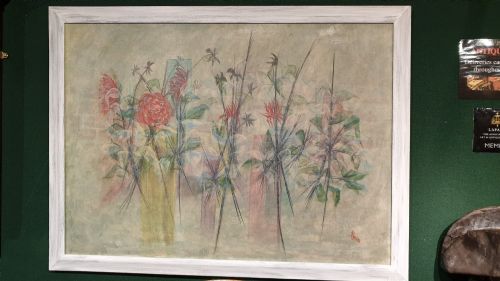
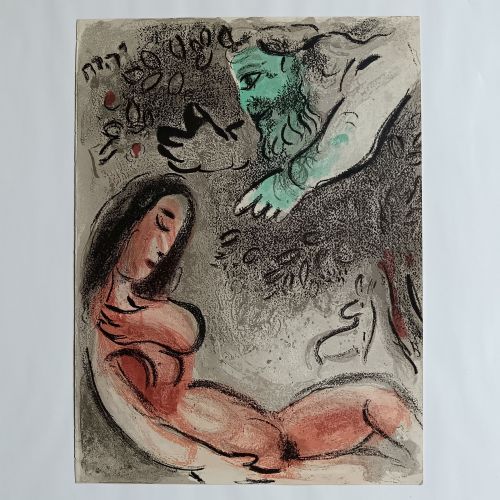
Original 1960s artwork spans paintings, drawings, prints and wall art created during the mid-century period. Buyers seeking this phrase encounter canvases in oil, watercolours on paper, woodcuts and lithographs.
Most pieces date directly from the decades around 1960, utilising contemporary styles that reflect the artistic movements of the mid-20th century.
Materials and techniques
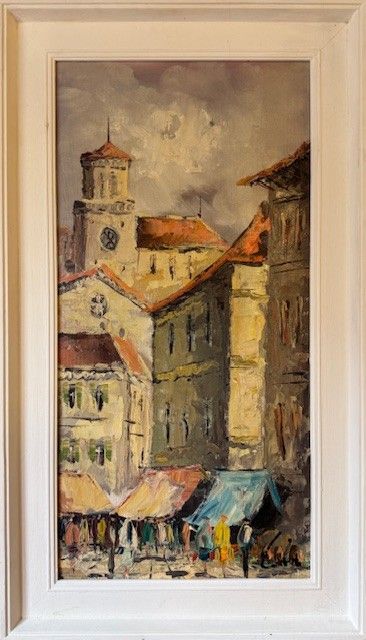
Artists of the period applied oil paint, impasto and gouache to stretched canvas, wood panels and heavy paper. Many works incorporate textured layers of oil paint or mixed media to build physical depth on the surface.
Graphic works utilise lithography on paper, charcoal on paper, and woodcuts in colours. Framing often involves simple wood mouldings and glass to protect delicate watercolours and drawings.
The works span woodcut prints, charcoal sketches and impasto paintings created across Britain, France and Germany.
Variations in quality
Quality rests on the confidence of the mark-making, the strength of the composition and the clarity of the artist's vision. Masterly handling of oil paint or impasto creates dynamic tension within abstracts and landscapes alike.
Signatures, dated provenance and attribution to known mid-century practitioners distinguish individual works from anonymous studio pieces of the era.
Marc Chagall·John Rattenbury Skeaping·Lionel Horsnell·Dame Elisabeth Frink·Helen Layfield Bradley·Gabriel Dauchot·Amile Coppieters·Ron Folland·William Littlejohn·Noel Quintavalle·Christian Caillard·William Ernst Burwell·Donald McIntyre
The Original 1960s Artwork Glossary
- Impasto
- Paint applied thickly to a canvas or panel so that it stands out from the surface. This technique leaves visible brush or palette knife marks that catch the light.
- Lithograph
- A print produced from a flat stone or metal plate treated to retain ink where required. Artists use this method to create multiple original impressions.
- Gouache
- An opaque water-based paint that dries to a matte finish. It provides dense colour blocks in works on paper.
- Woodcut
- A relief print created by carving an image into a block of wood. Ink is applied to the raised areas and transferred to paper under pressure.
- Mid-Century Modern
- A design and art movement spanning roughly the middle decades of the twentieth century. It prioritises clean lines, abstraction and expressive forms.
Original 1960s Artwork: Frequently Asked Questions
How do I identify a 1960s painting?
Look for characteristic mid-century colour palettes, modernist abstraction, and materials such as canvas stretched over period wooden frames. Signatures and dates inscribed by the artist often confirm the decade of creation.
Examine the back of the canvas or paper for gallery labels, framing stamps, or inscriptions that provide clues to the origin and date.
What is the difference between oil and watercolour?
Oil paint uses drying oils to bind pigments, allowing for thick impasto textures and rich, buildable layers on canvas or board. Watercolour relies on water-soluble pigments applied to paper, producing luminous, transparent washes.
Oils offer a robust, textured surface suited to bold brushwork, while watercolours deliver delicate precision and atmospheric lightness.
Are lithographs considered original art?
Original lithographs are prints where the artist draws directly onto the stone or plate, making each impression part of an authorised limited edition. These differ sharply from mechanical reproductions or posters printed decades later.
Check for plate signatures, numbering, and publisher stamps to confirm the print dates from the active period of the artist.
How should I hang and light mid-century art?
Hang paintings and framed works on interior walls away from direct sunlight to protect pigments from fading over time. Maintain stable room humidity to preserve wood frames, canvas integrity, and paper supports.
Position picture lights or adjustable ceiling spotlights above the work to illuminate the brush texture and colour nuances without generating excessive heat.