
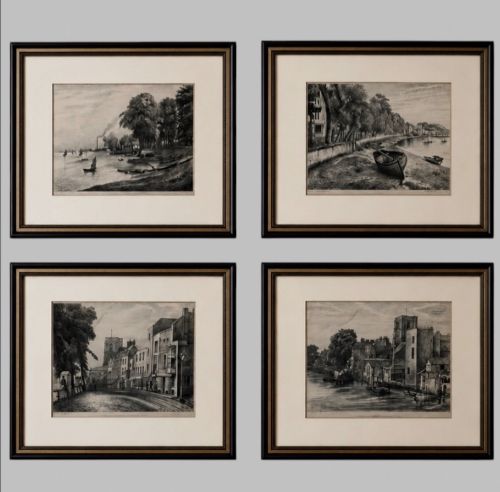


Paper Monochrome Landscape Artwork
Paper monochrome landscape artwork brings together quiet views rendered in subtle tones, offering a timeless focal point for any interior.
Paper Monochrome Landscape Artwork
Paper monochrome landscape artwork captures natural and architectural scenes through limited palettes, focusing attention entirely on line, tone and shadow. When seeking paper monochrome landscape artwork, collectors encounter pieces spanning from the eighteenth century through to the mid-twentieth century.
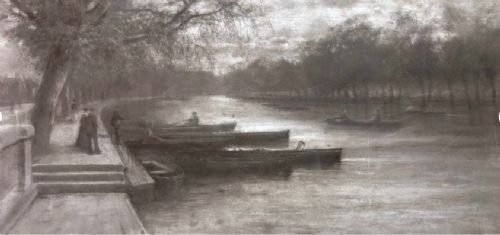
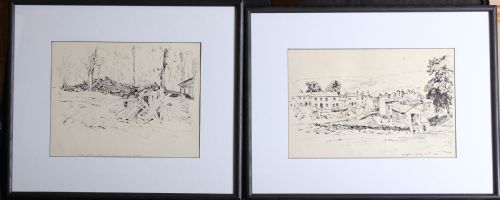
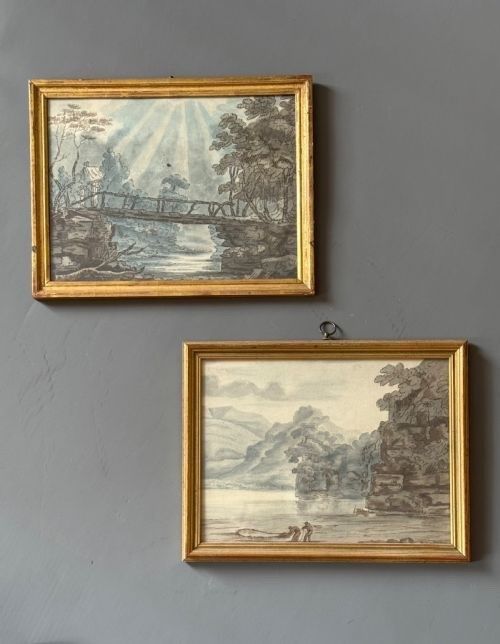
The selections here comprise original drawings, sketches, and prints framed under glass, often preserved within wood moulding. Subjects range from tranquil rural vistas and lake districts to historic townscapes and coastal scenes.
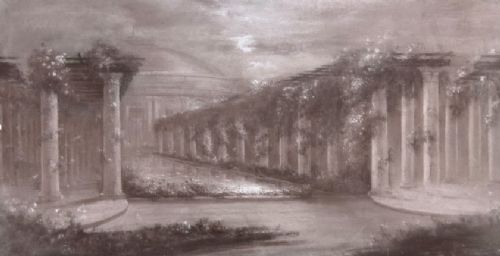
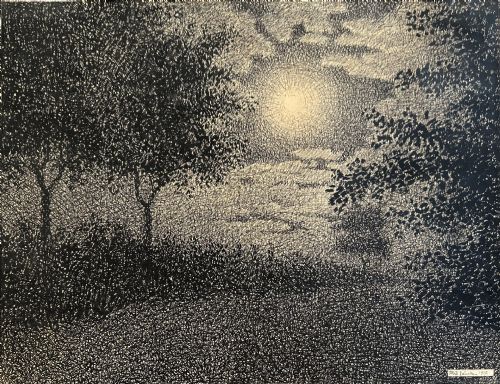
Examples stretch across multiple recognised periods, including Georgian, Victorian, Edwardian, and mid-century British movements. Buyers regularly discover atmospheric nocturnal compositions alongside crisp architectural studies.
Materials and methods
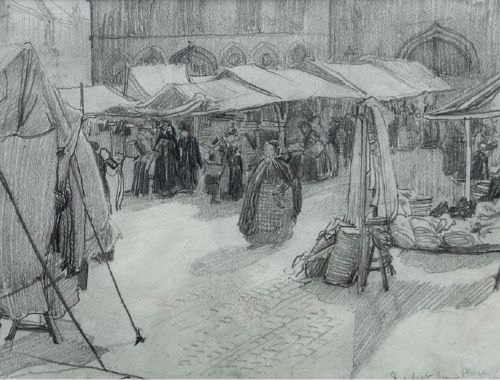
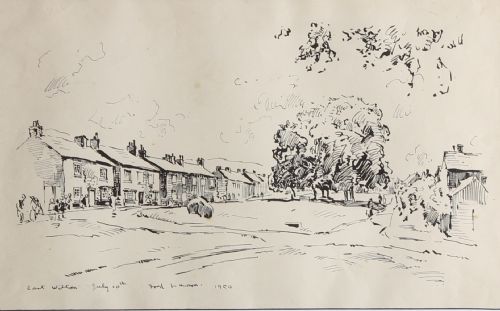
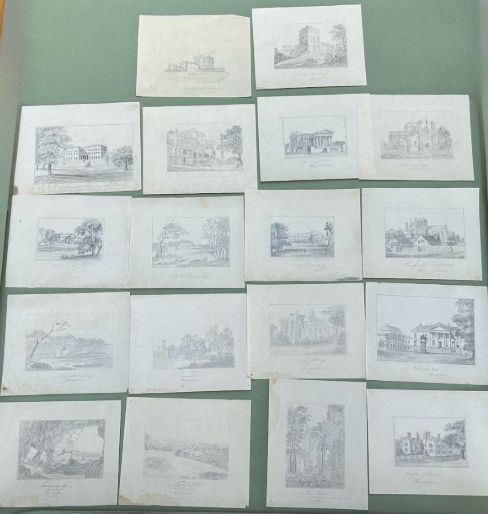
Artists relied primarily on paper supports, applying mediums such as graphite, charcoal, pen and ink, and watercolour washes to build depth. Etching and lithography also appear among the printed works, utilising metal plates or stones to transfer fine monochromatic details.
Subtle shifts in shading rely on the careful manipulation of pencil lead or diluted ink, frequently enhanced with touches of sepia or charcoal. These works are commonly presented behind glass within wooden frames to protect the delicate paper surfaces.
Listings feature works executed in pencil, charcoal, ink, watercolour, and etching across Victorian, Georgian, and twentieth-century periods.
Distinguishing quality
Quality rests upon the sureness of the draftsmanship and the artist's command of light and shadow within a restricted palette. Stronger examples display confident, expressive strokes that define distance and atmosphere without relying on heavy colour.
The preservation of the paper surface and the clarity of the ink or graphite lines significantly influence the visual impact. Works that retain their original tonal contrast and show minimal fading command greater appreciation among collectors.
Henry Percy Huggill·Fred Lawson·William Manners·Stanley Orchart·Edward Dayes·Sir Francis Leggatt Chantrey·Norman Janes·Peter Tillemans·Henry Bright·Henry Edridge·Henri Joseph Harpignies·Thomas Monro·Thomas Lound
The Paper Monochrome Landscape Artwork Glossary
- Monochrome
- Rendering a subject in a single colour or shades of a single colour. This approach emphasises form, texture, and tonal gradation over bright hues.
- Charcoal
- A dry drawing medium made from finely ground organic material held together by a gum or wax binder. It produces deep blacks and soft smudged lines.
- Aquatint
- A printmaking technique that produces tonal effects by using acid to eat into a metal plate. It allows the creation of areas resembling watercolour washes.
- Tonalism
- An artistic style that emerged in the late nineteenth century where artists painted landscapes with an overall atmosphere or mood. Works often feature misty or nocturnal lighting.
- Etching
- A method of making prints where lines are incised into a metal plate covered with a protective ground using acid. The plate is then inked and pressed onto paper.
Paper Monochrome Landscape Artwork: Frequently Asked Questions
What periods do these artworks come from?
The pieces span several centuries, with examples originating from the eighteenth century, the Georgian and Victorian eras, and through the early to mid-twentieth century.
Each period brings distinct stylistic approaches to the depiction of landscape subjects.
How should I frame and hang these works?
Because these pieces are created on paper and often presented behind glass, they require protection from direct sunlight to prevent fading of the ink or graphite.
Hanging them in rooms with stable humidity levels helps preserve both the paper support and the wooden frames.
What subjects are most common?
Common subjects include rural English landscapes, lake district views, architectural studies, coastal scenes, and nocturnal streetscapes.
Artists frequently recorded specific locations across Britain and Europe during their travels.
How do I identify a drawing from a print?
Drawings show direct application of hand-held mediums like pencil, charcoal, or ink where individual strokes sit directly on the paper surface.
Prints display the characteristic plate marks, uniform ink distribution, or dot patterns associated with etching, lithography, or aquatint processes.