



Oriental Wool Kilim
An oriental wool kilim brings flat-woven tribal geometry and rich regional dyeing into a room through centuries of nomadic craft.
Oriental Wool Kilim
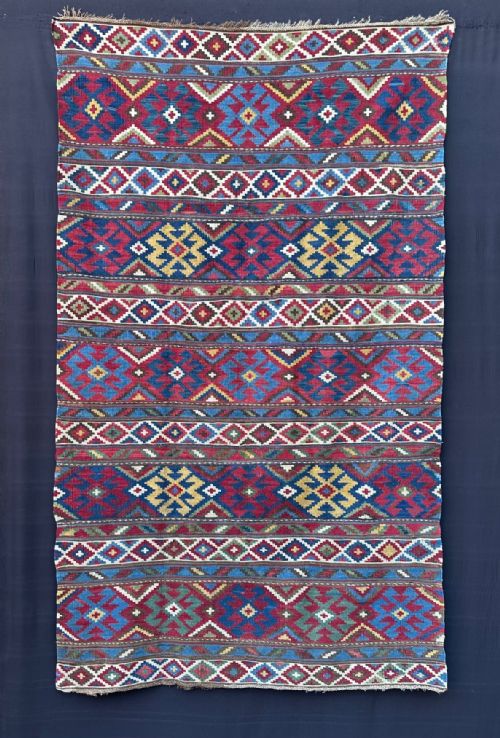
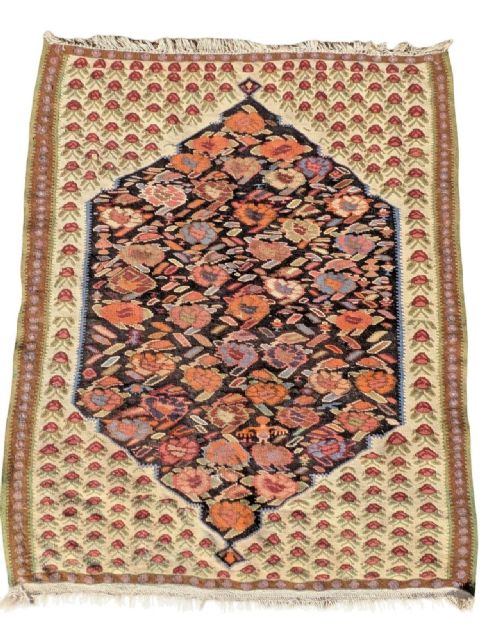
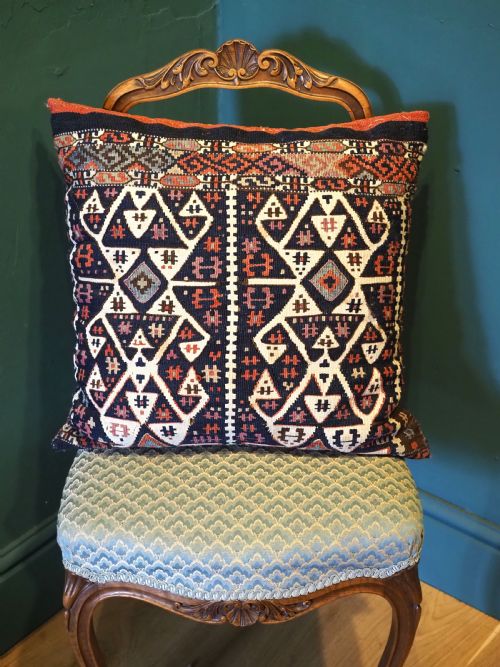
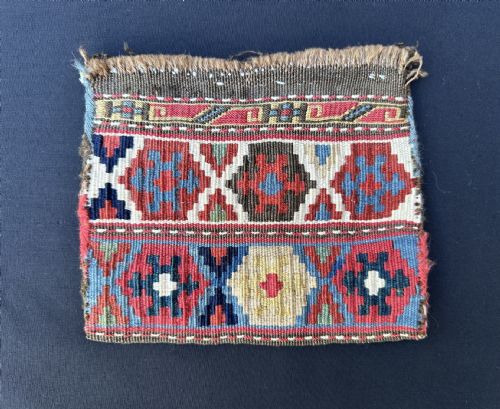
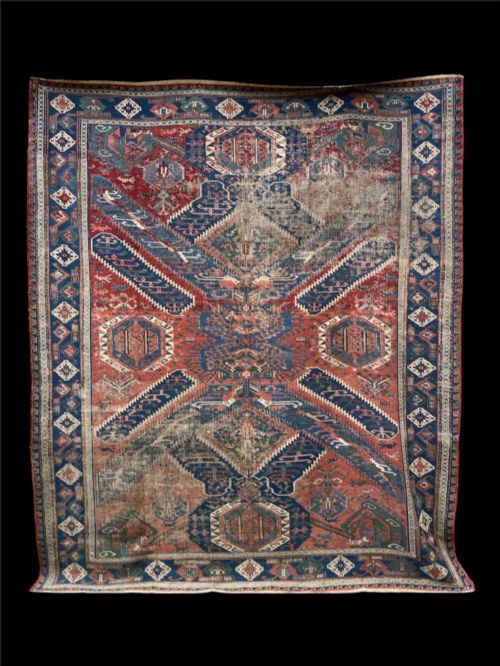
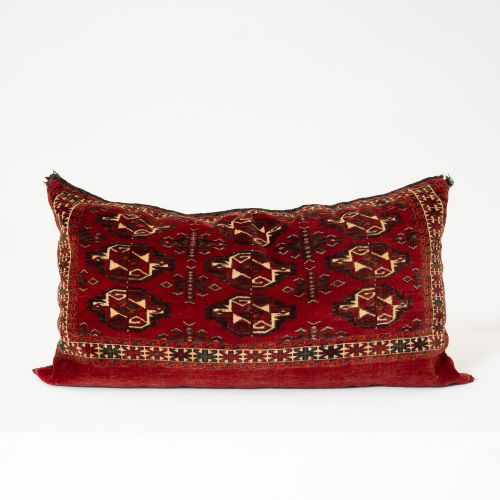
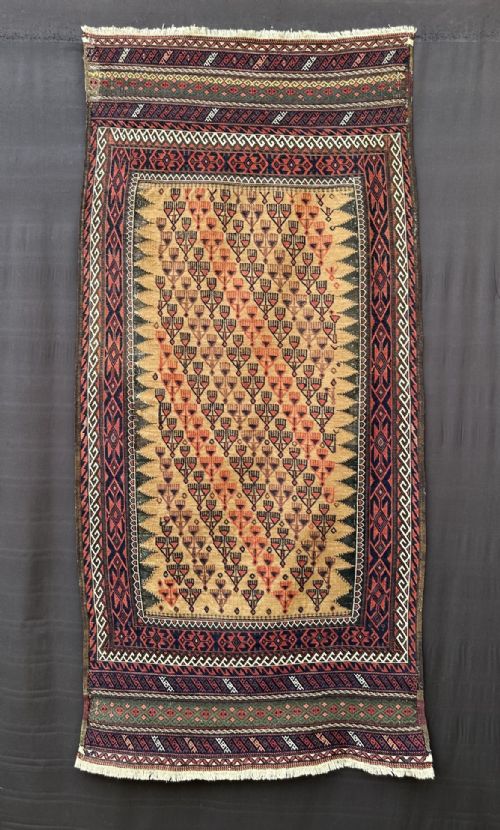
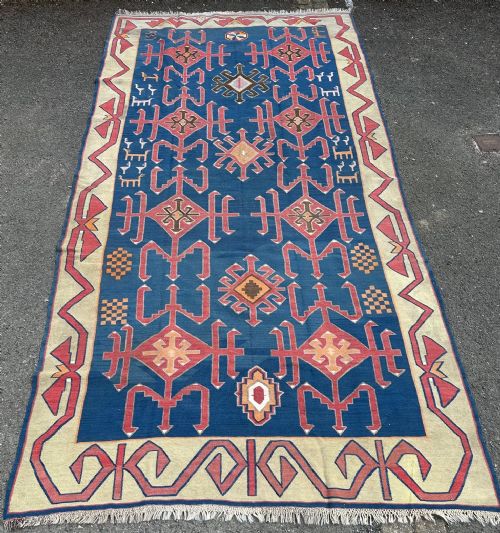
When you search for an oriental wool kilim, you encounter flat-woven carpets, rugs, runners and cushions produced across Anatolia, the Caucasus, Persia and Central Asia. These textiles originate from tribal groups and villages including the Shahsevan, Baluch, Shirvan and Bidjar, spanning periods from the mid-nineteenth century to the early twentieth century. The forms range from large room-size carpets and narrow runners down to repurposed storage bags and saddle bags made into cushions.
The pieces on this page reflect diverse regional weaving traditions, such as Caucasian geometric designs, Persian village Sofreh cloths, and Turkish Malatya or Ushak flat-weaves. Buyers most frequently meet smaller utility items like cushions alongside room-sized carpets and corridor runners. Each object displays the distinct palette and structural patterns characteristic of its specific tribal origin and manufacturing epoch.
Materials and Construction
These textiles rely primarily on wool and hand-spun wool combined with cotton foundations, utilising natural dyes to achieve their characteristic palette. Weavers construct them as flat-weaves without a pile, interlacing warp and weft threads tightly to form crisp geometric motifs and banded patterns.
Many items incorporate specialised techniques like Soumak brocading or originate from repurposed utilitarian objects such as Mafresh storage panels, Chuval cushions, and dining Sofreh cloths. The integration of hand-spun materials and natural colorants determines the tactile weight and visual depth of each flat-weave.
Several cushions began life as nineteenth-century storage bags carried across the steppes by nomadic tribes.
Factors of Quality
Quality rests upon the tightness of the weave, the clarity of the tribal geometry, and the integrity of the original structure, whether dealing with a complete carpet or a panel transformed into a cushion. Finer pieces demonstrate precise execution in complex designs such as dragon motifs or banded Shirvan layouts.
The handling of natural dyes and the use of hand-spun wool create tonal variations that elevate certain examples above standard village production. Superior items maintain structural stability and authentic regional characteristics without losing the crispness of their flat-woven patterns.
The Oriental Wool Kilim Glossary
- Kilim
- A flat-woven carpet or rug produced without a pile by tightly interweaving warp and weft threads. This technique creates sharp, geometric patterns common across tribal regions in the East.
- Sofreh
- A flat-woven cloth traditionally used during communal dining or food preparation in Persian and borderland tribal communities. These textiles often feature specialised field designs and narrow proportions.
- Soumak
- A brocade-like flat-weave technique where extra weft threads are wrapped around the warp threads before being tied off. This method produces a textured surface with raised pattern details.
- Mafresh
- A rectangular storage bag made by nomadic tribes to transport household goods, frequently constructed from woven panels. Surviving sections are often repurposed into smaller flat-weaves or cushions.
- Chuval
- A large storage bag produced by Turkmen and related tribes for domestic use. Examples preserved today typically showcase characteristic guls and tribal border arrangements.
Oriental Wool Kilim: Frequently Asked Questions
What is an oriental wool kilim?
An oriental wool kilim is a flat-woven textile created by nomadic and village weavers across the Caucasus, Persia, Anatolia, and Central Asia. These pieces lack a pile, relying instead on interlocking weft threads to form geometric patterns.
They encompass a variety of functional forms, including floor carpets, corridor runners, dining cloths, and bags repurposed into cushions.
How were kilims used originally?
Nomadic and village communities utilised these flat-weaves for practical domestic purposes, such as floor coverings, blankets, wall hangings, and saddle bags. Sofreh cloths served specifically during communal meals, while larger bags stored household possessions inside tents.
Over time, many utilitarian storage containers and panels have been converted into decorative cushions and smaller display rugs for modern interiors.
How do I care for a vintage kilim?
Maintenance requires gentle vacuuming without a rotating brush bar to protect the flat-woven structure from snagging. Professional cleaning suited for antique wool and natural dyes preserves the integrity of the fibres.
Placing a suitable underlay beneath rugs prevents slipping and reduces friction against hard flooring during everyday use.
How do regional styles differ?
Caucasian pieces tend to display crisp, angular geometric motifs and structured banded layouts in distinct palettes. Persian and Anatolian village weaves often incorporate floral abstractions, medallions, or wide borders reflecting specific tribal identities.
Central Asian textiles frequently utilise deep reds, madder tones, and repetitive guls characteristic of Turkmen and Uzbek weaving groups.