





Oriental Wooden Box
An oriental wooden box brings together distant craft traditions, offering practical storage disguised in rich carving, lacquer, and metalwork.
Oriental Wooden Box
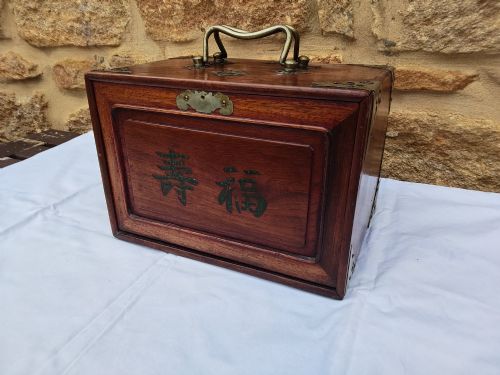
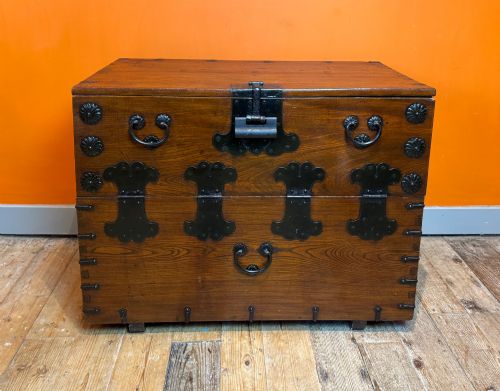
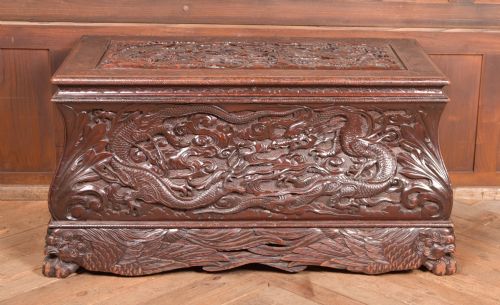
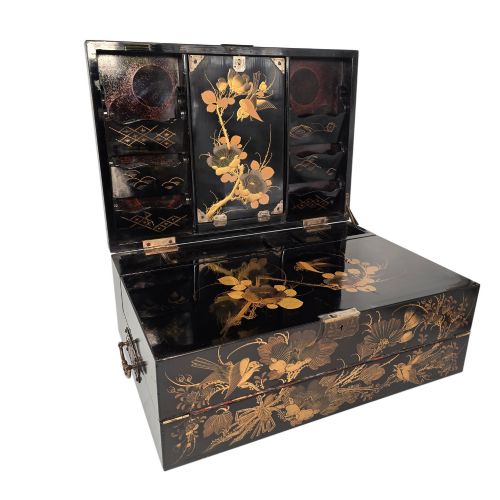
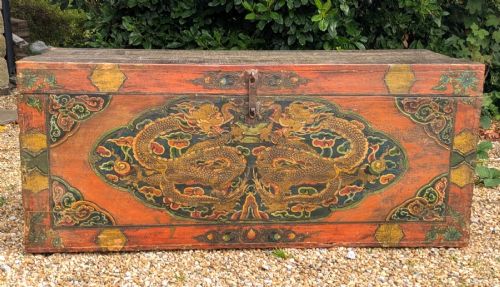
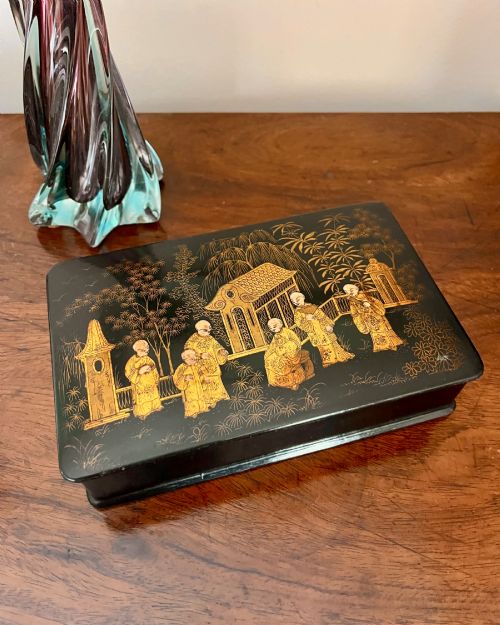
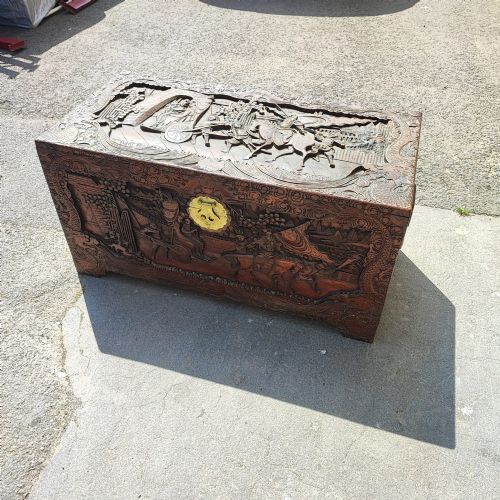
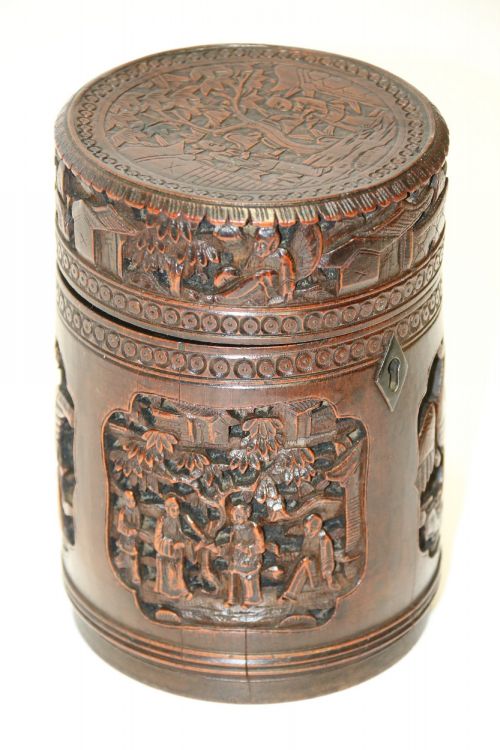
When you search for an oriental wooden box, you encounter a varied group of storage vessels spanning centuries of global trade, domestic utility, and fine craft. The selection ranges from small tea caddies and writing boxes to large camphorwood blanket chests and Zanzibar storage trunks.
The pieces you meet most often on this page date from the nineteenth century and the early twentieth century. They originate from workshop traditions across China, Japan, India, and the wider East, reflecting distinct regional materials and decorative methods.
Evaluating Quality
Quality rests upon the depth and precision of the hand carving, the stability of the timber joints, and the preservation of original decorative surfaces like lacquer or paint. Pieces featuring well-defined carving and crisp brass hardware hold greater visual presence than simpler, purely utilitarian boxes.
The integrity of the internal fittings, such as tea canisters within caddies or compartments in writing boxes, elevates the standard of a piece. Condition plays a role, with untouched surfaces and original hinges distinguishing superior examples from heavily restored ones.
Oriental Wooden Box Retail Price Guide 2026
Typical asking prices for oriental wooden box among the pieces listed under this phrase on Sellingantiques today, from the lower quarter to the upper quarter. They describe what is for sale here now, not the wider market.
The Oriental Wooden Box Glossary
- Camphorwood
- An aromatic timber frequently utilised for storage trunks because its natural scent deters insects. It is soft to work yet durable enough for travel chests.
- Tea caddy
- A small container designed to store dry tea leaves securely. These often feature internal lead or wooden compartments to preserve the aroma.
- Zanzibar chest
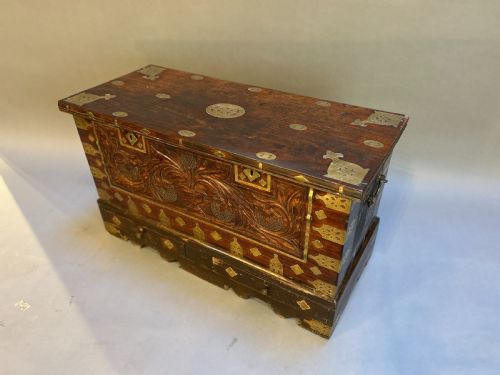
- A heavy storage trunk associated with East African and Indian trade routes, characterised by dense teak construction and elaborate brass studwork.
- Chinoiserie
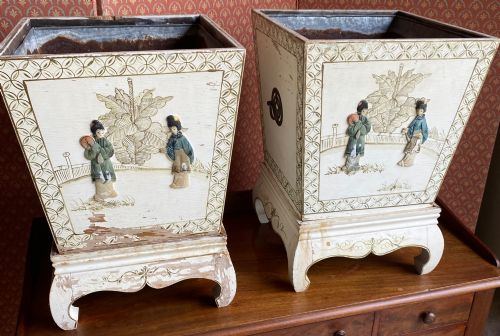
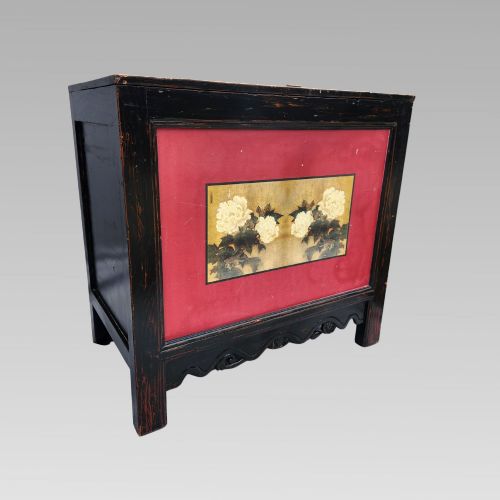
- A European artistic style reflecting Chinese aesthetic motifs. It appears on decorative boxes through painted lacquer scenes and gilded figures.
- Tansu
- A traditional Japanese mobile storage cabinet built from timber. These pieces typically feature multiple drawers and sliding doors for domestic organisation.
Oriental Wooden Box: Frequently Asked Questions
What were camphor chests used for?
Camphor chests served primarily to store textiles, garments, and valuable documents in humid climates. The natural oils in the timber protected the contents from moths and dampness.
Their robust construction also made them suitable as travel luggage on merchant and passenger ships during the nineteenth century.
How do I identify a Zanzibar chest?
Zanzibar chests are distinguished by heavy teak construction, prominent brass strapwork, and decorative brass studding across the front and lid. They frequently incorporate concealed interior compartments.
These pieces reflect the historic maritime trade between India, the Swahili coast, and the Middle East.
What is a Chinese tea caddy?
A tea caddy is a dedicated vessel used to hold loose tea leaves before the era of paper and cardboard packaging. They protected the precious leaves from moisture and light.
Examples from export workshops often feature carved bamboo, rosewood, or lacquered finishes designed for Western drawing rooms.
How should I care for an antique lacquer box?
Antique lacquer requires protection from direct sunlight and dramatic shifts in temperature, which can cause the surface to crack or lift. Dust the piece gently with a dry, soft cloth.
Avoid using modern cleaning chemicals or polishes, as these can permanently damage the delicate historical finish.