



Chinese Brass Mounted Box
These Chinese brass mounted box pieces combine sturdy timber framing with heavy metal corner braces, built to endure long journeys.
Chinese Brass Mounted Box
When you search for a Chinese brass mounted box, you are looking at practical containers designed for travel, storage, and safe transport of valuables. The pieces found on this page span several centuries, including the eighteenth century, the nineteenth century, and the nineteen-twenties.
The version you are most likely to meet here is a camphor wood or hardwood chest fitted with metal corners and straps. These objects range from small travelling jewellery boxes and collector cases to large blanket boxes and leather trunks.
Makers produced these items within Chinese Export, Anglo-Chinese Colonial, and Republic Period traditions. They served merchants, travellers, and households requiring secure storage that could withstand long-distance shipping.
How they were made
Workshops constructed these items using solid timbers such as camphor wood, rosewood, and burl wood. Artisans also utilised leather and lacquer finishes over wood cores to create durable exterior surfaces.
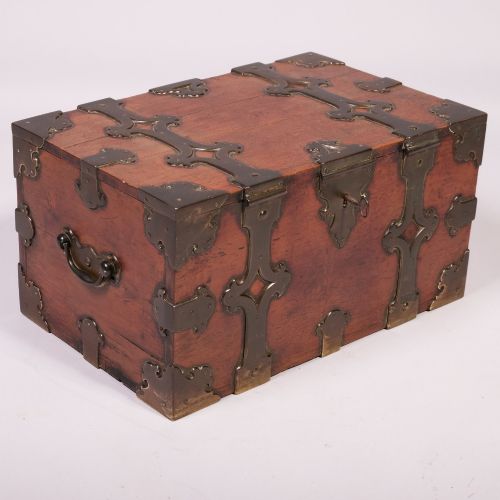
Metalworkers shaped brass and copper plates, corners, and straps to reinforce every joint and edge. These mounts were secured using pins or screws to protect the timber from heavy handling during transport.
Chinese Brass Mounted Box Retail Price Guide 2026
Typical asking prices for chinese brass mounted box among the pieces listed under this phrase on Sellingantiques today, from the lower quarter to the upper quarter. They describe what is for sale here now, not the wider market.
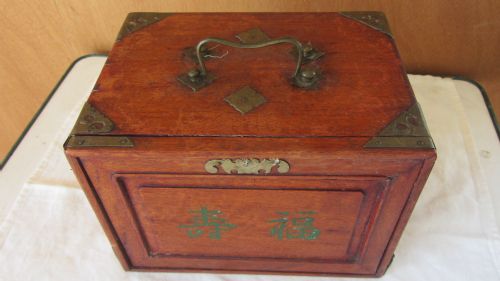
Shanghai mahjong sets from the 1920s bring unexpected game night flair to traditional brass-mounted storage collections.
What varies in quality
The standard of timber selection and preparation marks the difference between basic utility chests and finer pieces. Dense hardwoods and aromatic camphor wood provide better longevity and structural stability than softer woods.
The weight, thickness, and hand-finishing of the brass mounts distinguish finer examples. Crisp metalwork and well-fitted hinges indicate careful attention from the makers during assembly.
The Chinese Brass Mounted Box Glossary
- Camphor wood
- An aromatic timber traditionally chosen for chests and boxes because its scent repels insects. It is light yet sturdy, making it ideal for travelling trunks.
- Brass mount
- A metal corner piece, strap, or plate fastened to a box to protect vulnerable edges from impact. These mounts often feature engraved or hammered details.
- China trade
- Commerce between China and Western nations, particularly during the eighteenth and nineteenth centuries. Items made for this market frequently blend Eastern forms with Western utility.
- Lacquer
- A durable glossy finish applied in multiple layers to a wood surface. It provides moisture resistance and a smooth decorative appearance.
- Coffre fort
- A heavy strongbox or chest reinforced for secure storage of money or documents. These pieces rely on robust timber and extensive metal strapping.
Chinese Brass Mounted Box: Frequently Asked Questions
What were these boxes used for?
These boxes served as portable storage for merchants, officers, and travellers needing to protect personal belongings during long voyages. They held clothing, documents, jewellery, and gaming sets.
Larger chests accommodated blankets and heavy garments, while smaller caskets organised delicate items and precious specimens.
How do I date a Chinese wooden chest?
Dating relies on examining the timber types, construction methods, and hardware styles. Eighteenth-century examples often feature heavy joinery and simpler brass plates, while nineteenth-century pieces display refined corner mounts.
Twentieth-century items, including those from the Republic Period, sometimes incorporate specific finishes like black lacquer or red leather alongside distinct locking mechanisms.
Why is camphor wood common in these pieces?
Camphor wood naturally repels moths and silverfish, protecting stored textiles and papers in humid climates. Its distinct aroma made it the preferred material for blanket boxes and clothing trunks.
Workshop makers valued the timber for its stability and resistance to warping during maritime transport.
How should I care for a lacquered box?
Lacquered surfaces require gentle dusting with a soft, dry cloth to prevent scratching. Keep the box away from direct sunlight and extreme temperature fluctuations to avoid cracking the finish.
Avoid using harsh chemical polishes or water, as moisture can damage the aged lacquer layers.