
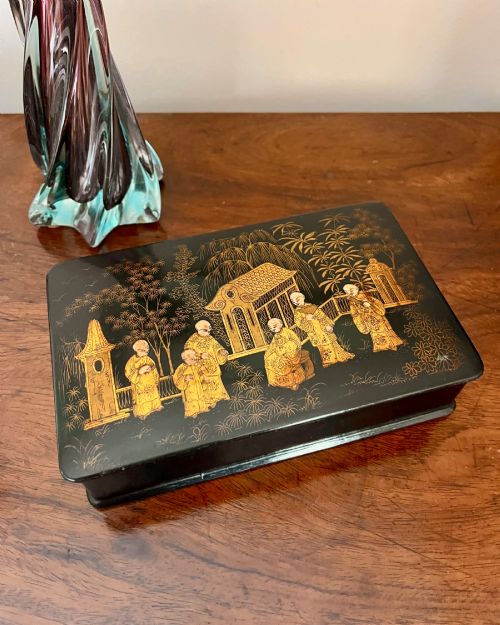
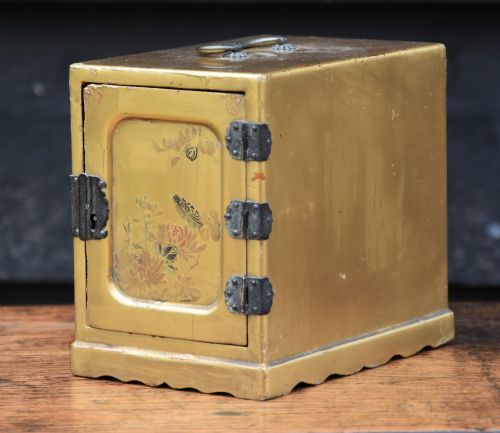


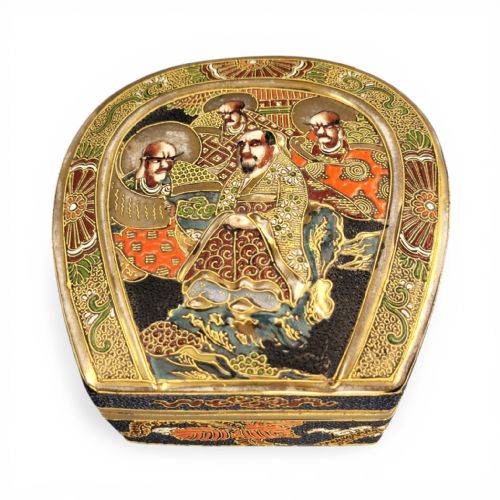
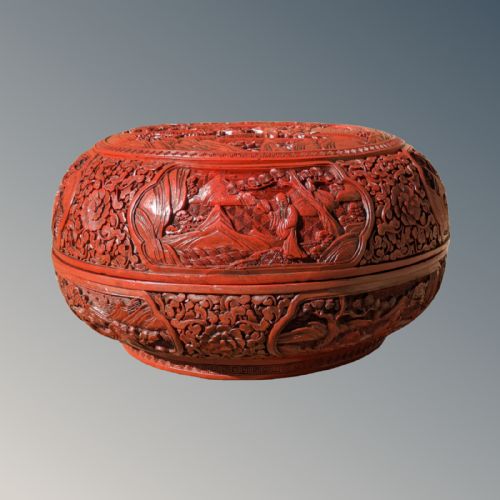


Oriental Trinket Box
An oriental trinket box holds small keepsakes while bringing lacquer, enamel, and carved wood into a room.
Oriental Trinket Box
An oriental trinket box encompasses small containers made across Asia and collected in Britain, taking the form of lidded boxes, jewellery caskets, and snuff boxes. When buyers search for an oriental trinket box, they encounter pieces ranging from Qing Dynasty lacquer to Edwardian Kashmiri painted containers.
Makers utilised regional materials such as hardwood, mother of pearl, and brass to create decorative vessels for domestic use. These objects reflect various traditions including Chinese export, Anglo-Indian craftsmanship, and Japanese lacquerwork.
How they were made
Craftsmen built these vessels using hardwood, lacquer, and metal, applying gold leaf, enamel, and mother of pearl for surface decoration. Lacquered pieces involve building multiple layers of sap on a wood base before carving or painting intricate designs.
Silver and brass boxes employ techniques such as repousse work, engraving, and casting, often featuring dragon motifs or floral patterns. Earthenware and porcelain boxes integrate painted glazes including famille rose and blue ground enamel.
Inlaid boxes combine wood structures with delicate pieces of mother of pearl or bone set precisely into the surface. Kashmiri boxes utilise painted wooden construction finished with protective coatings to highlight the detailed patterns.
Materials across these listings include wood, lacquer, gold leaf, enamel, brass, mother of pearl, hardwood, and silver.
What varies in quality
The standard of a box rests upon the precision of its carving, the stability of its lacquer layers, and the crispness of its metalwork details. Finer examples display deeply carved cinnabar lacquer or sharply defined silver dragon motifs without surface blurring.
Material selection divides standard containers from exceptional pieces, with heavy hardwoods, genuine silver, and complex cloisonne enamel commanding greater attention. The integration of mother of pearl inlay and hand-painted enamel decoration further distinguishes finer work.
Toshozan·Wang Hing & Co·Wang Hing & Company
The Oriental Trinket Box Glossary
- Cinnabar lacquer
- A technique where numerous coats of red lacquer are applied to a core before being carved with detailed motifs. This method requires considerable time and skill from the artisan.
- Cloisonne
- Enamelwork created by soldering wire compartments onto a metal base and filling them with coloured paste before firing. The resulting surface shows distinct coloured cells separated by thin metal lines.
- Chinese Export
- Goods manufactured in China specifically for Western markets, combining traditional Eastern techniques with European forms. These items often feature silver or porcelain materials.
- Meiji Period
- A Japanese era lasting from 1868 to 1912 noted for exceptional metalwork, lacquer, and ceramic production. Pieces from this time frequently demonstrate refined decorative arts.
- Famille Rose
- A palette of opaque rose-pink enamel used in Chinese porcelain decoration introduced during the Qing Dynasty. It allowed for subtle tonal gradations in painted floral and figural scenes.
Oriental Trinket Box: Frequently Asked Questions
What is an oriental trinket box used for?
These boxes served to hold small valuables, jewellery, snuff, or documents in domestic settings. Their decorative exteriors allowed them to sit openly on tables and desks.
Today they function as storage for modern keepsakes while adding historic character to a room.
How do I identify a Meiji period box?
Japanese Meiji period pieces often feature signature cloisonne enamel, gilt lacquer, or Satsuma earthenware construction. Look for detailed craftsmanship characteristic of late nineteenth century Japanese export art.
Work from this era frequently incorporates motifs like birds, flowers, and dragons.
What materials are common in these boxes?
Common materials include wood, lacquer, brass, silver, enamel, and mother of pearl. Artisans combined these substances to create contrasting textures and colours.
Hardwoods and layered lacquer form the structural base for many Asian decorative containers.
How do I care for antique lacquer boxes?
Keep lacquerware away from direct sunlight and extreme humidity fluctuations to prevent cracking or warping. Dust gently with a soft, dry cloth without applying modern chemical polishes.
Stable indoor environments help preserve the delicate surface finishes of antique boxes.