


Oriental Tray Top Table
An oriental tray top table brings distinct surface decoration and practical portability to a room.
Oriental Tray Top Table
When you search for an oriental tray top table, you encounter a versatile form designed for flexible use in domestic spaces. These pieces combine a removable tray surface with a supporting base, often folding for ease of storage.
The selections on this page span the 19th Century, Edwardian era, 1900, 1910, and 1930 periods. You will find coffee tables, side tables, and occasional tables shaped by Anglo-Indian, Chinoiserie, Regency Style, and Qing Dynasty influences.
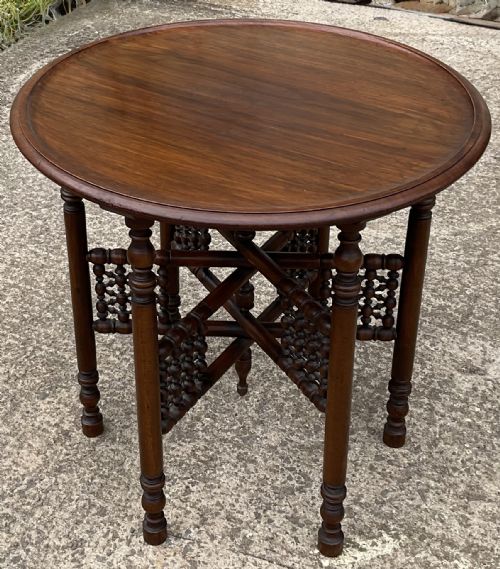
Materials vary from hardwood and lacquered wood to brass, copper, and papier-mâché. The forms range from circular designs to rectangular formats resting on folding bases.
How they were made
Construction relies on timber foundations such as mahogany, hongmu, and general hardwoods, frequently shaped to receive decorative finishes. Artisans applied lacquer, paint, and ebonising to create smooth display surfaces.
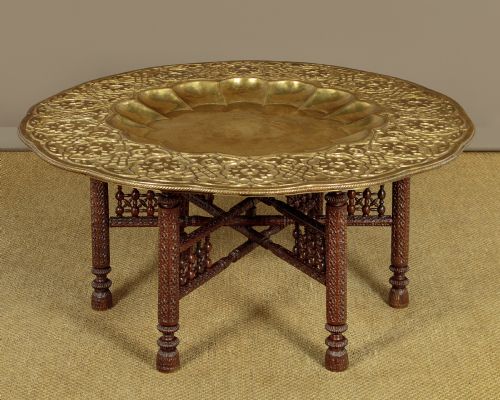
Metal elements play a central role, utilising brass and copper for raised tray tops or sheet metal inlays. Carving is evident in both wooden frames and metal surfaces, demonstrating skilled hand-tooling across the Qing Dynasty and Anglo-Indian examples.
Listings span the 19th Century, Edwardian period, and the early 20th century, utilising hardwood, brass, lacquer, and papier-mâché.
What varies in quality
Quality rests in the crispness of the hand-carved detail and the depth of the lacquer or painted finish. Pieces featuring intricate Chinoiserie motifs or substantial hardwood construction demonstrate greater artisanal investment.
The integration between the removable tray and its folding base dictates stability and balance in daily use. Finer examples maintain structural integrity alongside well-preserved surface ornamentation across brass, copper, and papier-mâché.
The Oriental Tray Top Table Glossary
- Tray top table
- A movable tabletop set upon a folding or fixed base. This design allows the surface to serve double duty for serving and display.
- Chinoiserie
- European interpretation of Chinese and East Asian artistic traditions. It appears frequently in painted and lacquered furniture from the 19th Century and Edwardian periods.
- Hongmu
- A dense, heavy Chinese hardwood often utilised for traditional furniture. It provides durability and a rich dark tone.
- Papier-mâché
- A composite material made from paper pulp mixed with adhesive, then moulded and lacquered. It offers a smooth, lightweight base for decorative painting.
- Anglo-Indian
- Design style combining British form with Indian craftsmanship and motifs. This often includes intricate brass or copper work applied to timber bases.
Oriental Tray Top Table: Frequently Asked Questions
What is an oriental tray top table?
These items consist of a detachable tray resting on a collapsible or fixed stand. They function as adaptable furniture pieces for serving or display.
The form accommodates diverse aesthetic traditions, incorporating British, Indian, and Chinese stylistic elements across various historical periods.
How were these tables used originally?
Owners used the removable trays to serve refreshments and carried them between rooms as needed. The folding bases allowed convenient storage when floor space was required.
Over time, many of these trays found permanent placement on stands to function as regular coffee or side tables.
How do I identify an Edwardian Chinoiserie piece?
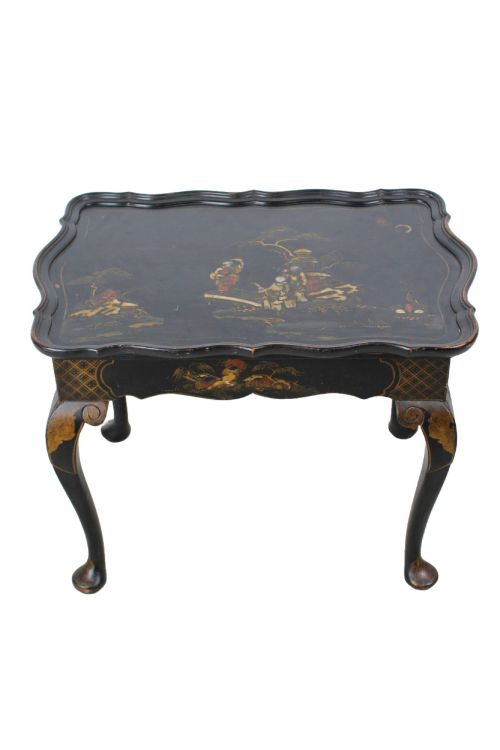
Edwardian examples often feature painted lacquer surfaces decorated with oriental motifs. These pieces typically combine light proportions with dark ebonised timber or lacquered wood.
Stylistic markers include distinct landscape or figurative scenes rendered in gilt or contrasting colours upon the tray surface.
What materials should I expect to find?
Construction materials range from traditional hardwoods like mahogany and hongmu to ebonised timber and papier-mâché. Metal surfaces in brass and copper also appear frequently.
Finishes include applied lacquer, paint, and gilt highlights that define the visual character of each piece.
How do I care for a lacquered or metal tray table?
Dust surfaces gently with a soft, dry cloth to protect delicate lacquer and painted finishes. Avoid excessive moisture and direct heat sources that might crack the wood or metal.
Treat brass and copper components with appropriate metal care if polishing is necessary, preserving any patination accumulated over time.