


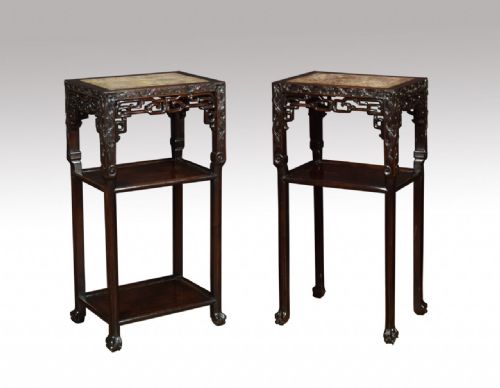
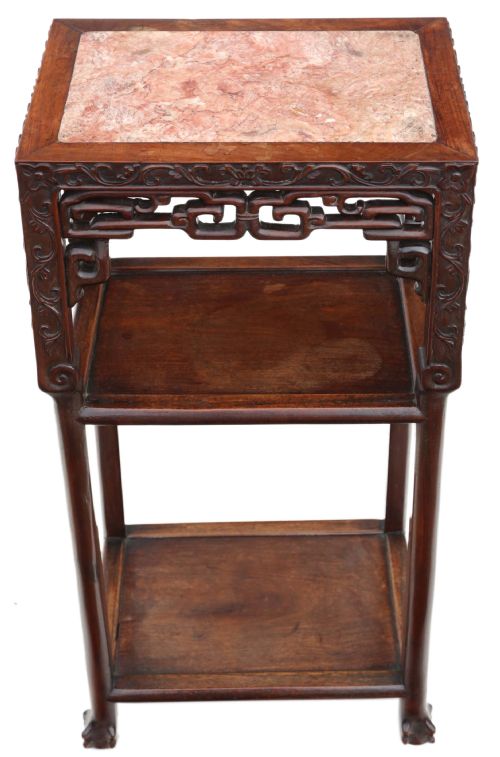
Oriental Tiered Display Stand
An oriental tiered display stand gives a room vertical interest and a dedicated stage for ceramics and small treasures.
Oriental Tiered Display Stand
When you search for an oriental tiered display stand, you encounter a variety of multi-level furniture designed to exhibit decorative objects. The pieces found here span the Victorian and Edwardian eras back into the nineteenth century, including the Qing Dynasty period.
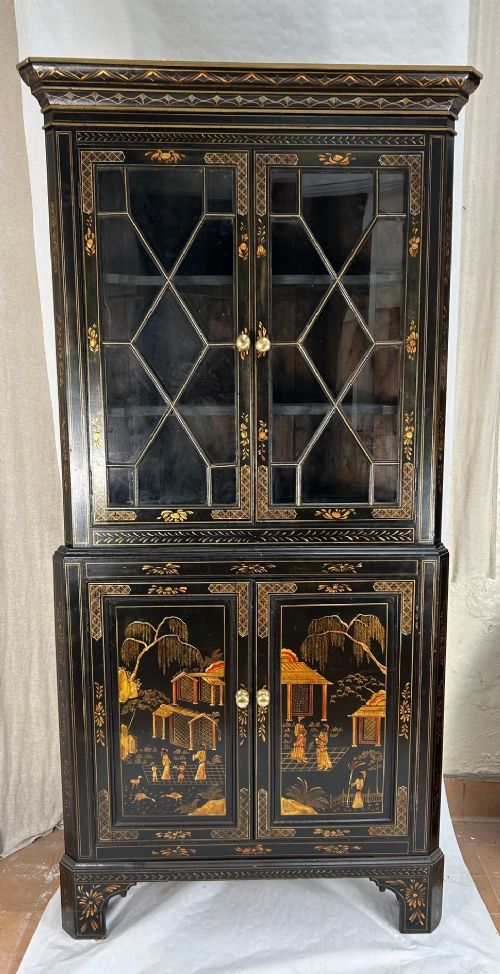
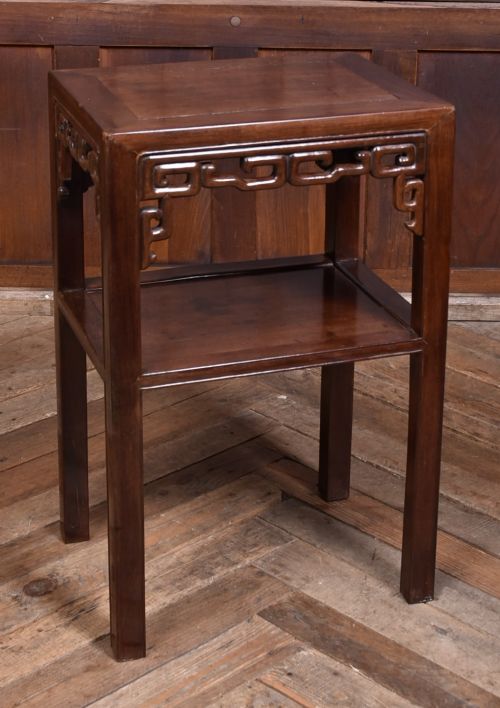
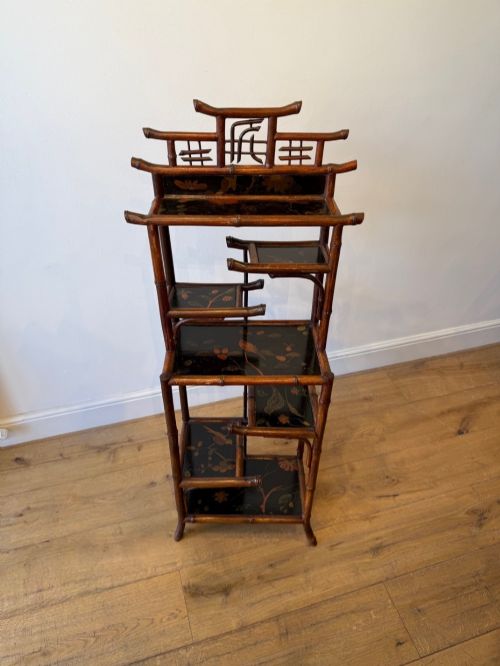
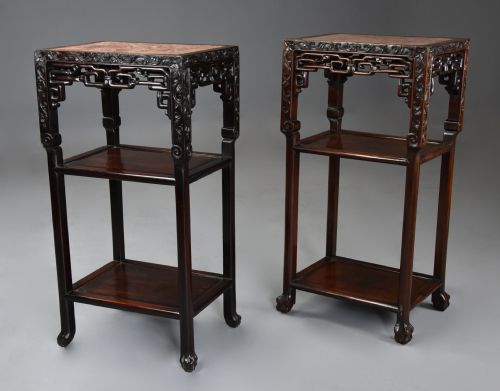
Forms on this page range from Chinese hardwood pot stands and two-tier occasional tables to bamboo display shelves and corner cupboards. You meet rectangular tables and pedestals featuring multiple tiers, alongside Japanese plant stands.
The origins lean heavily towards Chinese export and traditional designs, with occasional British interpretations in the Chinoiserie, Arts and Crafts, and Japonisme styles. These stands function primarily as display furniture for urns, vases, and plants.
How they were made
Makers utilised dense timbers such as hardwood, rosewood, hongmu, teak, and bamboo to construct these stands. Many nineteenth-century examples incorporate inset marble panels on their top surfaces to provide a durable and cool stage for heavy ceramic vessels.
Carving is a defining technique across the Chinese pieces, with intricate floral and geometric motifs worked directly into the hardwood frame. Lacquer and hand-carved elements also appear on bamboo and wood structures, reflecting both traditional workshops and later European adaptations.
Listings feature pieces spanning the nineteenth century, including the Victorian and Edwardian eras, alongside Qing Dynasty examples.
What varies in quality
The standard of carving and the density of the timber determine the upper tier of these stands. Heavy, dense woods like hongmu and rosewood with deeply undercut, crisp carving sit above lighter or softer timber constructions.
The integrity of the joinery and the matching of the grain across multiple tiers dictate the overall refinement of the piece. Superior examples maintain structural rigidity across their various levels without relying on heavy modern fasteners.
Liberty of London·Gabriel Viardot
The Oriental Tiered Display Stand Glossary
- Hongmu
- A dense, dark tropical hardwood traditionally used in Chinese furniture making. It is prized for its weight and ability to hold fine, sharp carved details.
- Japonisme
- A late nineteenth-century Western artistic movement influenced by Japanese art and design. It appears in European furniture that adopts Eastern structural motifs and asymmetry.
- Jardiniere stand
- A tall piece of furniture designed specifically to hold a large plant pot or flower bowl. These often feature marble inserts to protect the wood from moisture.
- Whatnot
- A piece of open shelving with multiple tiers used for displaying ornaments. They became particularly popular during the Victorian period for parlour rooms.
- Chinoiserie
- The European interpretation and imitation of Chinese artistic traditions and motifs. Makers applied this style to furniture and decor throughout the eighteenth and nineteenth centuries.
Oriental Tiered Display Stand: Frequently Asked Questions
How were these stands used originally?
These pieces served to elevate prized decorative objects, urns, and plants within the nineteenth-century home. Their multiple tiers allowed homeowners to display varied collections of ceramics and curiosities in a compact footprint.
In reception rooms and parlours, they created focal points by breaking up flat wall lines with varied heights. The sturdy marble or wood tops safely accommodated heavy vases and jardiniere pots.
How do I distinguish Chinese export from European Chinoiserie?
Chinese export pieces generally utilise traditional native hardwoods like hongmu and rosewood, featuring joinery techniques specific to Eastern workshops. The carving style aligns directly with Qing Dynasty conventions.
European Chinoiserie and Japonisme pieces typically employ local timbers or bamboo, reinterpreting Asian forms through a Victorian or Edwardian lens. Attribution to makers like Gabriel Viardot or retailers like Liberty of London points to Western production.
Where should I place a tiered stand in my home?
A corner cupboard or multi-tier shelf fits well in dead corners of a room where it can hold small sculptures or trailing plants. Smaller occasional tables and pot stands work effectively beside seating or beneath windows.
Ensure the piece sits on a level floor, particularly when dealing with heavy marble-topped variants. Keep them away from direct heat sources to protect nineteenth-century wood and lacquer surfaces from drying out.