


Oriental Tall Side Tables
Oriental tall side tables bring striking elevation and rich timber grain to an interior, serving practical display roles with distinct presence.
Oriental Tall Side Tables
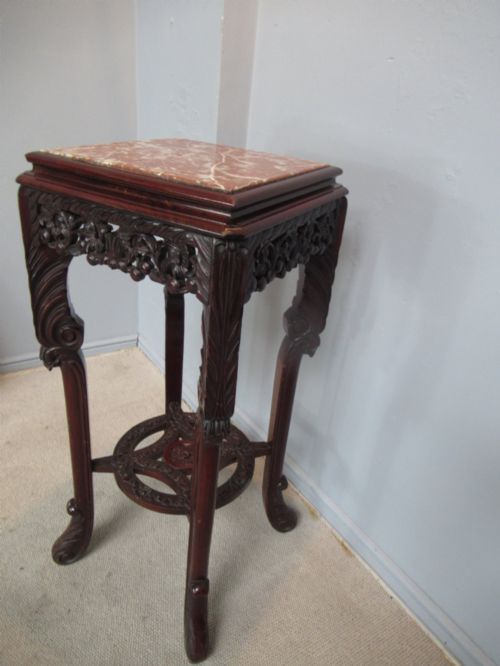
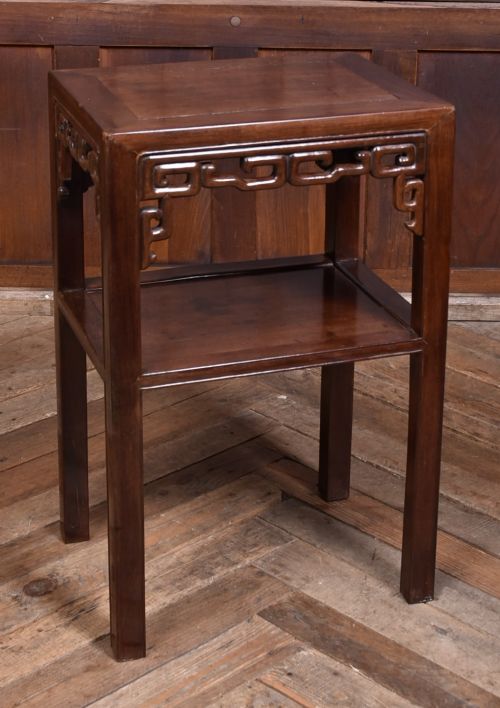
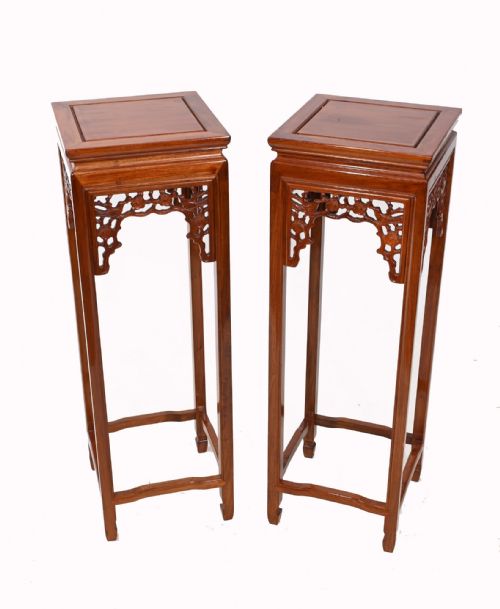
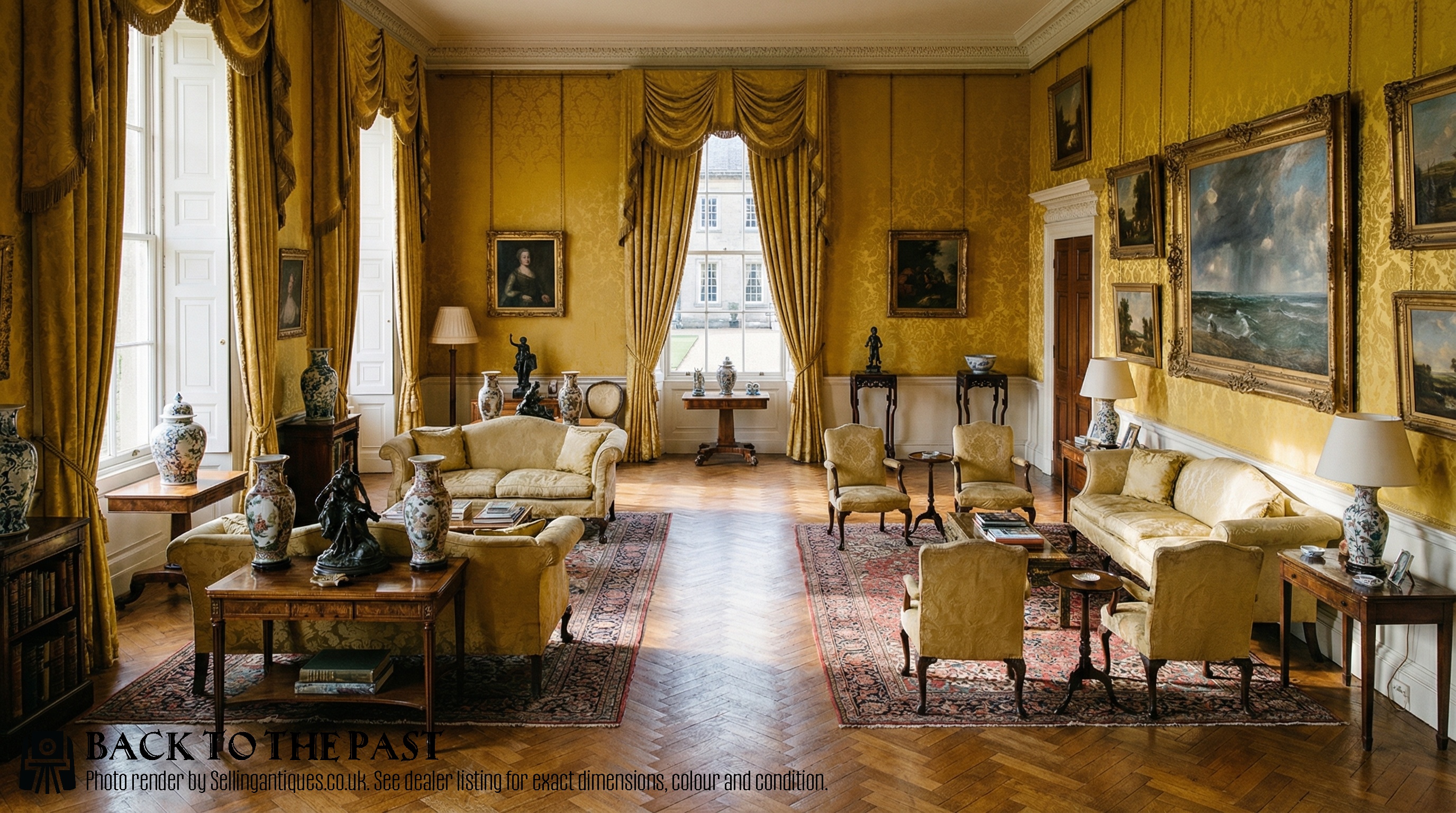
Oriental tall side tables encompass elevated display surfaces, plant stands, vase stands, and pedestal tables originating from Asian design traditions, frequently associated with Qing Dynasty aesthetics and Chinese traditional craftsmanship. These pieces function primarily to raise decorative objects, lamps, or floral arrangements to a more prominent viewing height within a room.
Buyers browsing oriental tall side tables will most frequently encounter nineteenth-century examples fashioned from dense timbers such as elm and huali hardwood, often featuring inset marble tops or intricate hand-carved ornamentation. Forms range from single-tier plant stands to two-tier lamp tables and pairs designed for balanced interior placement.
The material vocabulary of these tall tables relies heavily on substantial woods, occasional ebonising, lacquer finishes, and gold leaf highlights, reflecting both traditional Chinese craftsmanship and later nineteenth-century adaptations for Western interiors by firms such as Liberty of London.
How they were made
Makers constructed these tall tables using dense hardwoods, notably elm and huali, which provided the structural rigidity necessary for slender, elevated forms. Timber frames were frequently joined with precision woodworking techniques to support heavy inset marble panels without warping.
Surface finishes involved skilled application of lacquer, ebonisation, and gold leaf details to enhance the decorative impact of the carved wooden structures. Hand-carving was employed extensively to shape floral motifs, pierced aprons, and cabriole or straight supports characteristic of Chinese traditional and Qing Dynasty styles.
One recorded plant stand bears the touch of Liberty of London, proving Victorian shoppers loved an exotic corner just as much as we do.
What varies in quality
Quality in these tall tables is defined by the density and choice of hardwood, where superior pieces utilise fine-grained timbers like huali rather than simpler domestic woods. The crispness and depth of the hand-carving also separate ordinary production from exceptional examples, as skilled artisans achieved cleaner lines and more refined relief work.
The integration of inset marble tops demonstrates superior stone selection and precise joinery that accommodates natural wood movement without compromising the stability of the surface. Furthermore, historical provenance, such as documentation linking a piece to makers like Liberty of London, elevates the standing of an antique stand.
The Oriental Tall Side Tables Glossary
- Huali
- A fragrant and dense Chinese hardwood prized for its rich grain and durability in antique furniture. Cabinetmakers utilised this timber for high-status vases stands and display tables.
- Ebonised wood
- Timber treated with chemical stains, paints, or shellac to imitate the deep black appearance of ebony. This technique was popular in nineteenth-century decorative pieces.
- Pedestal stand
- A tall, narrow support designed to elevate an individual object such as a vase, urn, or lamp. These stands emphasise verticality and compact floor footprints.
- Qing Dynasty style
- Furniture aesthetics drawing upon the design vocabulary of China's final imperial dynasty, spanning the seventeenth to early twentieth centuries. It is characterised by elaborate carving and formal symmetry.
Oriental Tall Side Tables: Frequently Asked Questions
What were oriental tall side tables used for?
These tall tables functioned historically to elevate important decorative objects, porcelain vases, and potted plants within domestic spaces. By raising items off the floor, they drew the eye upward and protected fragile ceramics from accidental damage.
In contemporary settings, they serve identical display purposes while functioning effectively as narrow lamp tables or sculptural accent pieces in hallways and corners.
How do I identify a nineteenth-century piece?
Nineteenth-century examples typically display heavy, dense hardwoods like elm or huali alongside traditional hand-carved joinery methods. Examination of the timber undersides and the fit of inset marble panels often reveals age-appropriate wear and construction techniques.
Stylistic markers such as Qing Dynasty carving patterns and authentic nineteenth-century lacquer or ebonising further distinguish these antiques from later reproductions.
Are these tables sturdy enough for lamps?
Most of these tall stands were engineered to support heavy porcelain vases, making them inherently stable for modern table lamps. Their weighted bases and solid hardwood construction provide reliable support for vertical loads.
When positioning a lamp, ensure the cord is managed neatly down the slender frame to maintain the clean silhouette of the antique.