
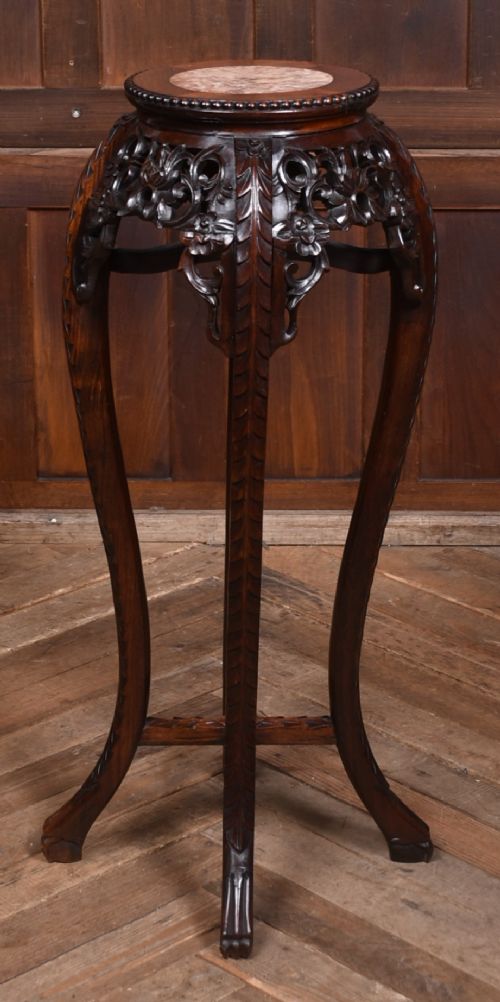


Chinese Incense Table
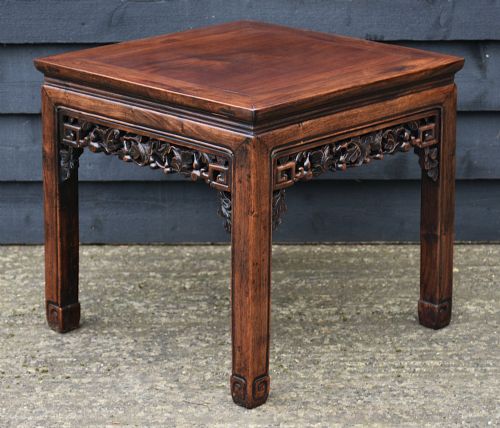
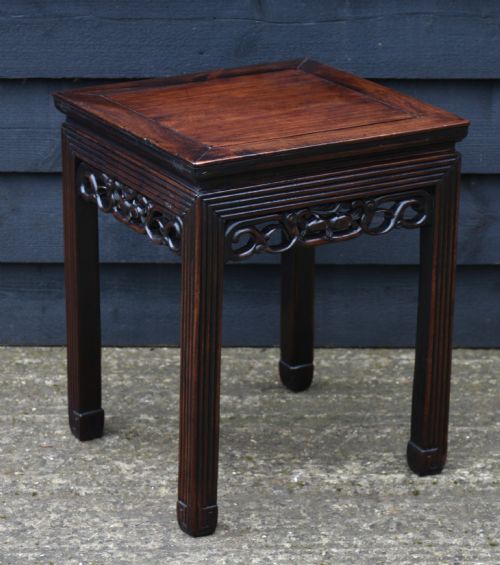
These Chinese incense table pieces bring carved rosewood and marble into a room as low tables, stands, and censers.
Chinese Incense Table
A Chinese incense table serves as a low surface, plant stand, or pedestal designed to hold decorative objects and ritual items. When searching for a chinese incense table, buyers encounter nineteenth century low tables, plant stands, and occasional tables.
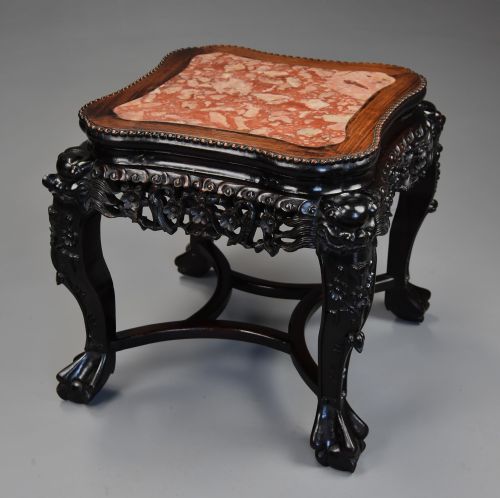
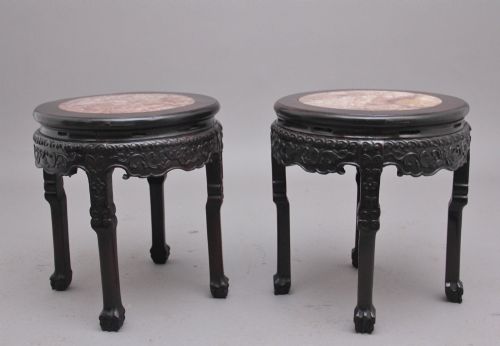
The forms span square low tables, pot stands, and end tables originating from the Qing dynasty and Victorian periods. Most examples on this page are carved hardwood pieces featuring inset marble tops or dish tops.
Construction and Materials
Workshops utilised dense woods such as rosewood and huali hardwood to build these tables and stands. Artisans carved the timber frames and fitted them with inset marble tops or porcelain elements.
The construction relies on traditional joinery methods suited to heavy tropical hardwoods. Cobalt blue glaze and porcelain also appear among the ritual vessels associated with these furnishings.
Listings span the seventeenth to the twentieth century, combining hardwood stands with porcelain censers and marble inserts.
Evaluating Quality
The distinction between tiers rests upon the crispness of the wood carving and the selection of the timber. Dense huali wood and well figured rosewood indicate higher grade examples.
The integration of the marble insert and the balance of the proportions determine the success of the piece. Superior specimens display sharp detailing in the Qing Dynasty carved motifs without looseness in the frame.
The Chinese Incense Table Glossary
- Huali Wood
- A fragrant and durable hardwood utilised in traditional Chinese furniture making. It displays distinct grain patterns and takes a fine carved finish.
- Censer
- A vessel designed for burning incense during ritual or domestic use. Examples include tripod forms decorated with cobalt blue glaze.
- Qing Dynasty
- The imperial dynasty of China spanning from sixteen forty four to nineteen twelve. Many carved hardwood stands date from the late nineteenth century of this era.
Chinese Incense Table: Frequently Asked Questions
What is a Chinese incense table used for?
These pieces function primarily as low tables, plant stands, and pedestals for display purposes within an interior.
Historically, specific forms held incense burners and ritual vessels, while domestic versions supported vases and decorative objects.
How do I date a Chinese hardwood table?
Dating relies on stylistic markers associated with the Qing dynasty and the Victorian period, typically pointing to the nineteenth or early twentieth century.
The tool marks, timber selection, and integration of marble inserts help differentiate nineteenth century production from later pieces.
What wood are these tables made from?
The primary timbers recorded are rosewood and huali hardwood, both chosen for their density and rich colour.
These heavy tropical woods allowed artisans to carve intricate decorative motifs that remain stable over centuries.
Are marble top stands traditional?
Marble inset tops appear frequently on nineteenth century pot stands and low tables from China.
This technique provided a cool, smooth surface that contrasted with the carved dark hardwood frames.