






Oriental Style Accent Table
An oriental style accent table brings distinct decorative pattern and form into a room, drawing on traditions from China, Japan and India.
Oriental Style Accent Table
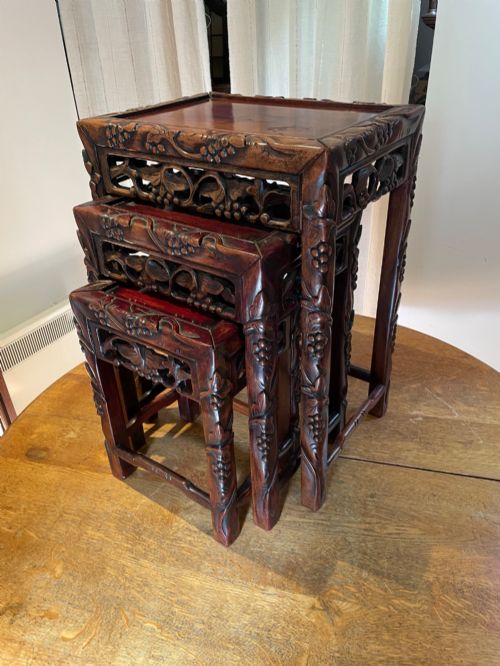
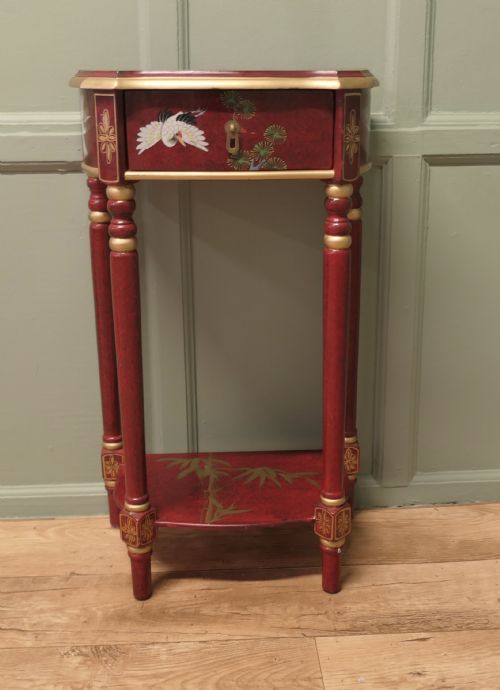
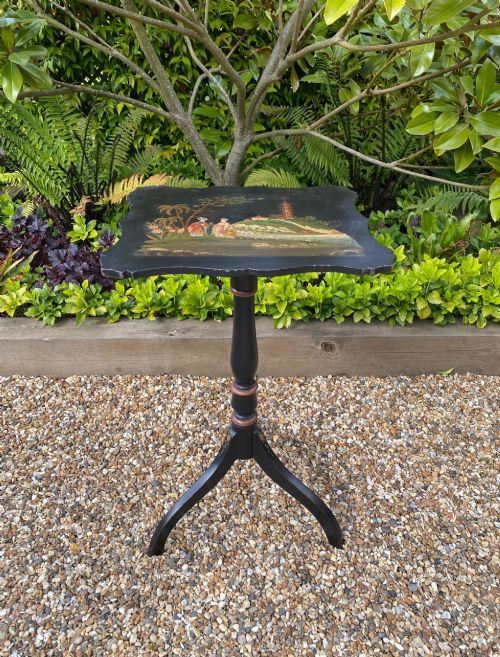
An oriental style accent table encompasses forms such as side tables, occasional tables, coffee tables, nests of tables, plant stands and jardiniere stands. Pieces span periods from the nineteenth century through the Edwardian era, alongside decades like 1900, 1910, 1920 and 1930. Victorian and Edwardian examples sit alongside pieces from the Meiji period and Chinese export traditions.
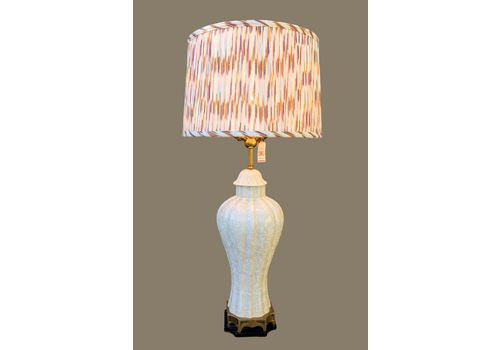
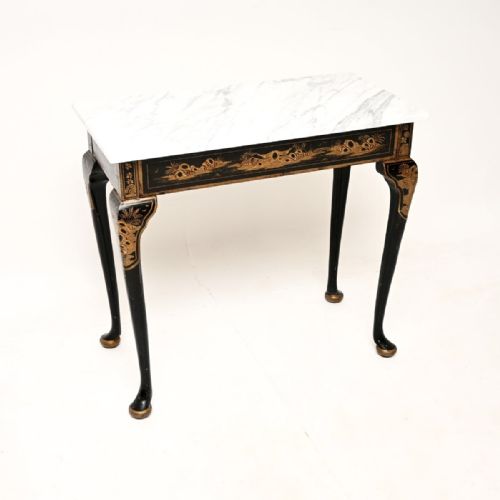
The selection ranges from lowboy and side table forms to multi-tiered stands and nesting sets. Buyers frequently encounter side tables and occasional tables finished with lacquer, marble tops or intricate carving. These surfaces function effectively as lamp tables or display stands within domestic interiors.
Materials and Construction
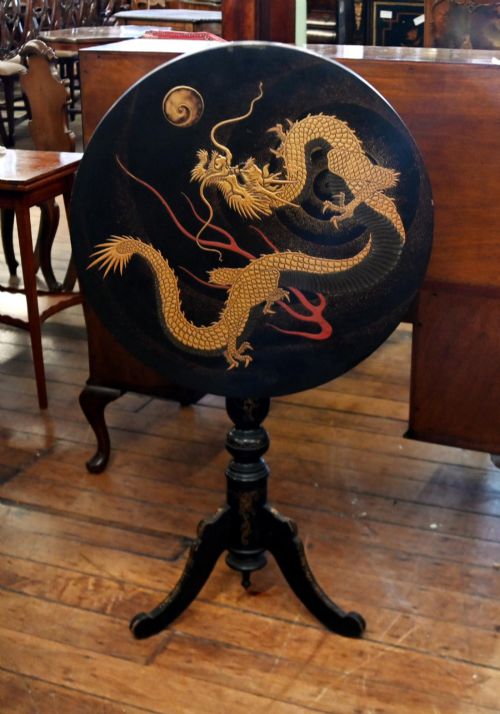
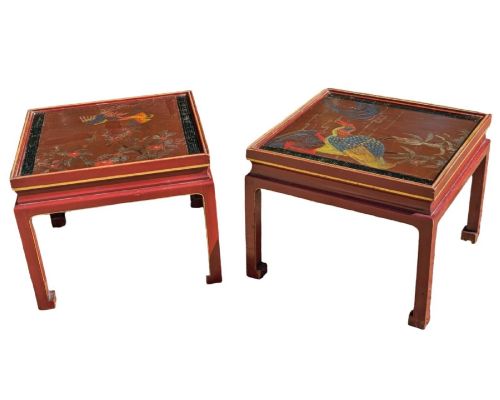
Construction relies heavily on hardwoods, wood, rosewood and elm, forming solid structural frames for tables and stands. Artisans applied black and gold lacquer, hand-painted decoration and Japanning to create glossy, decorative surfaces. Bamboo also appears in supporting frames.
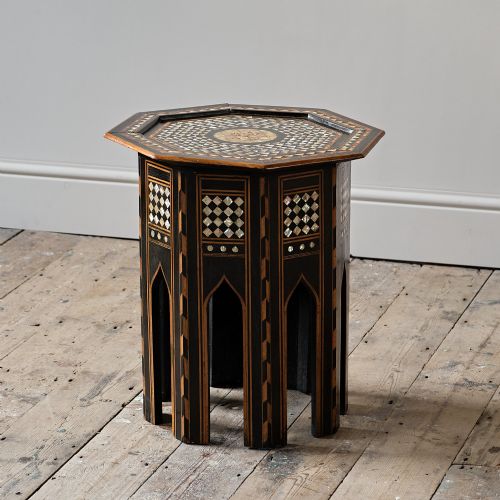
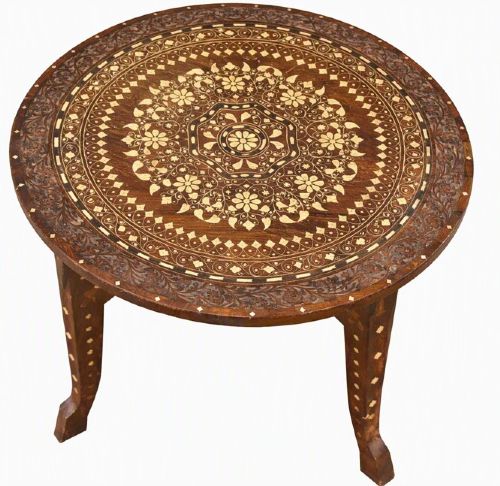
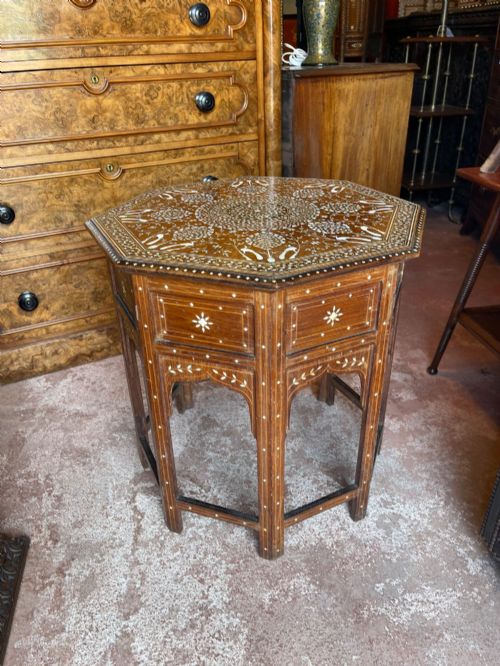
Surface ornamentation incorporates diverse materials including marble inserts, brass fittings, mother-of-pearl inlay and bone inlay. Anglo-Indian and Moorish pieces utilise deep carving techniques, while other examples employ cloisonné and bronze details.
Oriental Style Accent Table Retail Price Guide 2026
Typical asking prices for oriental style accent table among the pieces listed under this phrase on Sellingantiques today, from the lower quarter to the upper quarter. They describe what is for sale here now, not the wider market.
Mandarin orange tables brighten corners where ordinary brown wood fears to tread.
Judging Quality
Quality rests upon the precision of the hand-carving and the stability of the timber joints across the frame. Crisp detail in bone or mother-of-pearl inlay distinguishes finer pieces from simpler commercial output.
The durability of lacquer finishes and the tight fit of marble inserts indicate workshop competence. Pieces bearing maker or retailer attribution demonstrate documented provenance.
Liberty & Co·Gabriel Viardot
The Oriental Style Accent Table Glossary
- Chinoiserie
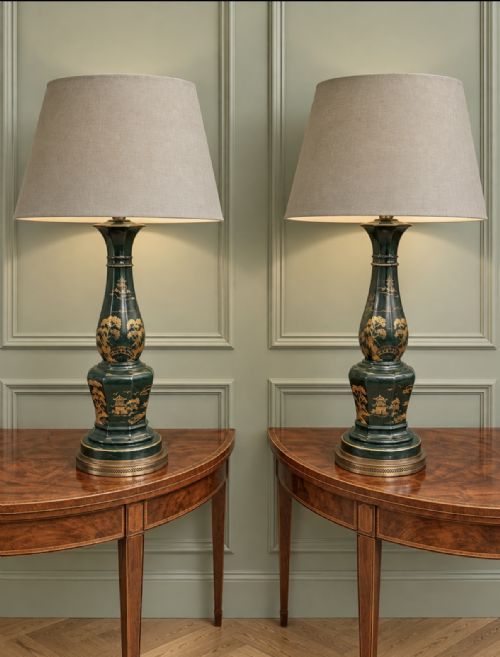
- European decorative style imitating Chinese artistic traditions. It appears frequently on lacquered tables and lamp bases.
- Japonisme
- European adoption of Japanese artistic motifs and design principles popular in the late nineteenth century. This influence appears in distinct forms and decorative schemes.
- Cloisonne
- Enamelling technique using metal wire compartments soldered to a base. It decorates specific side tables and panels.
- Japanning
- European imitation of East London and Asian lacquer work using heat-dried varnish. It produces a hard, glossy black or coloured surface.
Oriental Style Accent Table: Frequently Asked Questions
What is an oriental style accent table used for?
These tables function primarily as occasional furniture to hold lamps, plants or decorative objects in a living space.
Smaller formats like nesting tables or plant stands offer flexible placement options around a room.
How do I identify a chinoiserie table?
Chinoiserie tables feature hand-painted or lacquered motifs depicting figures, landscapes or floral designs inspired by Asian art.
They commonly use black or coloured lacquer backgrounds enriched with gilt decoration.
What materials are common in these tables?
Common materials include hardwoods such as rosewood and elm, supplemented by decorative elements like marble tops and brass.
Inlay work often incorporates mother-of-pearl or bone set into wood or lacquer surfaces.
How do I date an antique oriental accent table?
Dating relies on construction methods, timber choice, stylistic cues and period attribution ranging from Victorian and Edwardian eras to the early twentieth century.
Specific design movements like Japonisme or Moorish Revival help narrow the era of production.