
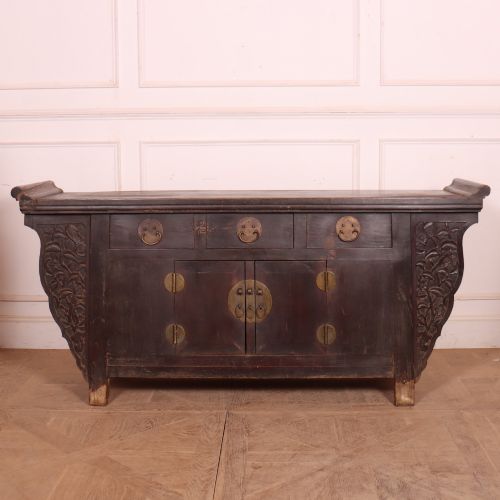
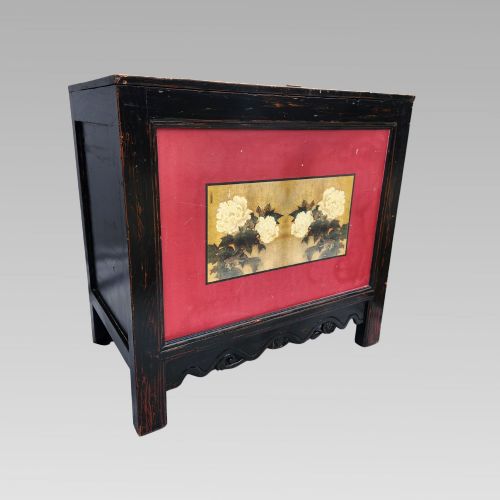


Oriental Storage Blanket Box
An oriental storage blanket box brings together practical capacity and hand-carved surfaces, offering a robust home for textiles with distinct regional character.
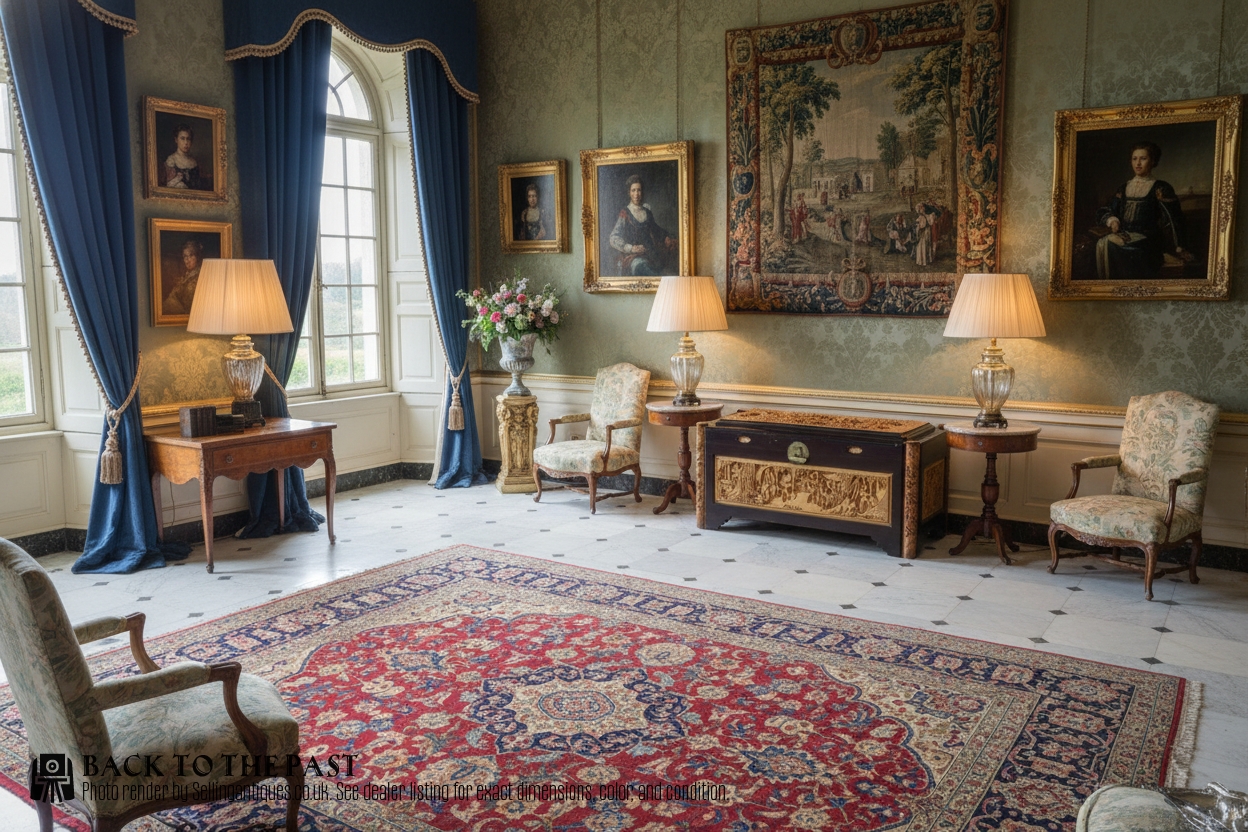
Oriental Storage Blanket Box
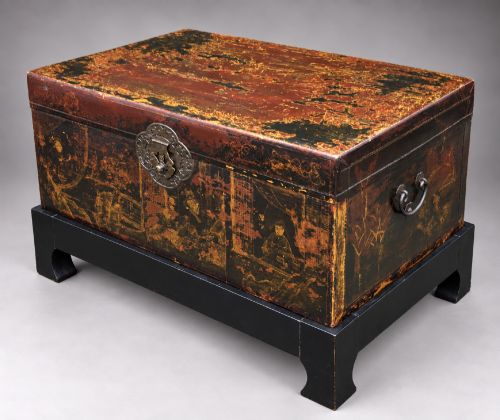
When you search for an oriental storage blanket box, you encounter heavy chests and coffers designed for travel or domestic storage across centuries. These pieces appear frequently in camphor wood, teak, and rosewood, often taking the form of campaign trunks or trade chests from Chinese and Indian workshops.
The selection ranges from eighteenth-century export coffers to early twentieth-century camphor trunks and art deco examples. Most examples on this page serve as large blanket boxes, luggage chests, or low coffee tables within contemporary interiors.
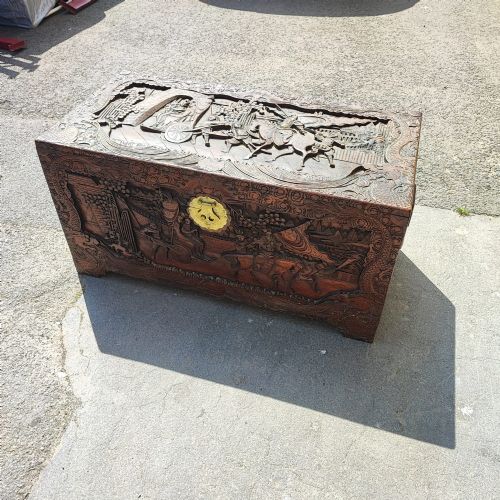
Makers utilised resilient timbers to protect contents from insects and humidity during long maritime journeys. You will find both plain brass-bound campaign boxes and heavily carved surfaces depicting traditional motifs.
Materials and construction methods
Makers relied heavily on camphor wood for its aromatic qualities and natural insect-repellent properties, alongside dense hardwoods such as teak, rosewood, and general hardwood. These timbers were joined with sturdy corner brackets and protected by brass hardware, iron fittings, or leather coverings.
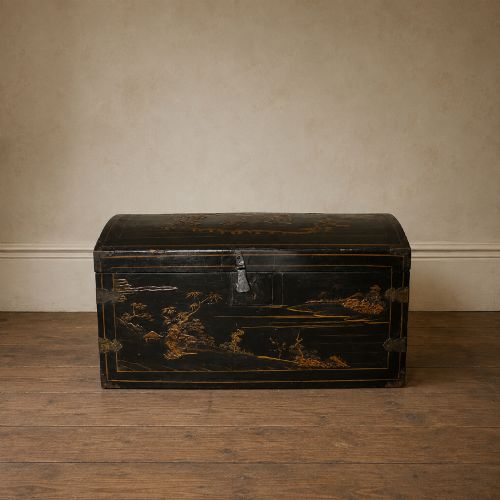
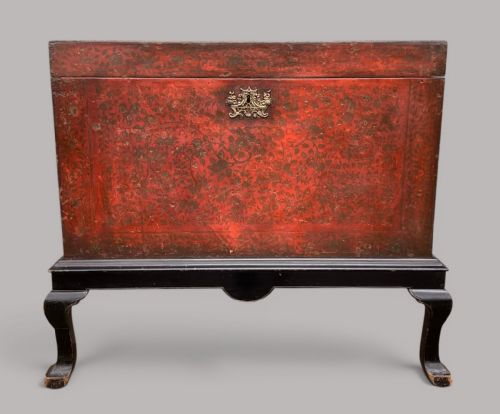
Surface decoration involved intricate hand-carving directly into the wood, black and red lacquer finishes with gilt or polychrome painted details, and Chinoiserie artwork. Many nineteenth-century export trunks also incorporated leather wrapping secured with rows of brass studs.
Many a Victorian sea captain kept his spare socks in a box that now holds someone's Netflix boxsets.
Evaluating craftsmanship and condition
The standard of an oriental storage blanket box rests on the crispness of the hand-carving and the integrity of the timber joints. Superior examples display deep, deliberate relief work rather than shallow, mechanical incisions.
Hardware execution dictates the grade of a trunk, with heavy original brass straps, handles, and lock plates distinguishing better workshops. The preservation of original lacquer, leather, and polychrome painted surfaces further elevates the standing of a piece.
The Oriental Storage Blanket Box Glossary
- Camphor Wood
- A fragrant, insect-resistant timber favoured for blanket chests and trunks because it protects stored textiles.
- Campaign Trunk
- A portable chest built in sections with recessed brass handles and corner brackets for military transport.
- Coffer
- A deep chest with a hinged lid, traditionally used for storing valuables, linens, and documents.
- Chinoiserie
- European decorative art imitating Chinese artistic styles, frequently applied to lacquered furniture and storage boxes.
- Zanzibar Chest
- A heavily brass-studded hardwood chest originating from India and the East African coast.
Oriental Storage Blanket Box: Frequently Asked Questions
How do I care for a camphor wood chest?
Keep the wood nourished with a suitable natural wax and avoid placing the trunk near direct heat sources that might split the timber.
Ensure the interior remains unsealed so the natural fragrance continues to protect textiles stored inside.
Can I use a storage trunk as a coffee table?
Many people place a flat-topped chest in the centre of a room to serve as both a surface for books and a hidden storage compartment.
Ensure the lid is sturdy and stable enough to support everyday items without tilting.
How do I date an antique Chinese chest?
Examine the construction methods, the type of hardware utilised, and the style of the surface lacquer or carving.
Eighteenth-century pieces typically show simpler, heavier proportions, while nineteenth and twentieth-century examples incorporate campaign brass or detailed floral motifs.
Why do these chests smell strongly of camphor?
Camphor wood naturally secretes aromatic oils that deter moths and silverfish, making it the ideal traditional material for linen storage.
This scent remains embedded in the timber fibres and revives slightly when the inside of the box is wiped or sanded.