


Oriental Relief Carved Pot
An oriental relief carved pot brings sculptural depth into a room through dense, tactile carving in wood, bamboo or metal.
Oriental Relief Carved Pot
An oriental relief carved pot encompasses utilitarian vessels transformed into decorative centerpieces through meticulous surface carving. The selection spans brush pots, jardinières, planters and vases originating from Chinese and Japanese workshops.
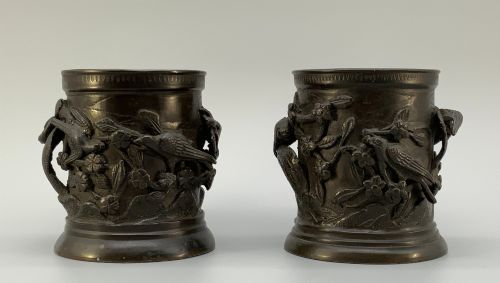
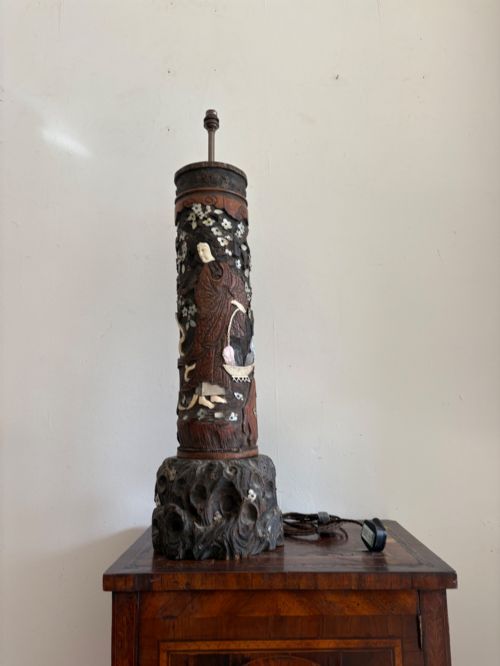
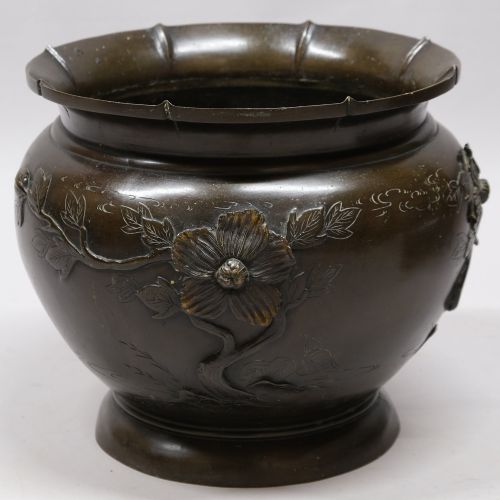
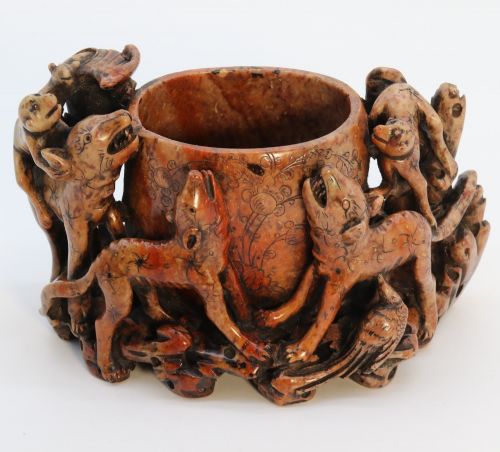
Brush pots and desk accessories dominate the smaller forms, often rendered in bamboo or soapstone with scholarly motifs. Larger vessels typically take the form of bronze jardinières and planters cast and chased with botanical or avian scenes.
The aesthetic bridges several distinct eras, drawing heavily on the Meiji period, Qing dynasty and Victorian importing tastes. Buyers encounter both Japanese bronze vessels and Chinese bamboo cylinders designed for scholar's studios.
Assessing the craftsmanship
Depth and undercut work separate ambitious carving from flat surface scoring. In bamboo and wood, the finest pieces show multiple layers of relief where figures and foliage recede into deep shadow without brittle snapping.
Metal vessels reveal quality through the crispness of the chased lines and the uniformity of the bronze casting. Heavy gauge bronze with integrated handles and clean interior walls signifies a more substantial workshop output than thin, hollow castings.
The Oriental Relief Carved Pot Glossary
- Jardiniere
- A large decorative pot or stand designed to hold plants and flowers. These vessels often sit on heavy tables or directly on the floor in nineteenth-century interiors.
- Brush pot
- A cylindrical container used in traditional studies to hold writing brushes. They are frequently carved from bamboo, wood or soapstone with scholarly scenes.
- Meiji Period
- The era of Japanese history lasting from 1868 to 1912. Metalwork and decorative arts from this time achieved worldwide renown for technical mastery.
- Qing Dynasty
- The final imperial dynasty of China, ruling from 1644 until 1912. Works from this period display refined carving traditions and sophisticated bronzework.
- Patinated Bronze
- Bronze metal treated with chemical solutions to produce a specific surface colour. This process enhances the visibility of relief decoration.
Oriental Relief Carved Pot: Frequently Asked Questions
What is an oriental relief carved pot used for?
These vessels serve primarily as decorative objects, holding floral displays, houseplants or writing implements. Many function as standalone sculptural accents on desks, mantelpieces and side tables.
In historical settings, bamboo brush pots populated scholar's desks while bronze jardinières housed ferns in Victorian parlours. Today, they bring organic texture and historical weight into modern interiors.
How do I identify a Meiji period bronze?
Meiji period bronzes typically exhibit dense, naturalistic motifs such as birds, blossoms and dragons rendered in high relief. The casting is often heavy and accompanied by deliberate patination.
Look closely at the chasing around the rim and base for hand-finished detailing. Japanese metalworkers of this era achieved exceptional precision in their surface textures.
Are bamboo brush pots fragile?
Bamboo is a robust natural material, but dried historical pieces can split if exposed to extreme humidity changes or direct heat sources. Gentle handling preserves the delicate undercut carving.
Dusting with a soft brush keeps the carved recesses clean without abrading the surface grain. Keeping them away from radiators ensures the bamboo remains stable.