


Antique Bitong Brush Pot
An antique bitong brush pot brings scholarly discipline to a desk through cylindrical form and carved depth.
Antique Bitong Brush Pot
An antique bitong brush pot serves as a cylindrical vessel designed to hold writing brushes within the scholar's studio. These objects emerge primarily from the Qing Dynasty and the Japanese Meiji Period, reflecting centuries of scholarly tradition.
How they were made
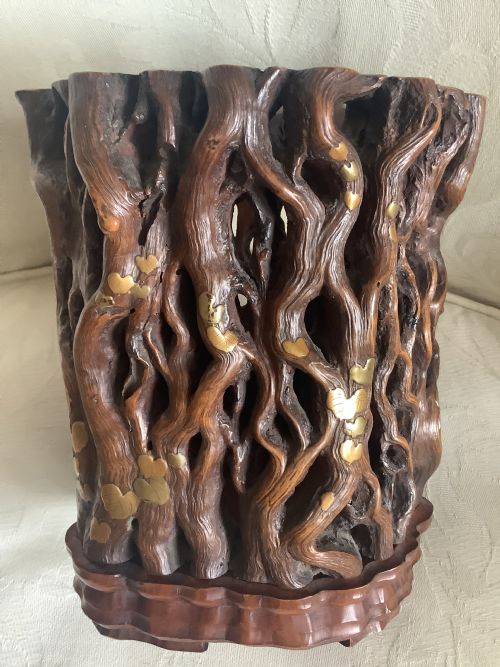
Carvers shaped dense bamboo and hardwood into thick-walled cylinders, often working deeply into the grain to reveal layered natural textures and figurative scenes. Wood and bronze techniques rely on precision turning and patination.
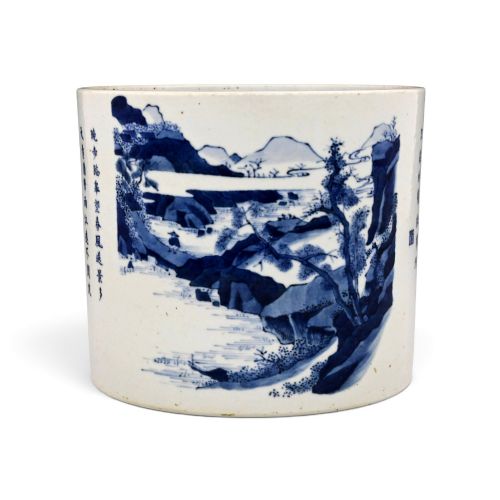
Potters shaped porcelain bodies before applying cobalt underglaze or famille rose and famille verte enamels, followed by high-temperature firing to achieve durable painted surfaces.
Eight immortals occasionally crowd the surface of a single cylinder, leaving tiny scholars little room to write.
What varies in quality
The depth and clarity of the carving separate standard vessels from exceptional examples, particularly in bamboo and hardwood where undercut relief requires immense skill. Enamel precision and glaze consistency define the porcelain tier.
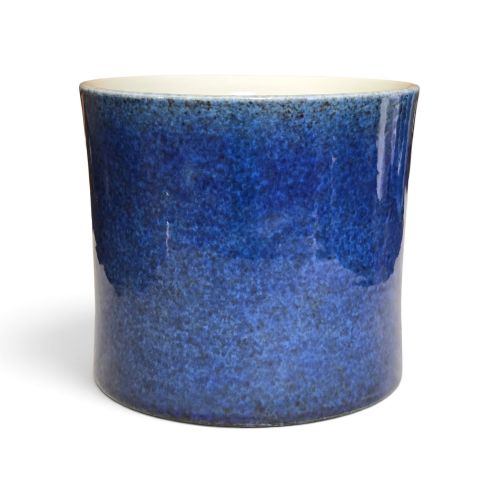
Proportion and material selection dictate overall presence, with larger or rarer glazed bodies commanding attention through disciplined symmetry and controlled pigment application.
The Antique Bitong Brush Pot Glossary
- Bitong
- A cylindrical Chinese brush pot used in the scholar's studio to organise writing implements. The form translates literally as brush barrel.
- Kangxi Period
- A phase of Qing Dynasty production lasting from sixteen sixty-two to seventeen twenty-two. Porcelain from this era often displays vibrant cobalt underglaze or famille verte palettes.
- Famille Verte
- A porcelain palette dominated by green enamels introduced during the Qing Dynasty. Artisans combined these with iron red and other pigments to render detailed narrative scenes.
- Meiji Period
- A Japanese historical era spanning from eighteen sixty-eight to nineteen twelve. Metalwork from this time frequently incorporates bronze and mixed metals.
Antique Bitong Brush Pot: Frequently Asked Questions
What were antique bitong brush pots used for?
Scholars utilised these cylindrical vessels to hold ink brushes upright on writing desks. They formed an essential part of the literati desk accessory ensemble in traditional studies.
Beyond simple storage, the carved imagery provided visual contemplation during quiet moments of writing and painting.
How do I date an antique bitong brush pot?
Dating relies on examining the material, carving style, and pigment application against established dynastic periods. Seventeenth-century porcelain often shows distinct cobalt tones, whereas nineteenth-century pieces display varied enamel techniques.
Material shrinkage, patina on hardwood, and the depth of bamboo carving also offer reliable clues to age.
How should I display a brush pot at home?
Place the vessel on a flat surface away from direct sunlight to protect organic materials like bamboo and hardwood. They sit well on bookshelves, side tables, or dedicated display cabinets.
Lighting should highlight the carved relief or painted enamel details without generating excessive heat.
What materials are common in these pieces?
Carved bamboo and hardwood appear frequently alongside porcelain painted in cobalt underglaze or famille rose enamels. Bronze and mixed metal examples also occur.
Each material dictates a different sculptural approach, from deep naturalistic root carving to smooth glazed ceramic throwing.