


Chinese Scholar Desk Accessory
These pieces are a chinese scholar desk accessory, crafted for the traditional studio to hold brushes, wash ink, and burn incense.
Chinese Scholar Desk Accessory
A chinese scholar desk accessory comprises functional objects for the studio table, ranging from brush pots and brush washers to censers, desk seals, and scroll weights. These items reflect the scholarly pursuits of Imperial and early twentieth-century China.
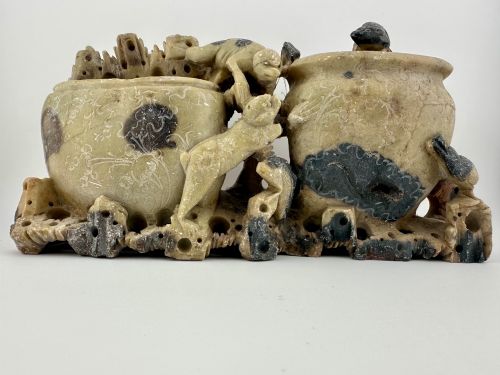
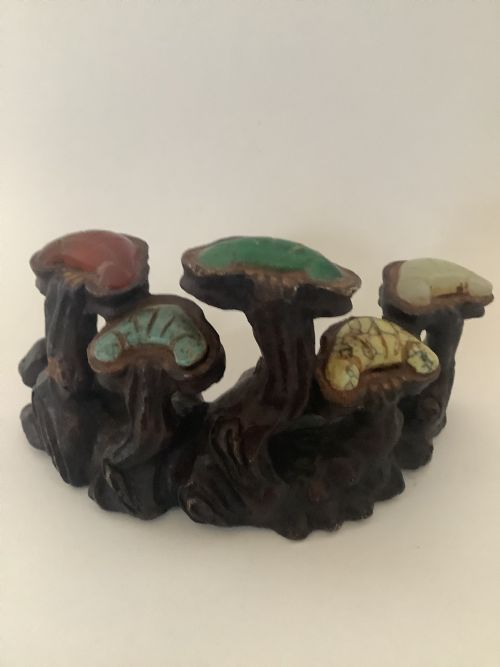
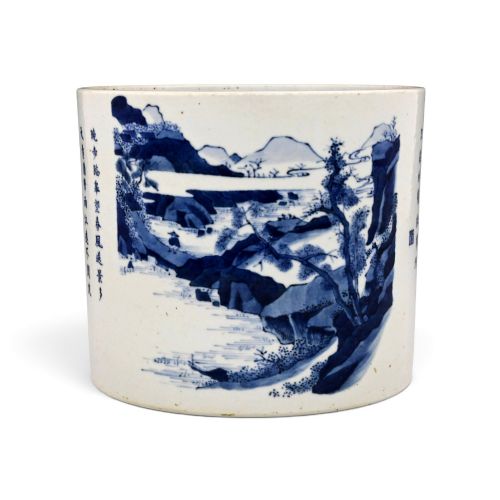
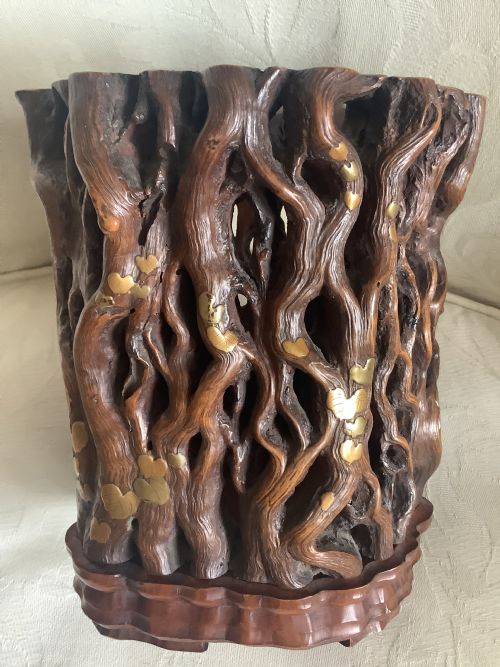
The pieces appearing on this page span the seventeenth century through to the Republic period, taking the form of bamboo, hardwood, soapstone, and porcelain vessels. Brush pots, known as bitong, emerge as the most frequent form among these desk objects.
Makers shaped these accessories within traditions such as the Qing Dynasty and the Kangxi period, producing items intended for writing, contemplation, and scholarly organisation. The materials selected often carry symbolic weight within traditional Chinese aesthetics.
Materials and methods of production
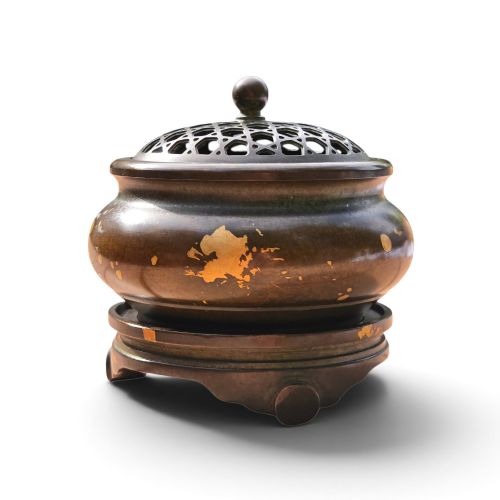
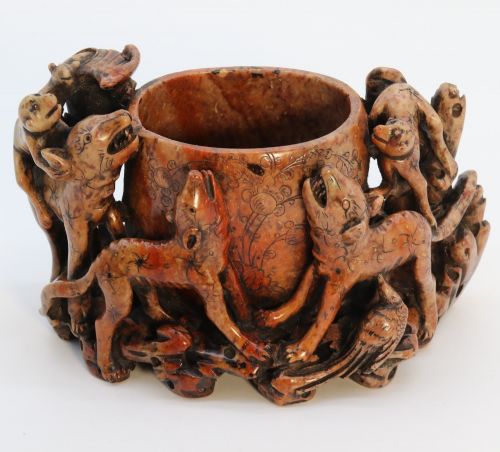
Artisans carved organic materials such as bamboo, hardwood, and soapstone, utilising the natural grain and contours of the medium to create detailed surface reliefs. Cast bronze and brass objects required metalworking techniques, sometimes finished with gold-splashed surfaces or fine patination.
Ceramic pieces employed porcelain shaped into cylindrical brush pots, decorated with cobalt underglaze or famille noire enamel work. These diverse manufacturing methods allowed craftsmen to produce both utilitarian writing tools and decorative desk ornaments.
Listings feature items from the seventeenth, eighteenth, and nineteenth centuries, alongside pieces from the Kangxi and Republic periods.
Distinctions in craftsmanship
Quality rests upon the precision and depth of the carving, particularly visible in the rendering of figures, foliage, and natural textures across bamboo, soapstone, and hardwood surfaces. Superior examples demonstrate a careful balance between the natural characteristics of the raw material and the disciplined hand of the carver.
Metal and ceramic pieces reveal quality through the crispness of the casting, the stability of the stand, and the refinement of the glaze or bronze patination. Higher-grade items maintain proportion and compositional harmony, whereas simpler versions show more routine execution.
The Chinese Scholar Desk Accessory Glossary
- Bitong
- A cylindrical brush pot used in traditional Chinese studies to hold writing brushes upright.
- Soapstone
- A soft, talc-based metamorphic rock favoured by Chinese carvers for its fine grain and ease of intricate shaping.
- Famille Noire
- A ceramic palette characterised by a black enamel ground, frequently decorated with contrasting floral or figural motifs.
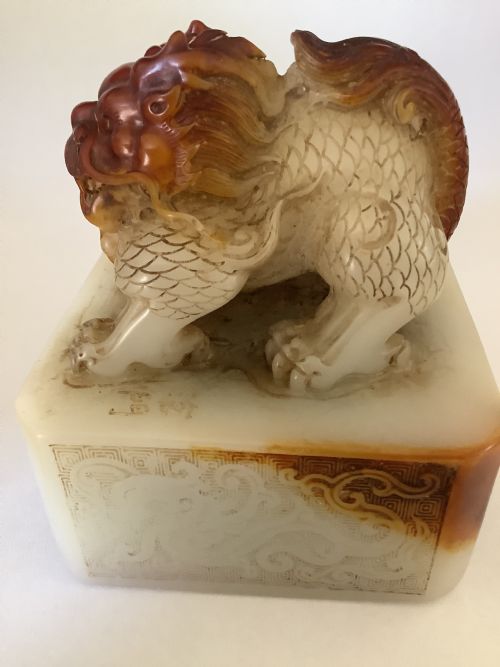
- Dog of Fo
- A mythical guardian lion depicted in Chinese art and sculpture, often seated upon desk seals or architectural elements.
- Censer
- A vessel designed for burning incense, typically formed with a cover and resting on a dedicated stand.
Chinese Scholar Desk Accessory: Frequently Asked Questions
What is a bitong used for?
A bitong serves as a cylindrical container designed to hold writing brushes on a scholar's desk.
These vessels kept brushes organised and upright when not in use during calligraphy and painting.
How do I care for bamboo brush pots?
Bamboo pieces require stable humidity levels to prevent the natural material from splitting over time.
Keep them away from direct sunlight and extreme heat sources to preserve the carved surface.
What periods do these objects come from?
The pieces date from the seventeenth century through to the late nineteenth and early twentieth centuries.
Styles span the Qing Dynasty, the Kangxi period, and the Republic era.
How are bronze desk items finished?
Bronze desk items often feature cast details, patination, or applied gold-splashed surface treatments.
These finishes highlight the metalwork and provide a decorative texture to scholar's weights and censers.