
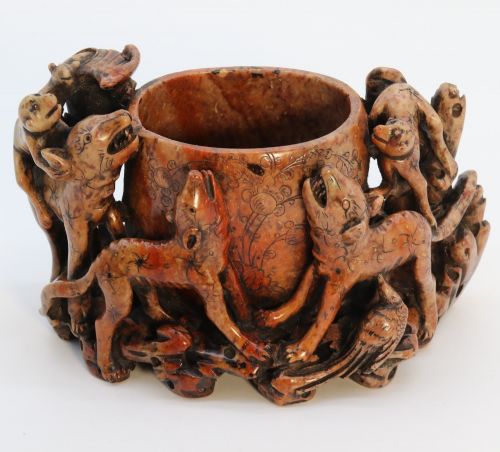


Qing Dynasty Brush Holder
A qing dynasty brush holder organises scholarly writing tools while bringing carved bamboo, timber and porcelain into the scholar's studio.
Qing Dynasty Brush Holder
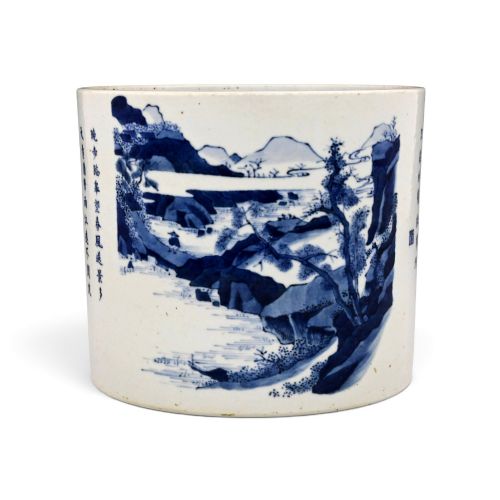
A qing dynasty brush holder takes the form of a cylindrical vessel, often called a bitong, or a sculptural rest designed for the scholar's desk. These pieces originate from various decades spanning the seventeenth century through to the end of the nineteenth century.
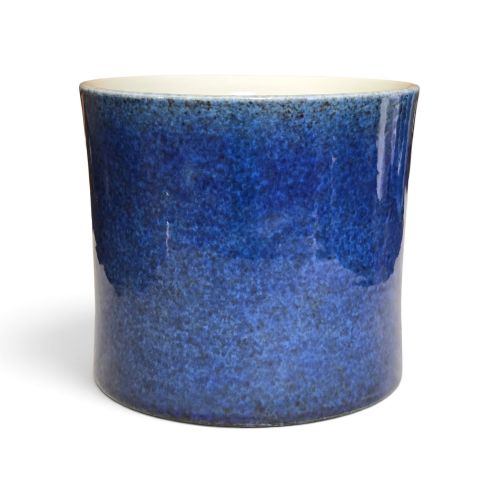
The materials encountered on this page range from carved hardwoods and bamboo to porcelain finished with blue and white, powder-blue, famille rose, or famille verte glazes, alongside occasional bronze and soapstone examples.
How they were made
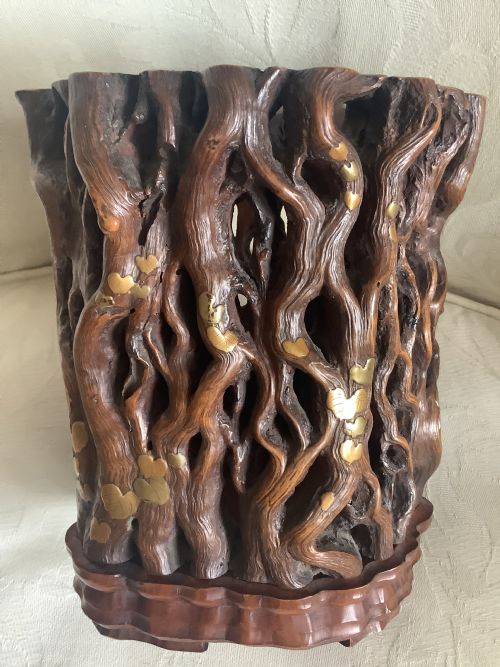
Carvers shaped dense hardwoods and natural bamboo into deep cylindrical pots, utilising the grain and hollow sections of the material for intricate relief scenes. Potters formed porcelain vessels on the wheel before applying cobalt underglaze or detailed enamel palettes like famille verte and famille rose.
Casting methods produced bronze scholar objects, while soapstone was hand-carved to exploit natural colour variations within the mineral.
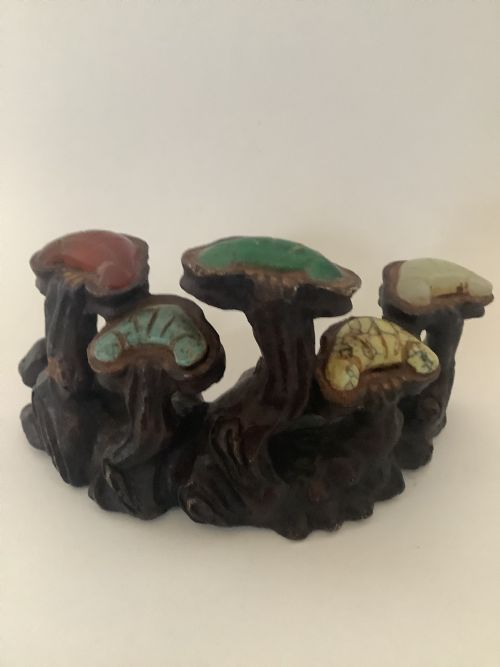
Scholars used brush rests shaped like miniature mountain ranges to keep wet brushes from rolling across important paper manuscripts.
What varies in quality
Quality rests upon the depth and precision of the carving, where deep undercut relief work reveals the skill of the artisan. The control of porcelain glazes, from cobalt underglaze to complex enamels, separates standard production from finer scholar pieces.
The choice of material dictates the character of the object, with well-figured hardwood and tightly grained bamboo commanding greater attention.
The Qing Dynasty Brush Holder Glossary
- Bitong
- A traditional Chinese cylindrical brush pot designed to hold writing brushes on a scholar's desk. These vessels form the principal category of brush holders found in this collection.
- Famille Verte
- A porcelain enamel palette dominated by green hues, originating during the Kangxi period. Artisans used these transparent overglaze colours to depict figures and natural scenes.
- Famille Rose
- A ceramic palette introduced during the Qing dynasty featuring opaque pink or rose enamel colours. This technique allowed for softer tonal gradations in pictorial scenes.
- Kangxi Period
- The era from 1662 to 1722 associated with high standards in Qing dynasty porcelain production. Pieces from this time often display refined cobalt underglaze or famille verte decoration.
- Cobalt Underglaze
- A blue pigment applied to porcelain clay before glazing and high-temperature firing. This method protects the pigment beneath a clear glass-like coating.
Qing Dynasty Brush Holder: Frequently Asked Questions
What is a bitong?
A bitong is the traditional Chinese term for a cylindrical brush pot used in a scholar's studio. These vessels kept writing brushes upright and tidy.
They stood on desks alongside inkstones and water droppers as essential tools for calligraphy and painting.
How do I date a brush pot?
Dating relies on examining material characteristics, glaze types and the style of carving or painting. Pieces from the Kangxi period show specific porcelain techniques.
Nineteenth-century examples often display denser carving styles and varied famille rose or famille noire enamel palettes.
Where were these pieces used?
These items belonged in the scholar's studio, a quiet space dedicated to study, poetry and painting. The scholarly class valued objects that reflected refined taste and literati ideals.
Brush holders organised tools while decorative carvings provided inspiration during quiet contemplation.
How should I care for timber and bamboo?
Organic materials like bamboo and hardwood respond best to stable indoor humidity away from direct sunlight. Sudden temperature shifts can cause timber to split or bamboo to dry.
Dusting with a dry, soft cloth preserves the natural surface patina without introducing moisture.