


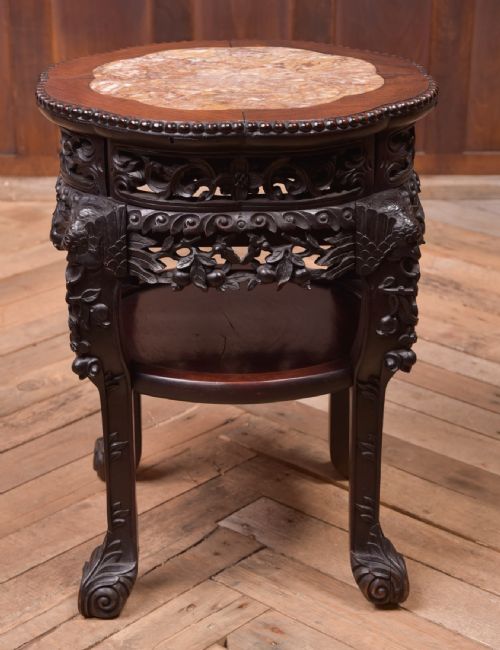
Oriental Potted Plant Table
An oriental potted plant table elevates your greenery, uniting carved hardwood and inset marble in Victorian and late nineteenth-century designs.
Oriental Potted Plant Table
When you search for an oriental potted plant table, you are looking at sturdy stands designed to elevate heavy ceramic pots, urns and jardinieres within a room.
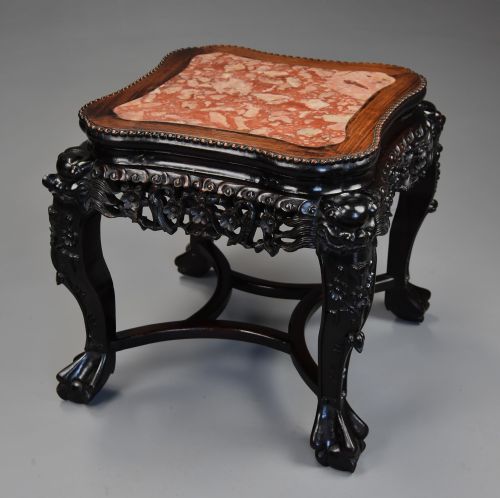
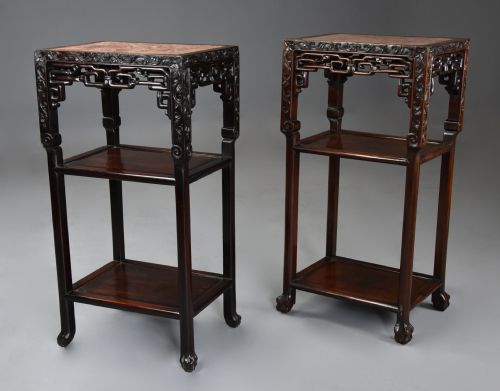
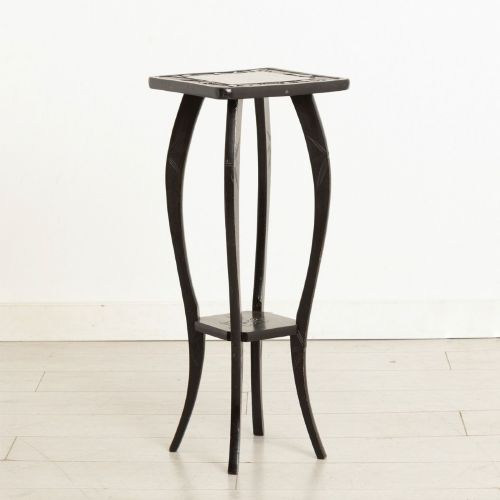
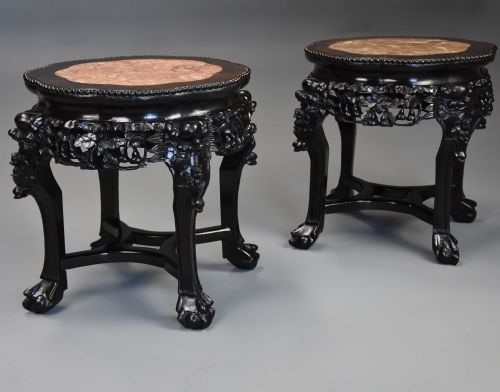
The pieces on this page span Chinese hardwood pot stands, carved jardiniere stands, and Victorian Anglo-Japanese ebonised wood planter tables.
You will most frequently meet low tables and freestanding plant stands featuring shaped marble inset tops, alongside rectangular and portico forms.
How they were made
Craftsmen shaped dense hardwood and ebonised wood, employing intricate hand carving to decorate the frames with traditional motifs.
Many examples incorporate smooth marble inset tops, specifically rouge marble, providing a durable and cool surface for heavy pots and plants.
Some versatile nineteenth-century plant stands moonlighted as wine tables when the ferns needed a night off.
What varies in quality
Quality rests in the crispness of the hand carving on the hardwood and the tightness of the joinery supporting heavy stone tops.
Finer examples display careful matching of grain and stone, whereas simpler pieces rely on straightforward ebonised finishes.
Liberty of London
The Oriental Potted Plant Table Glossary
- Jardiniere
- A large ornamental pot or stand for holding plants or flowers. These are frequently paired with low tables in Victorian interiors.
- Ebonised wood
- Timber treated with a dark finish to imitate expensive ebony wood. This technique appears often on Victorian Anglo-Japanese pieces.
- Hardwood
- Dense, durable timber harvested from broad-leaved trees. Chinese makers utilised this material for its strength in load-bearing plant stands.
- Qing Dynasty
- The final imperial dynasty of China, spanning from sixteen forty-four to nineteen twelve. Pieces from this era often feature elaborate carved details.
Oriental Potted Plant Table: Frequently Asked Questions
How were these tables used originally?
Victorian and late nineteenth-century homes used them to display prized exotic plants, palms, and large ceramic floral vessels. Placing plants on raised stands protected wooden floors from moisture.
They also functioned as lamp tables, wine tables, or side tables when plants were absent from the room.
How do I identify the materials?
Look closely at the frames to distinguish between natural hardwood and ebonised wood finished to look dark. Inset tops typically consist of polished marble.
Many Chinese export pieces rely on heavy carved hardwood, while Victorian interpretations frequently utilise ebonised timber surfaces.
How do I date these stands?
Dating relies on stylistic clues, connecting pieces to the Victorian era or the late nineteenth century based on carving depth and form. Chinese Qing Dynasty examples carry traditional motifs typical of that period.
Makers and retailers like Liberty of London also help establish specific twentieth-century production dates where recorded.