



Antique Chinese Jardiniere Table
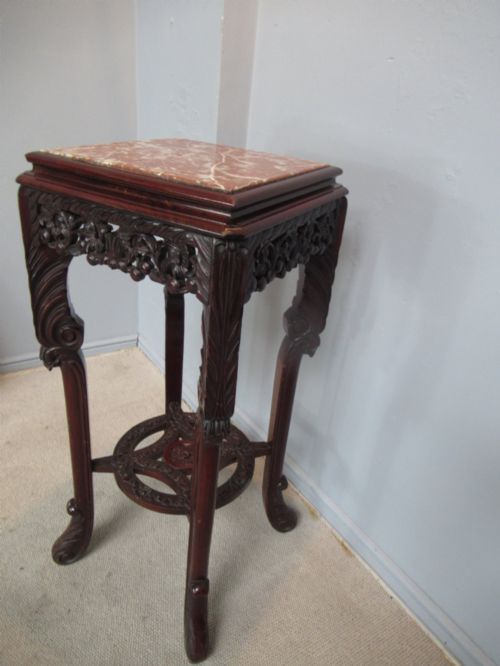
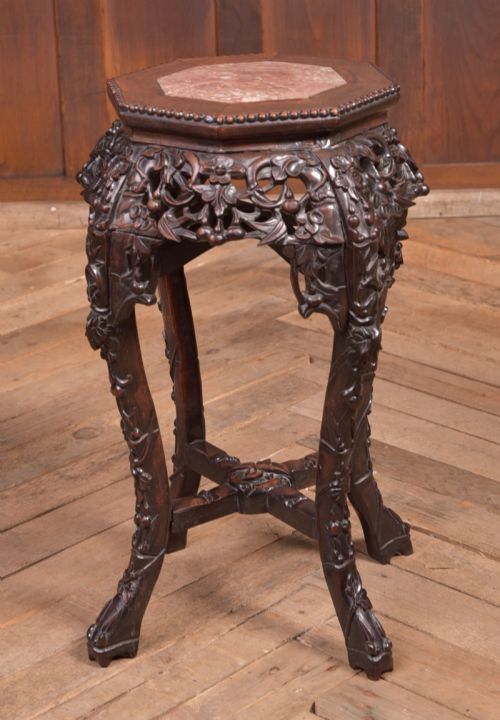
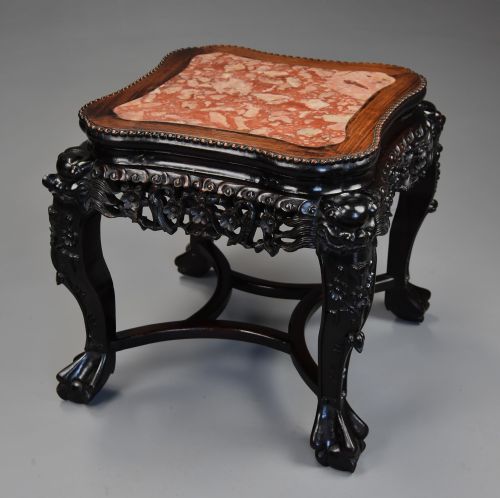
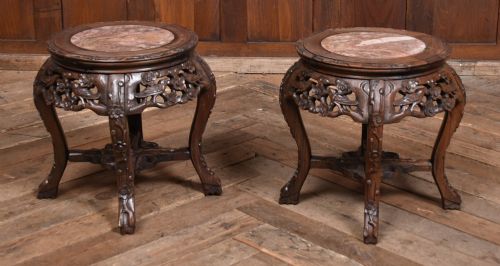
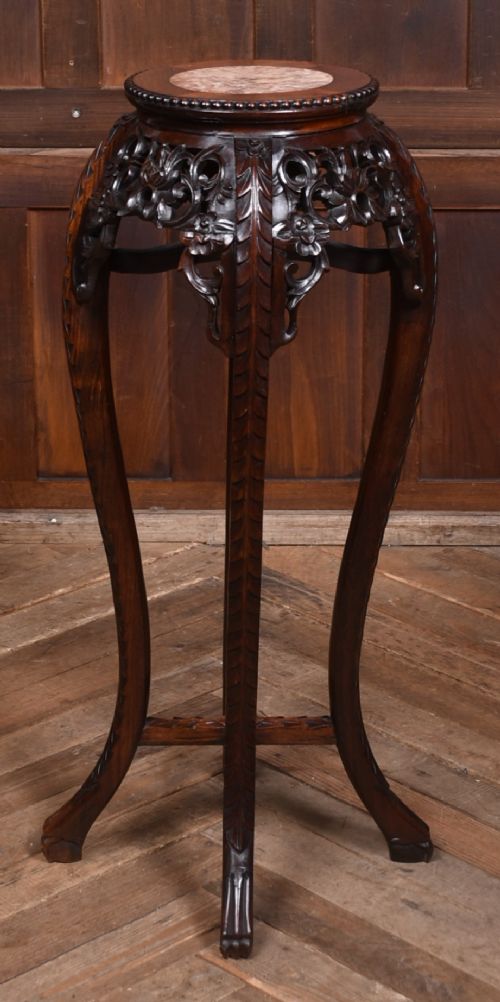
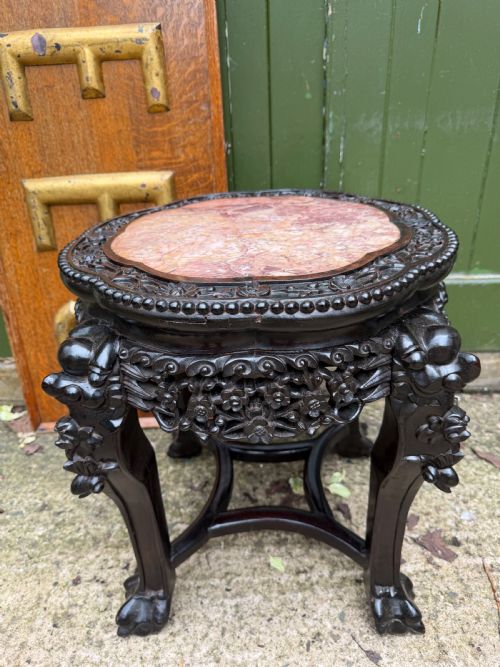
An antique chinese jardiniere table holds heavy ceramic planters and vases, bringing carved timber and inset stone to a room.
Antique Chinese Jardiniere Table
An antique chinese jardiniere table functions primarily as a sturdy plant stand, pedestal or low display surface designed to elevate heavy ceramic planters, bronze vessels and decorative vases. These compact items take the form of small side tables, plant stands and vase stands, serving rooms as versatile lamp tables and occasional tables.
The pieces appearing most frequently across this selection date from the nineteenth century into the Edwardian period, often reflecting the Qing Dynasty style or Chinese Export traditions. Collectors encounter low pots stands, shaped display tables and tall pedestals fashioned with distinct oriental character.
Makers and artisans built these forms to display prized flora and decorative objects within domestic interiors, combining practical load-bearing strength with ornate carving. Each piece demonstrates how traditional Chinese furniture forms adapted to Western Victorian interiors through import trade.
Materials and construction
Workshops utilised dense exotic timbers including padouk, rosewood, mahogany, elm and general hardwood, frequently ebonising the surfaces or applying traditional lacquer. These heavy woods provided the structural integrity required to support weighty stone insets and large ceramic jardiniere pots without warping.
The defining construction feature involves setting a smooth marble slab into the timber top, often using variegated rouge marble to contrast with the dark brown or black polished wood. Artisans carved the surrounding frames, aprons and cabriole or straight legs with intricate floral, foliage and traditional Chinese motifs.
Listings feature items from the nineteenth century, eighteen-eighty, eighteen-ninety, nineteen hundred, the Victorian era and the Edwardian period.
Quality differences
Quality rests in the crispness of the wood carving and the selection of materials, where deeply undercut floral motifs and dense, heavy padouk or rosewood outclass simpler, flat-cut hardwood pieces. The integration of the stone top also dictates standard; a tightly fitted, high-grade variegated rouge marble insert demonstrates superior craftsmanship compared to plain or loosely seated stone.
Proportion and structural stability separate standard examples from finer works, particularly where joinery remains tight without excessive modern glue or replacement parts. The weight and grain of the timber indicate the tier of production, distinguishing export pieces made for Western markets from standard domestic workshop output.
The Antique Chinese Jardiniere Table Glossary
- Jardiniere stand
- A tall or low table specifically built to support a decorative ceramic or metal plant pot filled with flowers or foliage. These items often feature water-resistant stone tops to handle dampness.
- Hongmu
- A traditional Chinese term translating to red wood, applied to dense, hard tropical timbers such as padouk and rosewood used in fine furniture manufacture. This material takes a high natural polish.
- Padouk
- A heavy, durable reddish-brown tropical hardwood favoured by Chinese cabinetmakers for its strength and rich grain. It resists moisture and provides a stable frame for stone insets.
- Rouge marble
- A deep red or reddish-brown decorative stone quarried in France and imported for use as furniture inserts. The variegated patterns feature striking white or grey veining.
- Ebonised wood
- Timber treated with chemical stains or black finishes to imitate expensive ebony. This technique gained popularity during the Victorian period for oriental-style display furniture.
Antique Chinese Jardiniere Table: Frequently Asked Questions
What is a jardiniere table used for?
An antique chinese jardiniere table serves as an elevated platform for heavy ceramic plant pots, large vases and decorative lamps. The sturdy timber frame and stone insert protect the surface underneath from moisture and weight.
Historically, these stands displayed prized indoor flora or bronze vessels within principal rooms. Today, collectors utilise them as compact side tables or lamp stands in living spaces.
How do I identify a Qing Dynasty style stand?
Qing Dynasty style stands feature dense hardwoods like rosewood or padouk, combined with carved floral aprons and inset marble tops. The joinery often displays traditional Chinese framing techniques without metal nails.
These pieces typically date from the nineteenth century or around nineteen hundred, reflecting the height of Chinese export trade to Britain. The carving focuses on natural motifs such as prunus blossom, bamboo or scrolling foliage.
Are marble top plant stands waterproof?
The marble insert resists water spills from watering plants placed on top, protecting the underlying wooden framework. However, moisture can still seep into the mortar or wooden edges surrounding the stone.
Owners should use protective saucers beneath heavy ceramic planters to prevent standing water from damaging the grout lines and the polished timber border.
What wood are Chinese plant stands made from?
Chinese plant stands utilise dense exotic timbers including padouk, rosewood, mahogany, elm and general structural hardwood. Workshops frequently ebonised these woods or applied traditional dark lacquers.
The choice of heavy timber provided the necessary structural strength to support thick marble slabs and heavy ceramic vessels without sagging under pressure.