
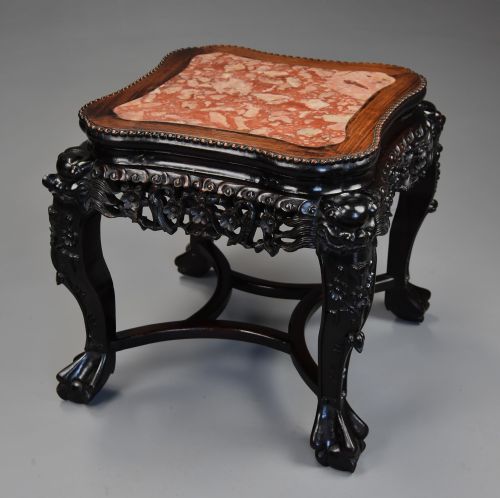


Oriental Pierced Carved Table
An oriental pierced carved table brings intricate openwork and dense timber into a room, offering a surface steeped in distant craft traditions.
Oriental Pierced Carved Table
An oriental pierced carved table spans compact plant stands and low occasional surfaces, created across the nineteenth and early twentieth centuries. These pieces emerge from diverse traditions, including Anglo-Indian, Chinese Qing Dynasty, and Burmese workshops.
The version most commonly met on this page is the hardwood side table or pot stand, often featuring intricate openwork carving around the apron or legs. Buyers also encounter brass inlaid occasional tables and marble inset tops alongside smaller pedestals and altar forms.
Originating from distant trade routes and colonial exchanges, these tables bring specific regional carving styles into British interiors. The forms range from octagonal side tables to console tables and table screens with intricately carved stands.
Materials and construction
These pieces rely on dense timbers such as teak, rosewood, padouk, and general dark hardwood, chosen for their ability to hold fine detail without splitting. Artisans cut deep recesses and pierced motifs through the wood using specialised chisels and saws.
Many examples incorporate contrasting materials, setting white marble panels into the timber top or hammering brass and copper wire into floral inlays across the surface. Sandalwood also appears in select pieces, prized for its natural grain and aromatic quality.
Peacocks carved into Indian tables offer silent company, watching the tea cups with permanent wooden poise.
Quality and craftsmanship
The distinction between standard production and superior work lies in the depth and crispness of the piercing, where skilled hands create layers of shadow through openwork frames. Finer examples maintain sharp relief along every leaf and geometric border, avoiding shallow or blurred cuts.
Material selection dictates longevity and visual weight, with dense hardwoods and well-fitted marble or metal inlays holding their structural integrity over decades. The stability of the joined frame and the precision of the carved joints separate everyday utility items from masterwork furnishings.
The Oriental Pierced Carved Table Glossary
- Pierced carving
- Woodwork where the pattern is cut entirely through the board to create an openwork design. This technique allows light to pass through floral and geometric motifs.
- Hardwood
- Dense timber from broad-leaved trees, encompassing species like teak and rosewood used in these tables. It resists daily wear and supports fine detailing.
- Inlay
- Material such as brass or copper embedded flush into the surface of the timber. It forms contrasting decorative lines and geometric patterns across the top.
- Padouk
- A heavy, reddish-brown tropical timber utilised in traditional Chinese furniture. Its stability makes it suitable for intricate stands and small tables.
- Altar table
- A traditional rectangular form with upturned ends, originally designed for ceremonial use. These pieces now function as console or display surfaces.
Oriental Pierced Carved Table: Frequently Asked Questions
Where should I place an oriental pierced carved table?
These tables suit hallways, drawing rooms, or corner spaces where their carved aprons and detailed surfaces remain visible. Smaller stands work well beside armchairs or as display pedestals for lamps and ceramics.
Because the timber and openwork carving draw the eye, they serve effectively as focal points rather than tucked-away utility furniture. Pair them with neutral surroundings to let the intricate woodwork define the space.
How do I clean a pierced carved table?
Dust the openwork carving gently with a soft, dry brush to prevent dirt from settling in the deep recesses. Avoid harsh liquid polishes that can build up within the intricate crevices of the wood.
Treat marble inserts with a damp cloth and mild soap, drying them immediately to protect the stone surface. Keep the timber away from direct heat sources and strong sunlight to preserve the natural finish.
Are these tables sturdy enough for daily use?
Most of these pieces function well as occasional tables, plant stands, or display surfaces for moderate weight. The dense hardwoods used in their construction provide natural strength despite the delicate appearance of the openwork.
Avoid placing excessively heavy items on smaller pot stands or altar tables to protect the joined frames. Gentle daily use suits these decorative items without risking structural strain.
How do I distinguish between regional styles?
Chinese pieces often feature heavy hardwoods like padouk and marble insets, reflecting Qing Dynasty forms and traditional motifs. Anglo-Indian and Burmese examples frequently display dense overall floral carving, sometimes combined with brass wire inlay or teak construction.
Examining the specific timber grain and the style of the pierced motifs helps identify the workshop tradition. Comparing the joinery and ornamental details clarifies the geographic origin.