


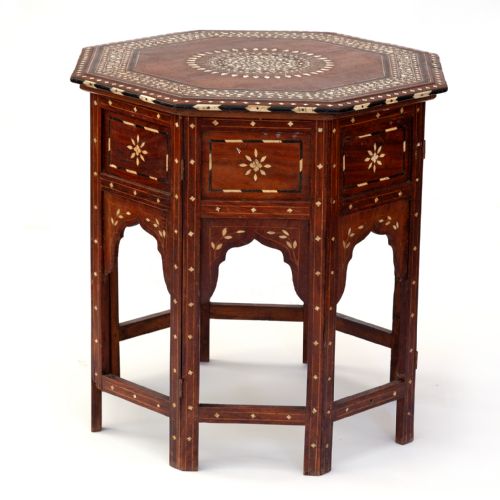
Oriental Octagonal Accent Table
An oriental octagonal accent table brings intricate regional craft into a room, offering surface space with geometric presence.
Oriental Octagonal Accent Table
An oriental octagonal accent table is a low or side-height surface defined by its eight-sided geometry and imported stylistic origins. When searching for an oriental octagonal accent table, buyers encounter side tables, occasional tables, and centre tables from various late nineteenth and early twentieth century traditions.
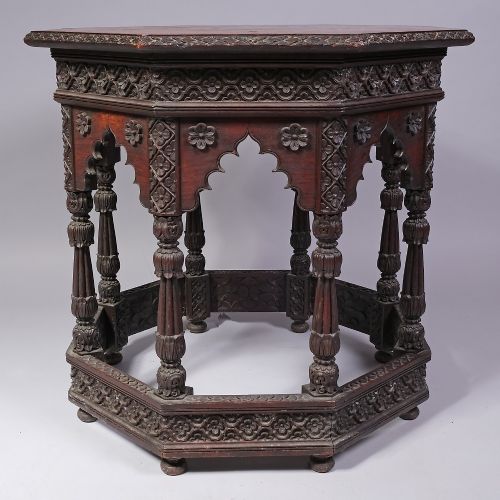
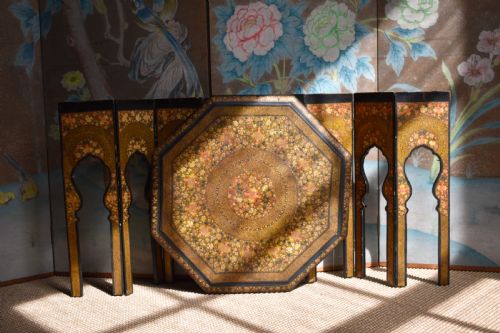
The pieces appearing on this page span several distinct geographical and stylistic lineages, including Anglo-Indian, Moorish Revival, Chinese Export, and Anglo-Burmese designs. Formats range from folding Hoshiarpur tables to carved dragon side tables and black lacquered examples.
Makers and workshops across India, Burma, and China produced these tables during the Victorian and Edwardian eras for export and domestic use. Common forms include lamp tables and small occasional tables designed to function easily within existing room layouts.
How they were made
Construction relies upon dense timbers such as teak, padauk, sheesham wood, sandalwood, and general hardwoods that provide a stable foundation for intricate surface work. Artisans shaped these materials using traditional joinery, often incorporating folding frames that allowed the furniture to be packed flat.
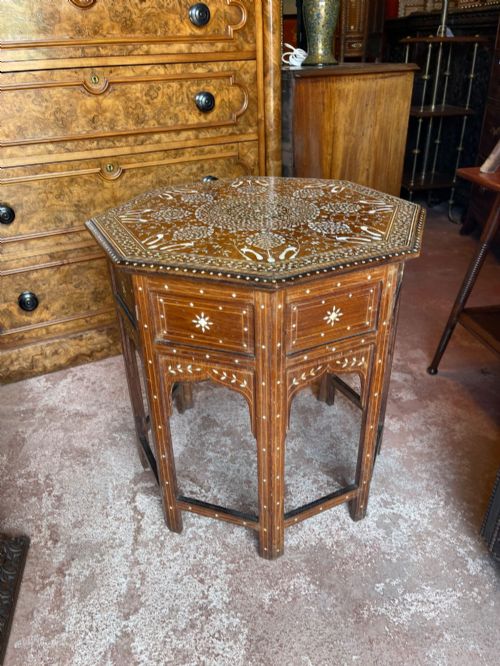
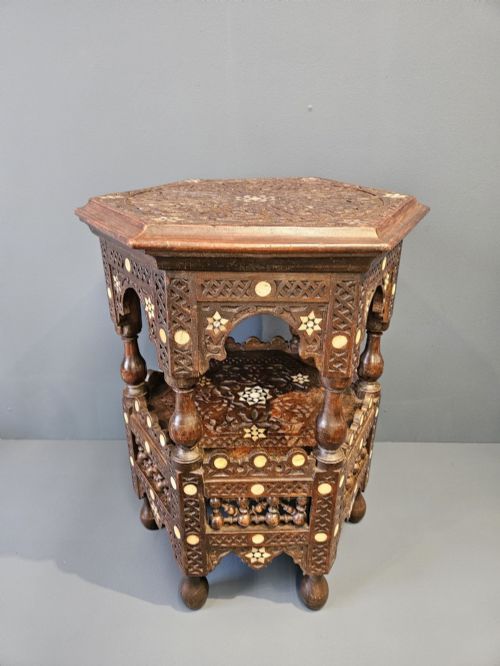
Surface decoration distinguishes these pieces through extensive hand carving, contrasting inlays, and painted finishes. Bone and mother-of-pearl form geometric and floral patterns set into recesses within the wood, while brass wire inlay and black lacquer provide alternative surface textures.
Materials recorded across these listings include teak, sandalwood, padauk, bone, brass, and lacquer, representing diverse global export traditions from the nineteenth and twentieth centuries.
What varies in quality
Quality rests primarily in the depth, crispness, and precision of the hand carving across the eight sides and top. Tables featuring densely packed relief work or intricate pierced lattice show greater artisan investment than plain surfaces.
The integrity and completeness of the inlay work dictate the standard of execution, particularly where bone, mother-of-pearl, or brass meet the surrounding timber. Examples retaining every small inlaid section without modern replacement pieces command higher appreciation.
The Oriental Octagonal Accent Table Glossary
- Hoshiarpur
- A city in Punjab known for its distinct woodwork where artisans inlaid bone and shesham wood with geometric patterns. This style is frequently found on folding occasional tables.
- Moorish Revival
- An architectural and decorative style popular in the nineteenth century that incorporated Islamic design motifs into Western domestic furnishings. It appears on carved lamp tables with horseshoe arches or geometric lattice.
- Anglo-Indian
- A term describing furniture made in India under British colonial rule, combining local craftsmanship with British room forms. These items often feature dense overall carving and inlaid details.
- Padauk
- A heavy tropical hardwood valued for its durability and rich natural colouration. It provides a stable base for detailed carving.
- Sheesham
- An Indian hardwood, also known as Indian rosewood, commonly utilised for carved tables and inlay work. Its dense grain supports fine chisel work.
Oriental Octagonal Accent Table: Frequently Asked Questions
How do I care for inlaid wood?
Dust regularly with a soft, dry brush to prevent dirt settling into the carved recesses and bone inlay. Avoid commercial polishes that can build up inside the intricate channels.
Keep these tables away from direct heat sources and strong sunlight to prevent the timber from drying out and the bone or mother-of-pearl elements from loosening.
Are these tables sturdy enough for daily use?
Most of these occasional and side tables are built to hold lamps, books, or small decorative items rather than heavy loads. Folding models require careful handling when opening and closing to protect the hinges and joints.
Placing them on level flooring prevents undue strain on the eight-sided frame and keeps the structure balanced during everyday interaction.
What does Hoshiarpur mean on a listing?
Hoshiarpur refers to a specific regional centre in India celebrated for its master woodcarvers and intricate inlay techniques. Tables bearing this attribution typically feature dense bone or wooden mosaic patterns across the top.
Many of these specific regional pieces were constructed with folding bases designed for easy transport during the colonial period.
How can I tell the period of an octagonal table?
Dating relies on examining the timber preparation, the style of the carving, and the specific inlay materials used. Late nineteenth-century examples often display deep hand carving and authentic bone work, while early twentieth-century pieces might show lacquered finishes or simplified construction.
Matching the stylistic markers against known export patterns helps narrow down the decade of production.