






Asian Export Carved Furniture
Asian export carved furniture brings dense regional craftsmanship into the room, spanning nests of tables and cabinets from the nineteenth and early twentieth centuries.
Asian Export Carved Furniture
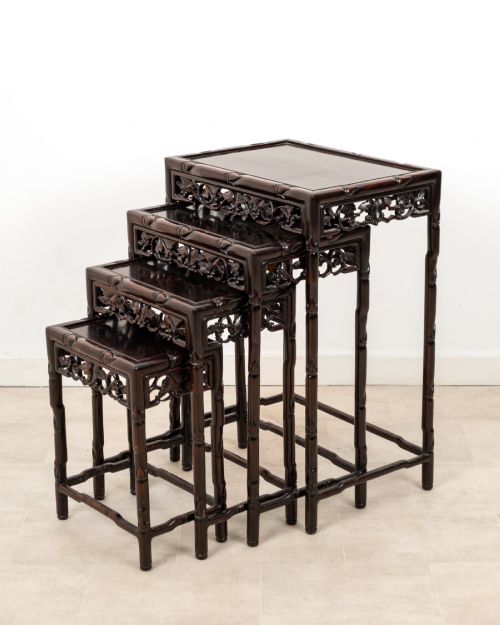
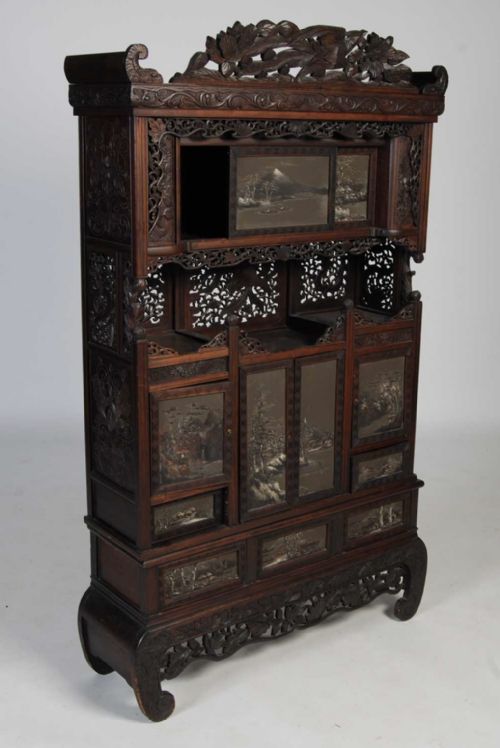
Asian export carved furniture encompasses decorative items made for international trade, appearing across nests of tables, display cabinets, and desks. These pieces mostly date from the nineteenth century up through the nineteen-thirties, reflecting diverse regional workshops.
The selections available here lean heavily toward Chinese hardwood nests of four tables and Japanese Meiji period cabinets. Buyers also encounter occasional benches, centre tables, and side tables carved with intricate motifs.
Distinctions in quality
The depth and crispness of the hand carving separate standard commercial output from superior items. Sharply defined dragon motifs and clean joinery indicate superior workshop standards.
The choice of material dictates baseline quality, with dense hongmu and burrwood selections showing greater stability and grain complexity than generic timber. Original lacquer surfaces and intact mother-of-pearl inlay also elevate a piece.
Current listings feature items spanning the nineteenth century through the nineteen-thirties, utilising rosewood, lacquer, and mother-of-pearl.
The Asian Export Carved Furniture Glossary
- Hongmu
- A dense tropical hardwood frequently used in Chinese furniture making. It translates literally as red wood and takes a fine polished finish.
- Shodana
- A traditional Japanese display cabinet featuring asymmetrical shelving and small cupboards. These pieces showcase delicate woodwork and ornamental joinery.
- Qing Dynasty
- The final imperial dynasty of China, spanning from sixteen-fourteen-fourteen to nineteen-twelve. Many export items appropriate motifs from this artistic period.
- Meiji Period
- An era in Japanese history lasting from eighteen-sixty-eight to nineteen-12. Furniture from this time often combines traditional craftsmanship with export-focused design.
Asian Export Carved Furniture: Frequently Asked Questions
How do I clean carved hardwood?
Dust regularly with a soft, dry brush to prevent dirt settling in the deep recesses of the carving. Avoid chemical polishes that can build up within the textured grain over time.
Maintain stable humidity levels in the room to prevent the dense timber from splitting. A light application of appropriate wax preserves the polished surface.
Where were these pieces made?
These items were produced in workshops across China and Japan specifically for Western export markets during the nineteenth and early twentieth centuries. Makers adapted traditional regional forms to suit European and American interior tastes.
Cities such as Canton and Shanghai acted as primary hubs for the trade and shipping of these goods. Japanese pieces often emerged from centres associated with the Meiji period opening of trade.
Are nest of tables practical?
Nests of four tables offer a versatile surface solution that occupies minimal floor space when stacked together. They function well as occasional side tables for drinks or lamps.
Individual tables can be distributed around a room when hosting guests and stored compactly afterward. Their sturdy hardwood construction makes them suitable for daily use.