
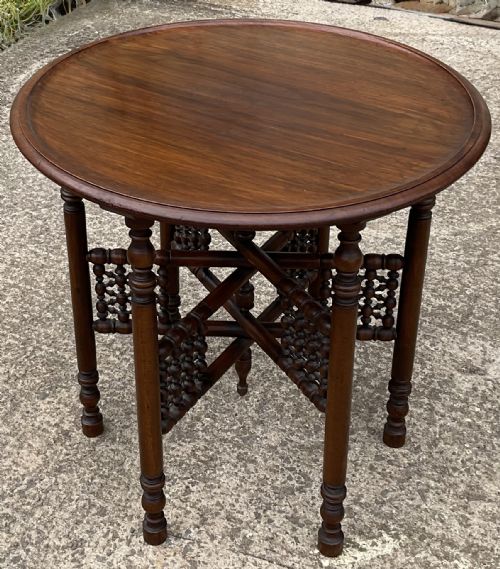
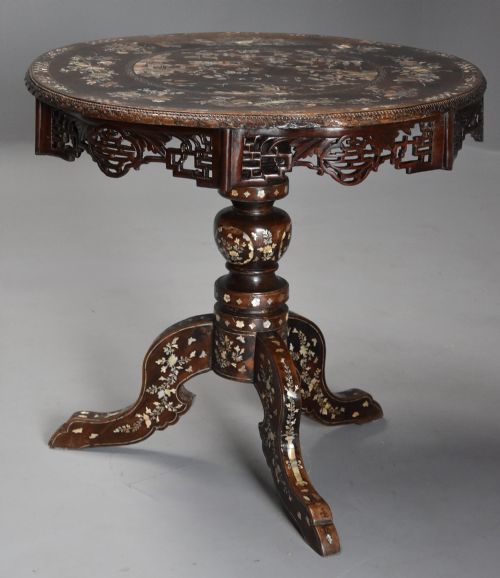


Oriental Carved Centre Table
An oriental carved centre table brings dense relief carving, rich hardwood timber and inset marble or enamel panels directly into a principal room.
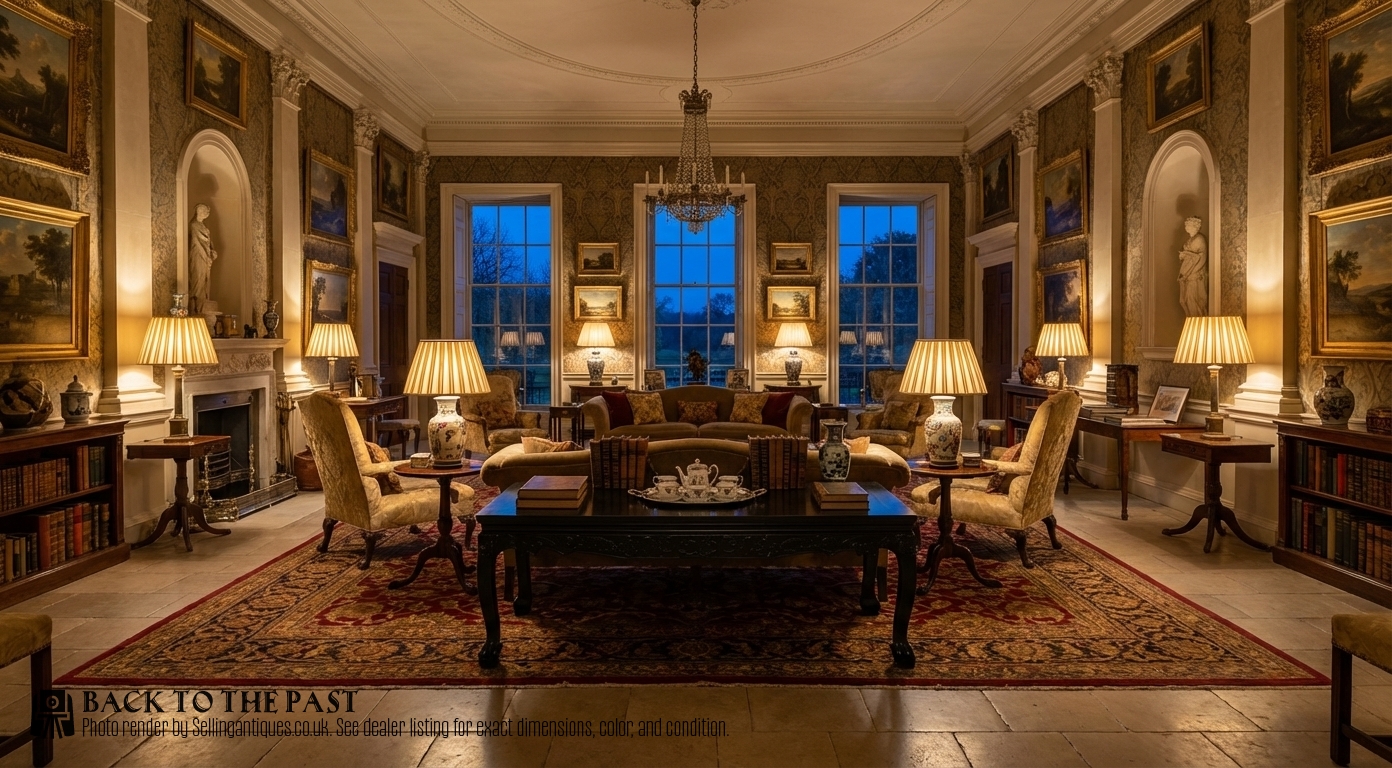
Oriental Carved Centre Table
An oriental carved centre table gathers diverse regional traditions spanning the nineteenth and early twentieth centuries, including Chinese Qing Dynasty, Anglo-Indian, Anglo-Burmese and Japanese examples. Buyers encounter circular, rectangular, low and tilt-top forms designed to sit prominently in a room.
The woods utilised across these tables include teak, rosewood, mahogany and general Asian hardwoods, frequently accompanied by marble, mother-of-pearl or cloisonné enamel panels. Many pieces function equally as coffee tables, console tables or side tables depending on their height and top configuration.
Dating ranges from the early nineteenth century through to the 1930s, encompassing ebonised finishes, black and gilt lacquer, and dragon motifs. These varied origins produce distinct visual languages within a single search category.
Assessing quality and execution
The depth, sharpness and undercut detail of the hand carving separate simpler production from superior workmanship. Finer examples display meticulous relief work on the apron and legs, whereas lesser pieces show flatter, mechanical incision.
The quality of the inset panel - whether a solid piece of rouge marble, precise mother-of-pearl inlay or detailed cloisonné enamel - largely dictates the overall grade of the table. Sound structural timber without excessive shrinkage splits ensures the piece holds its form.
Dragons hide within the dense hardwood carving of nineteenth-century tables, keeping silent watch over the tea service.
The Oriental Carved Centre Table Glossary
- Hardwood
- Dense timber derived from broad-leaved trees such as teak, rosewood and mahogany. These woods provide the heavy structural foundation required for deep relief carving.
- Tilt-top table
- A table designed with a mechanism allowing the top to pivot vertically when not in use. This form appears in nineteenth-century Burmese and oriental examples.
- Cloisonné enamel
- A decorative technique where metal wire forms compartments on a surface that are filled with enamel paste and fired. These panels occasionally form table tops.
- Ebonised
- Wood treated with a dark finish to imitate expensive ebony timber. This technique appears on specific Chinese low tables from the early twentieth century.
Oriental Carved Centre Table: Frequently Asked Questions
How were oriental carved centre tables used?
These tables served as decorative centrepieces in nineteenth and early twentieth-century reception rooms, often holding lamps, ornaments or serving tea.
Lower variants functioned as coffee tables or low tables, while tilt-top versions saved space by pivoting vertically against a wall when not in active use.
What woods are typically found?
Makers utilised dense regional timbers such as teak, rosewood and mahogany, along with general Asian hardwoods.
These woods provided the necessary weight and grain density to support heavy hand-carved motifs and inset stone or enamel panels.
How do I identify the period?
Dating relies on stylistic markers associated with the nineteenth century, Qing Dynasty, and early twentieth-century manufacturing methods.
Turn-of-the-century pieces often feature specific regional traits like ebonising, black and gilt lacquer, or distinct floral and dragon carvings recorded across the era.