


Black Wood Coffee Table
A black wood coffee table brings deep tone and strong form to a room, drawing on centuries of global design from Victorian ebonising to Asian lacquer.
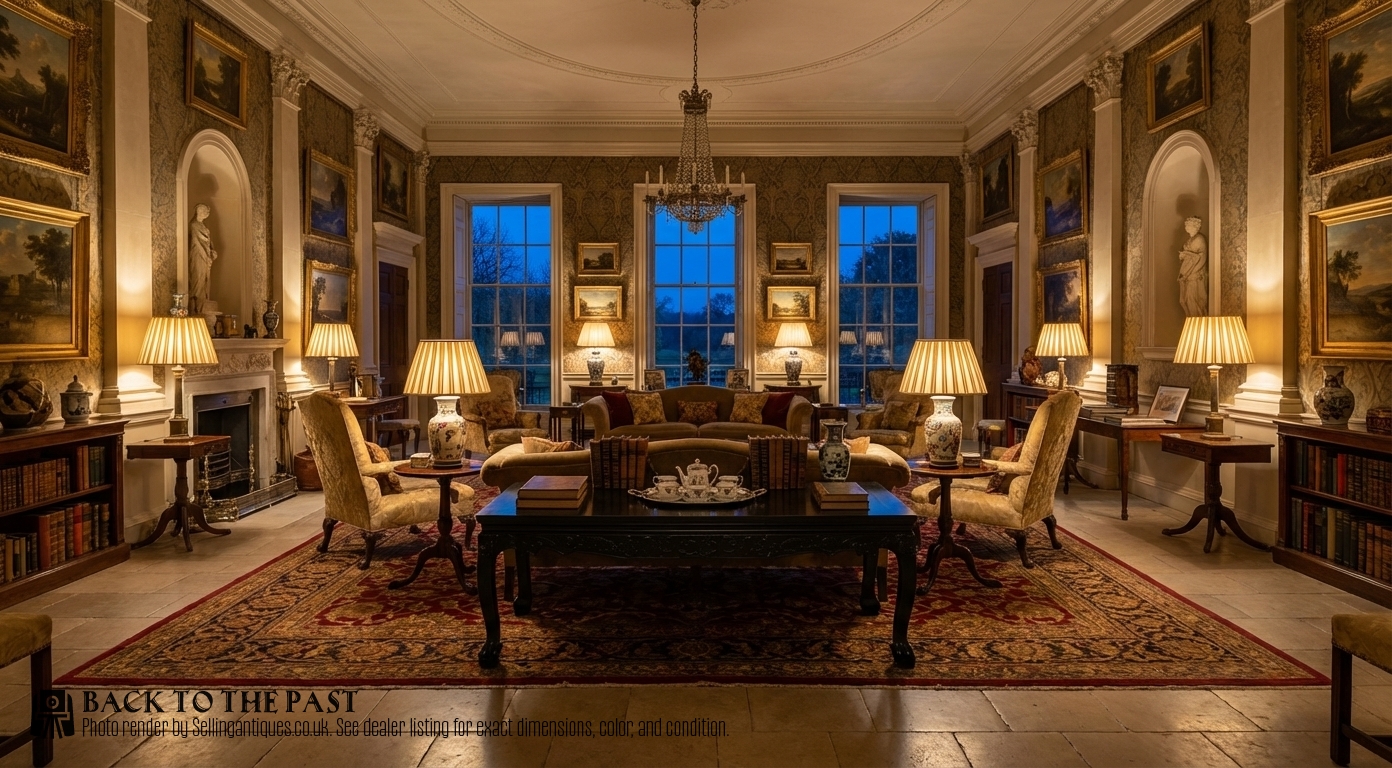
Black Wood Coffee Table
A black wood coffee table covers a broad sweep of dark-toned low tables, ranging from nineteenth-century ebonised timber and Victorian Black Forest work to twentieth-century Art Deco pieces. When searching for a black wood coffee table, buyers encounter various low forms including nests of tables, occasional tables, and low coffee tables.
Origins stretch across multiple stylistic traditions, encompassing Anglo-Indian, Chinoiserie, Japonisme, and traditional Chinese aesthetics alongside European period designs. Pieces appear in solid hardwoods, ebonised surfaces, and lacquered finishes, often detailed with carving, marquetry, or gold leaf.
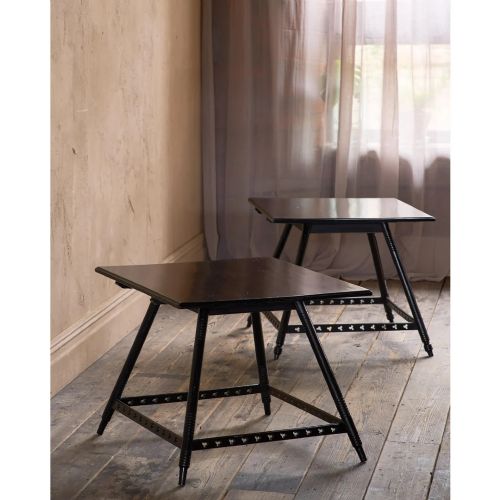
The selection on this page leans heavily toward nineteenth-century craftsmanship and early twentieth-century interpretations, particularly Art Deco and Chinoiserie styles. Buyers meet both matched pairs and single low tables adapted or built for modern living spaces.
Materials and construction
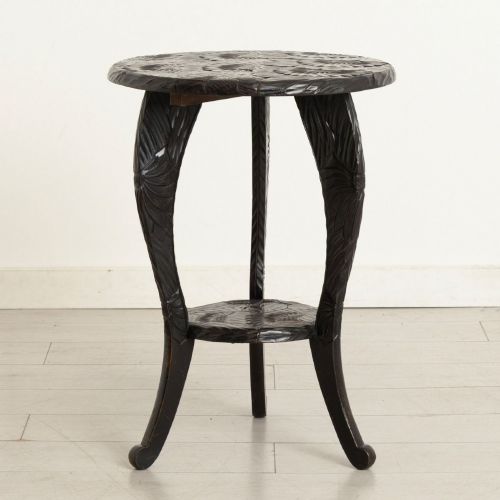
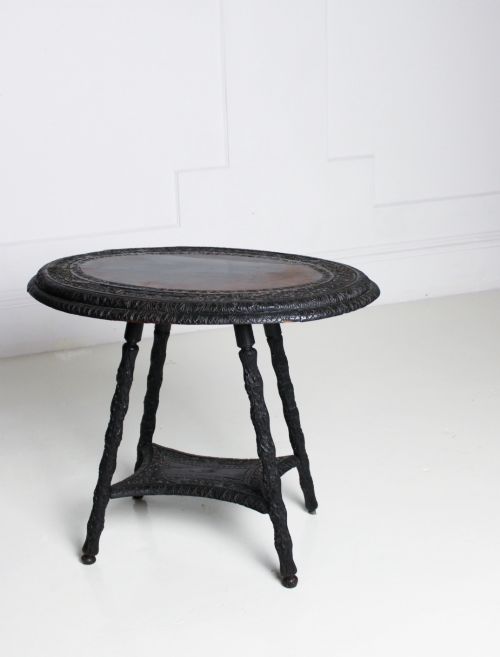
Construction relies on dense timbers and applied dark finishes, utilising natural hardwoods, walnut, and specifically ebonised wood where paler timber is darkened to resemble ebony. Surface decoration frequently involves intricate hand carving, polished lacquer, and applied gold leaf to create high-contrast decorative schemes.
Many examples incorporate specialised techniques such as pietre dure stonework, marquetry inlay, and Japanese or Chinese lacquer applications. These methods require skilled handwork to build up durable, glossy, or textured surfaces on structural wood frames.
Camphor trunks included in the selection bring a distinct aromatic presence directly from nineteenth-century travel.
Evaluating quality and execution
Quality rests upon the integrity of the underlying timber frame and the precision of the surface finish, whether deep ebonising or layered lacquer. Superior examples display crisp hand carving, tight joinery, and well-preserved decorative inlays rather than flat, uniform factory spraying.
The depth of the finish and the subtlety of decorative elements such as gold leaf detailing or marquetry distinguish finer pieces from simpler utilitarian items. Material authenticity, including genuine marble inserts or traditional lacquer work, marks the distinction between standard production and exceptional workshop output.
Liberty of London
The Black Wood Coffee Table Glossary
- Ebonised wood
- Timber treated with stain, paint, or chemical processes to imitate costly ebony. This technique gained widespread popularity during the nineteenth century for furniture requiring a uniform black finish.
- Japonisme
- The influence of Japanese art and design on Western decorative arts, prominent in the late nineteenth century. It appears in furniture through asymmetrical layouts, natural motifs, and black lacquer surfaces.
- Pietra dura
- An inlay technique using cut and fitted polished-stone sections to create pictorial designs. Often found on nineteenth-century table tops set into stone or wood bases.
- Marquetry
- The art of applying pieces of veneer to a structure to form decorative patterns. Craftsmen use varied wood tones and grains to build pictorial or geometric motifs.
- Lacquer
- A durable resin finish applied in multiple thin layers and polished to a hard gloss. Traditional Asian and European Chinoiserie pieces utilise this method for moisture resistance and deep visual sheen.
Black Wood Coffee Table: Frequently Asked Questions
How do I clean a lacquered black wood coffee table?
Dust gently with a soft, dry microfibre cloth to prevent scratching the polished surface. Avoid abrasive cleaners, strong solvents, and excessive moisture which can damage traditional lacquer layers.
For stubborn marks, use a barely damp cloth with mild soap, then dry the surface immediately with a clean cloth. Regular gentle care preserves the depth and sheen of the dark finish.
How do I distinguish Art Deco from Victorian black tables?
Victorian pieces often feature ornate carving, heavy turned legs, and complex inlay work reflecting historical revival styles. They prioritize traditional ornamentation and rich textural contrast.
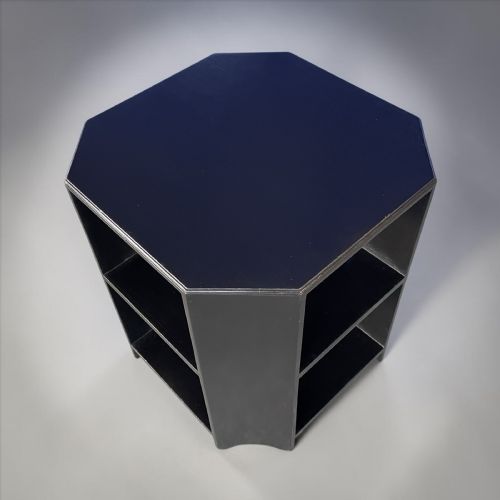
Art Deco examples lean toward streamlined geometric forms, smooth surfaces, and simplified silhouettes. They emphasise clean lines and functional modernity over intricate historical detail.
Can I use a nest of tables as individual coffee tables?
A nest of tables provides flexible surface space that can be separated around a room or stacked together when not needed. The smaller tables slide neatly beneath the main piece to save floor space.
Using them separately offers convenient placement for drinks or books next to seating. Their lightweight construction allows for easy movement across living spaces.