


Chinese Opium Coffee Table
A chinese opium coffee table brings low, grounded lines and dense timbers like rosewood or padouk directly into a modern room.
Chinese Opium Coffee Table
A chinese opium coffee table stands low to the floor, taking its architectural lineage from traditional sleeping and seating platforms known as kang beds. These versatile pieces function effortlessly as modern coffee tables, offering a broad, flat surface scaled for contemporary living spaces while retaining historical form.
Most examples encountered here date from the nineteenth century through the early twentieth century, spanning the late Qing dynasty and the Republic period. The selection relies heavily on substantial oriental hardwoods, resilient elm, and occasional surfaces finished in red lacquer.
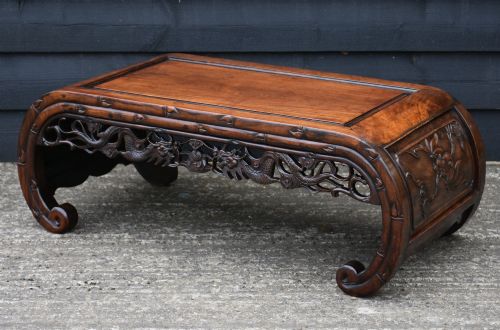
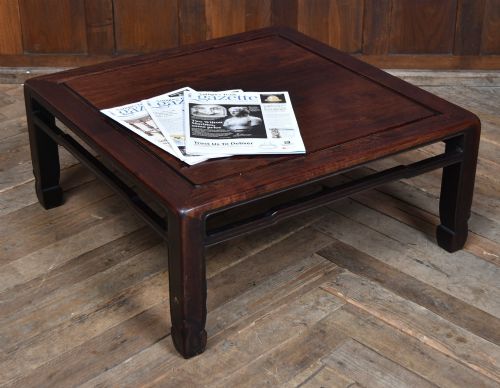
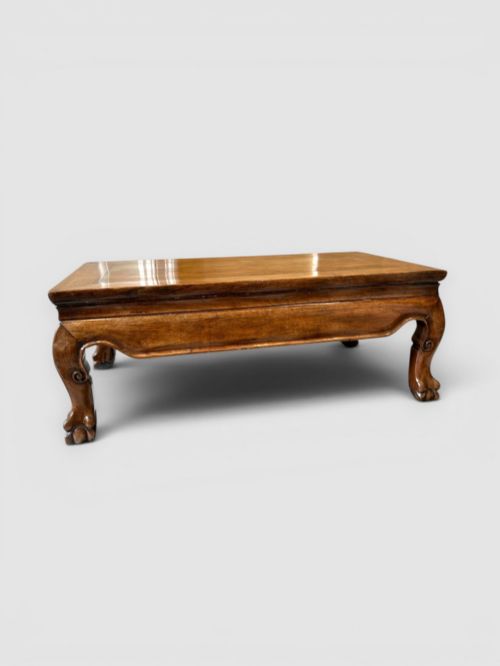
The silhouette generally presents as a low rectangular or square platform, sometimes featuring subtle scroll ends that echo classical Chinese furniture design. Buyers find both restrained, clean-lined examples and heavily carved versions bearing dragon details or floral motifs.
Materials and construction
Makers utilised dense, durable timbers including rosewood, padouk, and general oriental hardwood, selecting woods capable of supporting weight despite the low profile of the frame. These dense materials often develop a rich, deep patina through decades of handling and wax polishing.
Surface treatments range from clear timber finishes that highlight the natural grain to mineral pigments and traditional red lacquer applications. Joinery relies on traditional interlocking techniques rather than modern metal fasteners, allowing the timber to expand and contract naturally over time.
Many of these low tables spent their early lives holding tea sets rather than opium.
Judging quality and craftsmanship
Quality rests upon the selection of the timber and the crispness of any carved ornamentation, such as scroll ends or dragon motifs. Superior pieces display tight, deliberate joinery and a warm, glowing patina that indicates careful polishing and age.
Proportion and scale distinguish finer examples, where the thickness of the top board balances harmoniously with the strength of the legs. Lesser pieces may exhibit coarse carving or replacement timbers that disrupt the visual integrity of the original design.
The Chinese Opium Coffee Table Glossary
- Kang
- A heated brick sleeping platform in traditional northern Chinese homes, which inspired the low tables built to sit upon them. These portable platforms served multiple domestic uses throughout the day.
- Padouk
- A heavy, durable tropical hardwood prized for its reddish-brown colour and stability in furniture construction. It frequently appears in high-status nineteenth-century tables.
- Huali
- A traditional Chinese term for fragrant rosewood timbers used in classical furniture. This dense wood takes a fine polish and shows intricate natural figuring.
- Patina
- The deep, lustrous surface sheen developed by aged timber through handling, exposure to light, and waxing. A good patina denotes authenticity and careful stewardship.
Chinese Opium Coffee Table: Frequently Asked Questions
What is a kang table?
A kang table is a low wooden platform historically placed upon a heated brick bed in traditional Chinese architecture for dining, writing, or resting.
Today, these versatile platforms function perfectly as low coffee tables in contemporary living rooms.
How do I style a low table?
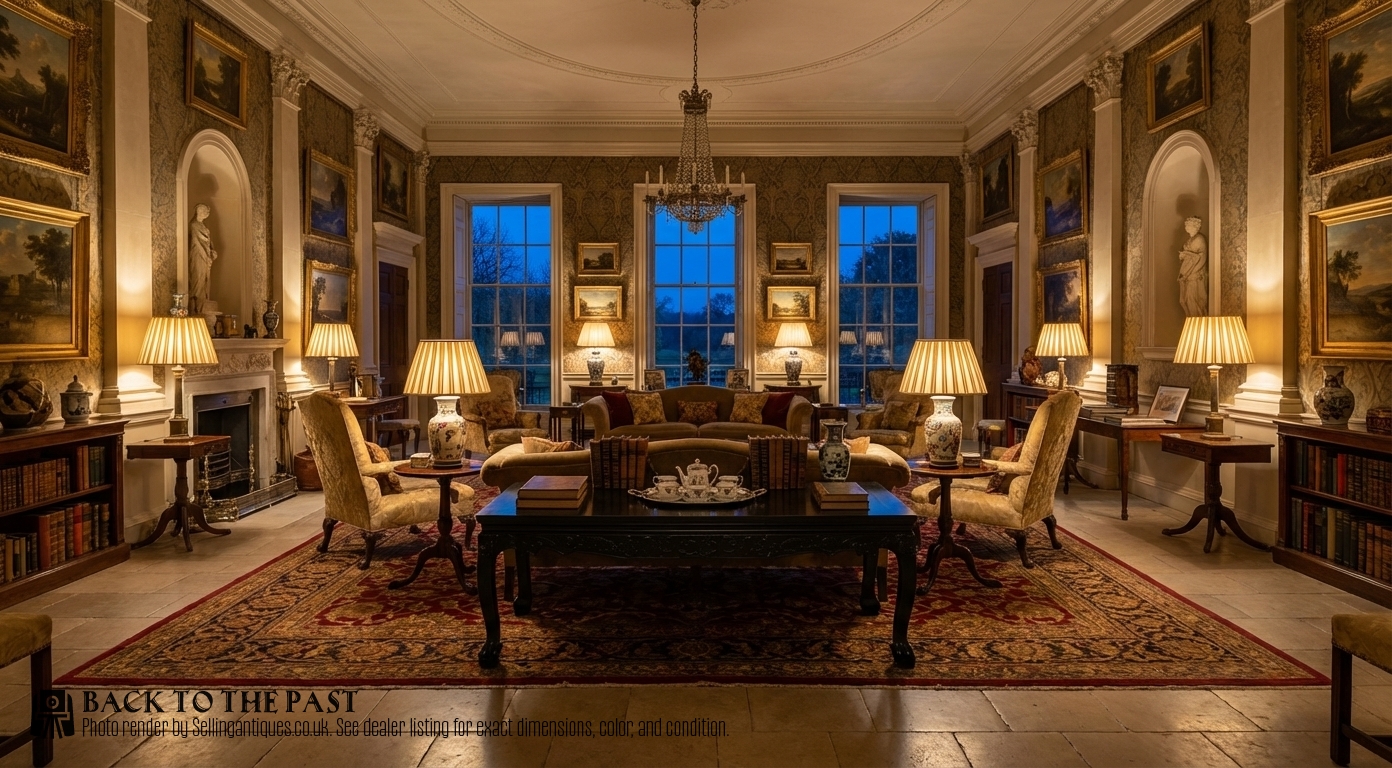
Because of their modest height, these tables anchor a room by drawing the eye downward and creating a sense of open space above.
Pair them with low-slung seating or minimalist sofas to maintain the correct visual proportions within the interior.
Are these tables solid wood?
Traditional pieces are constructed from heavy oriental timbers such as rosewood, padouk, or elm, joined without modern metal hardware.
This dense timber construction ensures the low frames remain remarkably sturdy and resilient.
How do I identify the period?
Dating relies on timber selection, construction methods, and stylistic cues associated with the Qing dynasty and the early twentieth century.
Tables from the nineteenth century often display a deeper, richer patina and hand-carved scroll ends.