

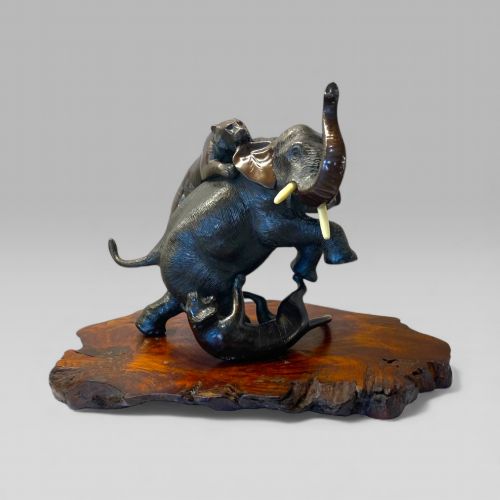


Oriental Metalwork Okimono
These oriental metalwork okimono are finely cast figures and sculptures designed for display, bringing intricate Japanese artistry into your interior.
Oriental Metalwork Okimono
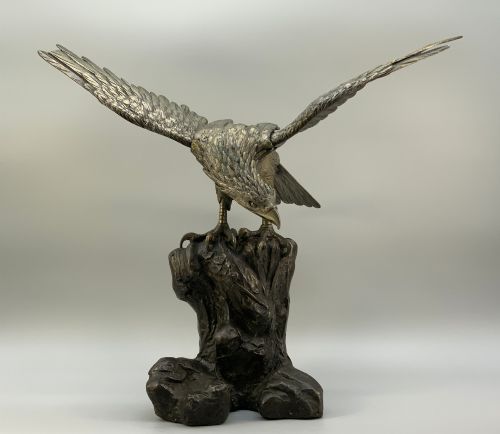
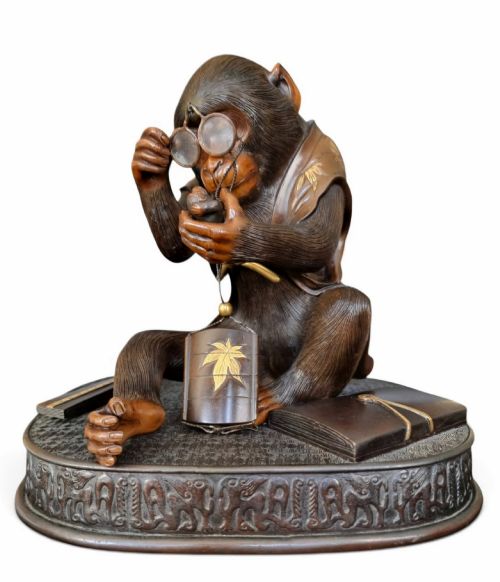
When you search for oriental metalwork okimono, you encounter sculptural pieces originating predominantly from the Meiji period, spanning the late nineteenth and early twentieth centuries. These objects range from naturalistic animal models such as eagles, hawks, elephants and monkeys to human figures including scholars and geisha.
The form is essentially decorative, intended for domestic display as standalone table sculptures or companion groups. You will frequently find animals rendered in realistic detail, often depicted in dynamic poses like an elephant fighting tigers or a rat clutching a chestnut.
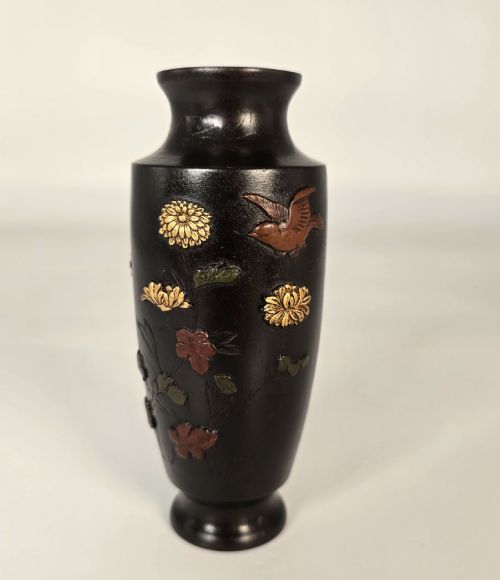
In addition to standalone fauna and figures, the category encompasses related sculptural vessels such as bronze vases. The physical presence of these pieces varies from modest table objects to large scale groups measuring up to sixty-eight centimetres.
Materials and Techniques
Makers utilised bronze as the primary medium, frequently applying patination to achieve deep brown or dark surface tones. Mixed metals appear regularly, combining copper and other alloys to create contrasting colouration on the surface of the sculpture.
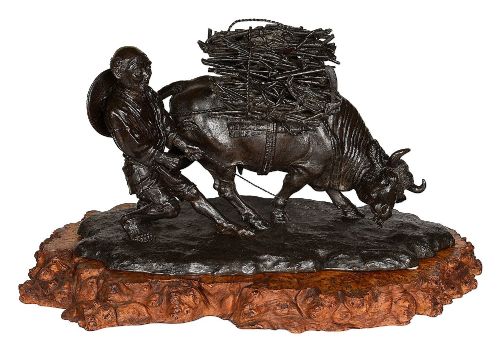
Detailing often incorporates gold inlay and shakudo, a specialised copper and gold alloy that provides a rich purple-black finish. Wood and burr wood elements occasionally appear as integral bases or components paired with the metal sculptures.
Listings feature pieces spanning the nineteenth and early twentieth centuries, predominantly anchored in the Meiji period.
Judgement of Quality
Quality rests heavily on the fidelity of the casting and the precision of the surface chiselling. Fine works display anatomical accuracy in subjects like birds, primates and domestic animals, capturing tension and movement with high naturalism.
The application of mixed-metal details, gold inlay and controlled patination distinguishes superior examples from simpler production. Signed pieces associated with notable makers demonstrate a higher grade of artistry in the finishing stages.
Jomi Eisuke·Tsunemitsu
The Oriental Metalwork Okimono Glossary
- Okimono
- A Japanese ornamental object designed for display in a tokonoma alcove or on a shelf. These freestanding sculptures represent animals, people and mythical subjects.
- Meiji Period
- The era in Japanese history lasting from 1868 to 1912, characterised by rapid modernisation and the opening of trade with Western markets. Much of the metalwork exported dates to this span.
- Shakudo
- A traditional Japanese alloy of copper containing a small percentage of gold, treated with a chemical solution to produce a dark blue-black or purple patina. It is used for contrasting highlights.
- Patinated Bronze
- Bronze that has been chemically treated to alter its surface colour and texture. This technique enhances the visual depth of feathers, fur and garments.
Oriental Metalwork Okimono: Frequently Asked Questions
What is an okimono?
An okimono is a Japanese freestanding display piece intended for interior decoration. They were produced in large numbers during the late nineteenth century for export to Western collectors.
Unlike utilitarian items, these sculptures exist purely for aesthetic appreciation, taking the form of animals, figures and natural scenes.
How do I identify Meiji period metalwork?
Meiji period metalwork is identified by its association with the historical dates between 1868 and 1912, alongside specific stylistic markers like naturalistic animal depiction and mixed-metal inlay. The use of patinated bronze and shakudo is typical of this era of Japanese craftsmanship.
Many pieces reflect the technical mastery achieved by Japanese metalworkers responding to international demand during the late nineteenth century.
Where should I place an okimono?
These sculptures suit stable display surfaces such as sideboards, tables or dedicated display shelves where their detail can be examined closely. Because materials like bronze and wood respond to environment, keep them away from direct heat sources and excessive moisture.
Larger scale animal groups work well as focal points in a room, while smaller figures fit neatly into cabinet displays.
What subjects are common in these sculptures?
Animal subjects dominate the category, including eagles, hawks, elephants, monkeys, dogs and turtles. Human figures such as scholars, woodcutters and geisha also appear frequently in the available work.
Narrative scenes, such as an animal clutching food or engaged in combat, are characteristic of the expressive repertoire used by the makers.