



Oriental Metal Charger
An oriental metal charger is a substantial decorative plate or tray worked in copper, brass, and enamel, prized for intricate pictorial scenes of nature and mythology.
Oriental Metal Charger
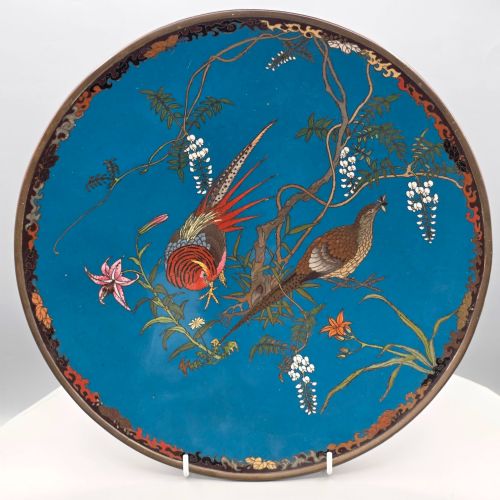
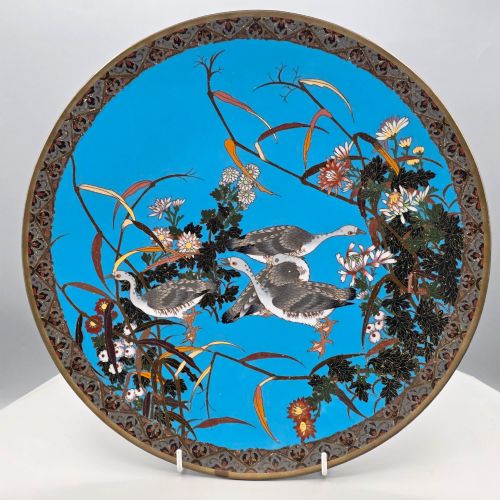
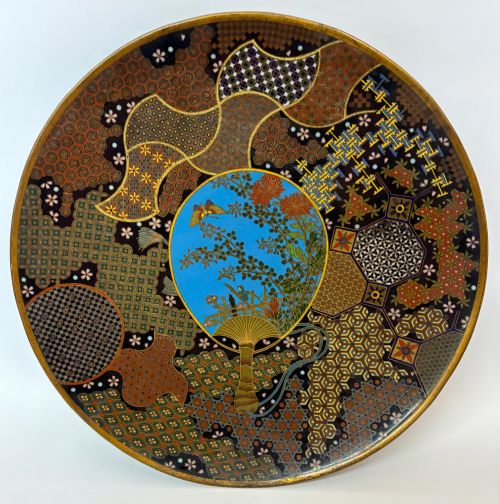
An oriental metal charger functions primarily as a decorative display plate or large plaque, created to showcase elaborate metallic and vitreous craftsmanship. When browsing this selection, buyers encounter circular, octagonal, and square metal trays originating mainly from Japanese Meiji and Edo periods, alongside examples from the Qing Dynasty. Common visual themes span naturalistic subjects like leaping koi, birds on branches, and landscapes, as well as mythical motifs such as dragons, phoenixes, and samurai figures.
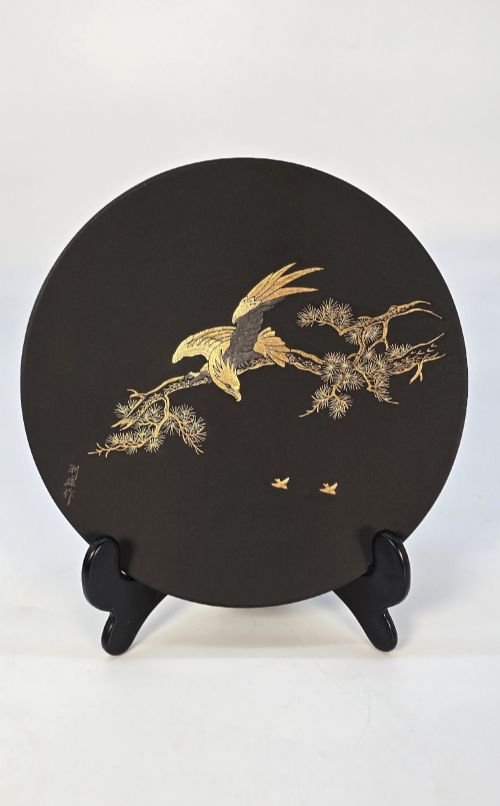
The dominant form on this page is the Japanese cloisonne enamel charger, dating predominantly from the nineteenth century between eighteen fifty and nineteen twenty. These pieces range from modest medium plates to huge chargers measuring up to fifty centimetres across. Alongside cloisonne work, the inventory includes patinated iron plaques with precious metal inlay, brass dishes in Komai style, and Chinese bronze plates.
How they were made
The construction of an oriental metal charger typically relies upon a heavy copper or brass base plate shaped into a wide tray. Artisans soldered thin metal wires, known as cloisons, onto this metallic surface to form intricate cellular compartments that delineate the intended pictorial design.
These wire cells were subsequently filled with coloured enamel pastes before undergoing multiple firings in a kiln to vitrify the glass powders. After cooling, the surface was polished smooth to expose the delicate network of wire outlines alongside the lustrous vitreous infill. Alternative techniques represented in the collection include patinated iron bases inlaid with gold and silver, and mixed-metal compositions.
Oriental Metal Charger Retail Price Guide 2026
Typical asking prices for oriental metal charger among the pieces listed under this phrase on Sellingantiques today, from the lower quarter to the upper quarter. They describe what is for sale here now, not the wider market.
The listings demonstrate a strong concentration of nineteenth-century Japanese Meiji and Edo period production, utilising copper, brass, and cloisonne enamel.
What varies in quality
The degree of refinement in an oriental metal charger is determined by the precision and density of the wirework. Finer examples display extraordinarily thin, uniform wires that delineate complex subjects like microscopic feather details or subtle landscape gradients without distortion.
Material depth and surface finish further distinguish the manufacturing standard. Superior specimens achieve a flawless, mirror-like polish across the vitreous enamel fields and feature intricate signature marks from celebrated workshops such as Nagoya or makers like Kinkozan.
Kinkozan
The Oriental Metal Charger Glossary
- Charger
- A large ornamental plate or shallow basin traditionally intended for display on a sideboard or wall rather than for practical dining use. These substantial vessels provide an expansive canvas for detailed pictorial metalwork.
- Cloisonne
- An ancient enamelling technique where metal wires are soldered onto a base plate to create small compartments that hold coloured glass pastes. The piece is then fired and polished until the wire edges flush seamlessly with the hardened enamel.
- Meiji Period
- The era of Japanese history spanning from eighteen sixty-eight to nineteen twelve, characterised by extensive modernisation and the flourishing of decorative arts exported globally. Pieces from this time often exhibit exceptional technical mastery in metal and enamel.
- Totai Shippo
- A specialised Japanese technique involving transparent enamel applied over a wire mesh or textured base without a solid metal backing, creating a translucent effect similar to stained glass. This method allows light to pass directly through the body of the vessel.
- Komai Style
- A decorative metalworking tradition associated with Kyoto, featuring iron or steel surfaces heavily inlaid with fine threads of gold and silver to produce dense pictorial patterns. Named after the master artisans who perfected the technique during the late nineteenth century.
- Ho-o Bird
- The mythical Chinese phoenix, symbolizing grace, virtue, and imperial authority, frequently rendered with elaborate tail feathers and sweeping crests upon nineteenth-century metalwork.
Oriental Metal Charger: Frequently Asked Questions
How were oriental metal chargers displayed?
These decorative plates and trays were primarily designed to be showcased on walls, mantelselshelves, or dedicated wooden display stands within grand interiors. Their substantial size and reflective metal surfaces made them striking focal points in Victorian and Meiji-era decorative schemes.
Collectors today continue to mount them securely on walls or exhibit them on sturdy plate stands to properly appreciate the intricate enamel work and inlaid metallic details from various viewing angles.
What motifs appear on these chargers?
The imagery spans a wide vocabulary of traditional flora and fauna, including chrysanthemums, geese, leaping koi, owls, and sprawling landscapes. Mythological subjects such as dragons, samurai figures, and ho-o birds also feature prominently across nineteenth-century examples.
Many pieces incorporate auspicious symbols that carry traditional cultural meanings of longevity, prosperity, and good fortune. These pictorial elements were meticulously rendered through wirework and coloured enamels by skilled artisans.
How do I distinguish Edo from Meiji pieces?
Pieces attributed to the late Edo period generally date from the mid-nineteenth century around eighteen sixty and often display robust forms with deep, rich enamel tones. They frequently feature grand pictorial subjects like massive dragons or birds executed with traditional heft.
Meiji period items span from eighteen sixty-eight onwards, marked by increasingly refined wirework and technical precision following the opening of international trade. These later works often incorporate sophisticated Nagoya or Kyoto workshop techniques and signed reserves.
How should I care for a metal charger?
Maintenance requires gentle dusting with a soft, dry cloth to prevent accumulation within the wire crevices and enamel surfaces. Harsh commercial cleaning agents, abrasive cloths, or liquid polishes must be strictly avoided to protect the delicate vitreous glass pastes and patinated metallic backgrounds.
Environmental stability is equally important for long-term preservation, keeping the vessels away from excessive humidity, direct sunlight, and sudden temperature fluctuations. Proper placement ensures the copper bases and enamel layers remain stable for decades.