



Oriental Medicine Chest
An oriental medicine chest is a utilitarian repository of drawers designed for herbal remedies, prized by collectors for its dense grid of compartments and honest joinery.
Oriental Medicine Chest
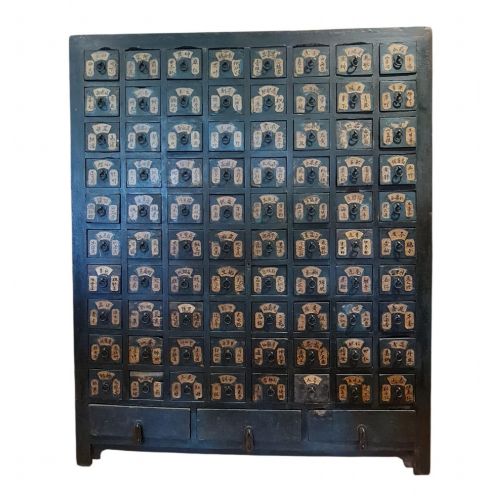
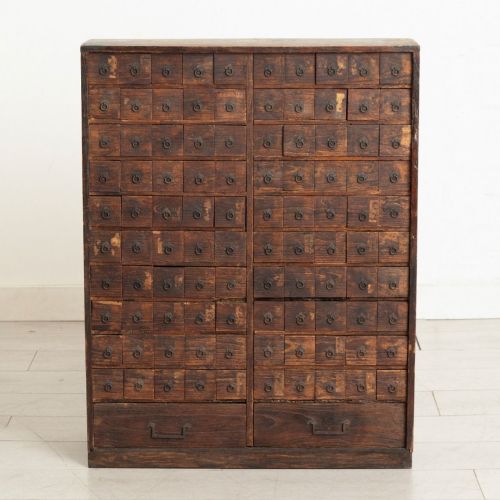
When you search for an oriental medicine chest, you encounter a specialised form of storage furniture designed to house medicinal herbs and dried ingredients. These pieces originate across East Asia, spanning Chinese provinces, Japanese workshops, and Korean dynasties. The form is defined by its repetitive facade of numerous small drawers, each once labelled to identify specific roots, barks, and minerals.
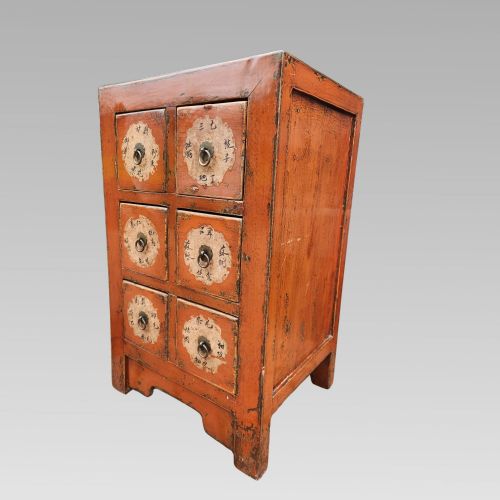
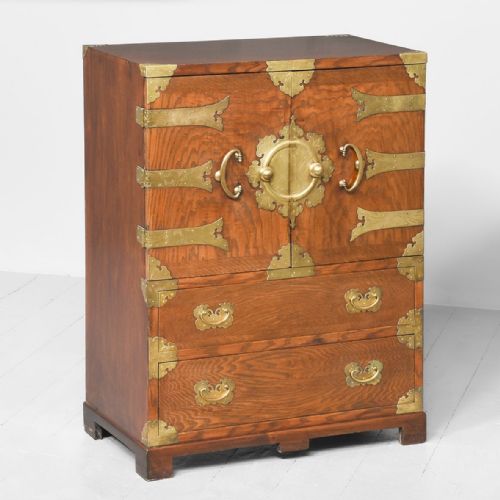
The versions you are most likely to meet on this page date from the eighteenth century through to the early twentieth century. They manifest as floor-standing apothecary cabinets, lower side cabinets, and smaller table chests constructed in regional variations like traditional Chinese, Qing Dynasty, and Korean Joseon styles. Elm and cedar predominate, often fitted with robust brass or iron hardware to secure the multitude of small compartments.
How they were made
Cabinetmakers utilised indigenous timbers such as elm and cedar, selecting woods capable of withstanding heavy daily use and dry storage conditions. Panels were joined using traditional framing techniques that allowed the timber to move naturally with changes in humidity. Surfaces were finished simply or treated with lacquer, preserving the natural grain of the wood while providing a durable barrier.
Metalwork played a structural and decorative role, with blacksmiths forging iron and brass strapwork, corner brackets, and flush pull handles. Drop handles and backplates were secured with pins or cotter keys, allowing each of the dozens of drawers to be pulled smoothly. Paper linings occasionally survived inside the drawers, adding a further layer of authentic historical detail to the interior construction.
The inventory spans side cabinets, floor-standing units, and small table chests dating from the eighteenth century onward.
What varies in quality
The calibre of a piece depends heavily on the integrity of its timber selection and the precision of its multi-drawer construction. Cabinets fashioned from dense burr elm or select cedar exhibit superior grain patterning and structural stability across their numerous partitions. The uniformity of the drawer fronts and the tightness of the surrounding pigeonholes separate standard provincial workshop output from finer examples.
Hardware preservation dictates much of the visual success of these cabinets, as original brass or iron mounts impart essential character. Pieces retaining their full suite of matching metal pulls and backplates demonstrate greater integrity than those with replaced fittings. The crispness of the original joinery around the dense banks of drawers further distinguishes superior cabinetmaking from cruder utility pieces.
The Oriental Medicine Chest Glossary
- Apothecary cabinet
- A specialised storage unit featuring a high density of small drawers intended for sorting medicinal ingredients and dried herbs. They often stand at floor level or sit upon a table.
- Brass hardware
- Metal fittings cast or beaten from copper and zinc alloy used to reinforce corners, secure joints, and provide drawer pulls. On these pieces, they offer essential structural support.
- Burr elm
- A prized wood figuring characterised by swirling knots and distorted growth patterns, selected for decorative panels and drawer fronts. It adds visual texture to the timber surface.
- Joseon style
- An aesthetic tradition originating from the Korean dynasty spanning several centuries, known for restrained forms and honest expression of materials. Cabinets in this style favour unadorned surfaces.
- Qing Dynasty
- The final imperial dynasty of China, lasting from the mid seventeenth to the early twentieth century. Pieces from this era often display traditional regional carving and robust proportions.
Oriental Medicine Chest: Frequently Asked Questions
What were oriental medicine chests used for?
These cabinets served traditional practitioners of herbal medicine as secure repositories for dried roots, leaves, and animal components. Each tiny drawer held a specific ingredient, allowing dispensers to locate remedies quickly.
The large number of compartments prevented cross-contamination and kept fragile botanical stores organised in busy dispensaries and village clinics.
How do I date an antique medicine chest?
Dating relies on observing wood ageing, construction methods, and the style of the regional workshop that produced the cabinet. Eighteenth and nineteenth century pieces typically show hand-cut joinery and deeper patina on the timber surfaces.
Twentieth century examples often incorporate machine-cut elements and standardised hardware while maintaining traditional forms.
Where should I place a medicine chest at home?
These cabinets suit hallways, living rooms, or studies where their strong vertical or horizontal drawer grids can be appreciated close up. Placing them away from direct heat sources protects the dry elm or cedar timbers.
Their compact drawer configuration also makes them effective storage units for small modern household items.
How do I tell Chinese and Korean chests apart?
Chinese apothecary chests frequently feature massive banks of dozens of drawers with uniform small pulls and occasionally carved framing. Korean cabinets often lean towards simpler timber panels with prominent brass strapwork and distinct side proportions.
Regional styles also reveal themselves in the choice of native woods and the subtlety of the surface finishing.