



Dark Wood Apothecary Cabinet
These dark wood apothecary cabinet examples offer compact multi-drawer storage shaped by medical, shop and scientific use across centuries.
Dark Wood Apothecary Cabinet
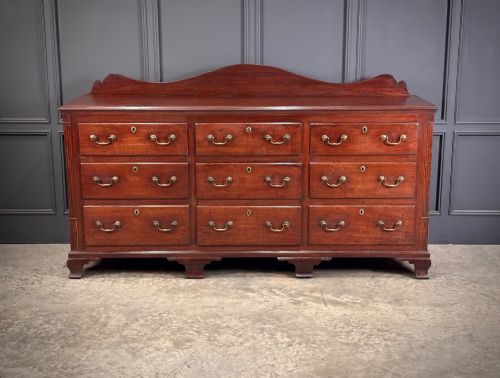
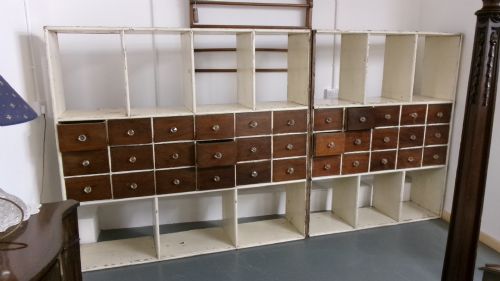
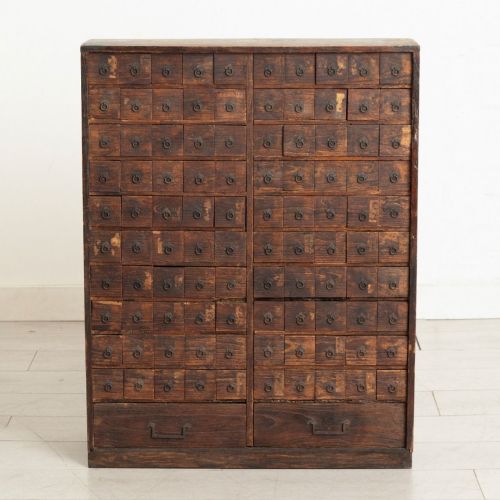
A dark wood apothecary cabinet serves as a multi-drawer storage vessel originating from chemist shops, surgeries and specialised trades. When searching for a dark wood apothecary cabinet, buyers encounter bank of drawers formats, wall cabinets and countertop display pieces designed for organising small items.
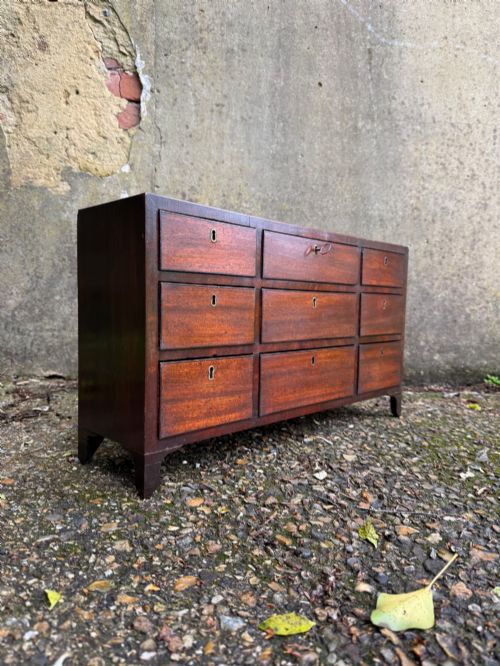
The selection ranges from 18th century mahogany specimens to Victorian chemist shop fittings and Edwardian seed chests. Chinese elm and Japanese examples also appear alongside English utilitarian furniture and French ironmongers drawers.
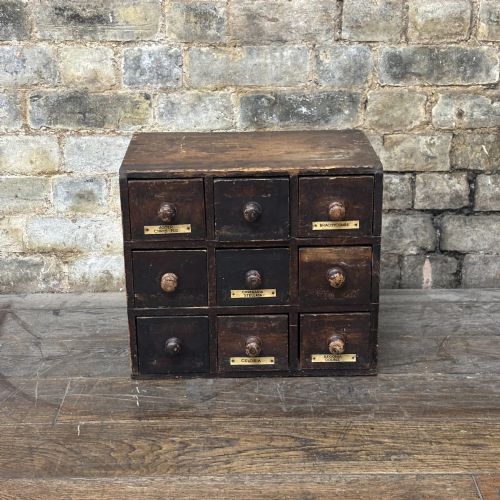
Most pieces function as banks of small drawers intended for medicines, seeds, watch parts or microscope slides. They provide practical tabletop or wall-mounted storage with numerous compartments built into dense dark timber.
How they were made
Cabinet makers utilised dense hardwoods including mahogany, teak and elm alongside pine, deal and iron reinforcements. Timber selection prioritized durability and structural stability for heavy banks of numerous small drawers.
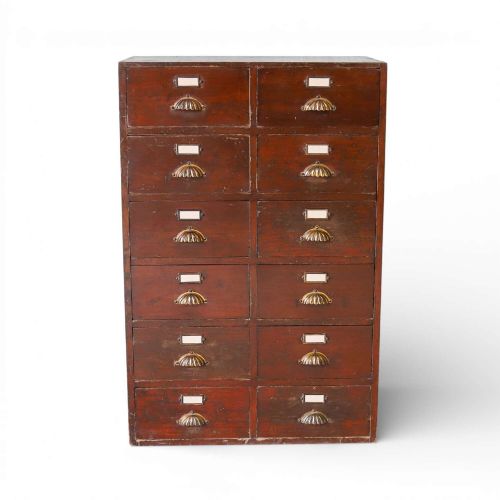
Construction details include original shell pulls, brass label holders and glass fronts for display purposes. Surfaces show the dark patination accumulated through decades of commercial or scientific handling.
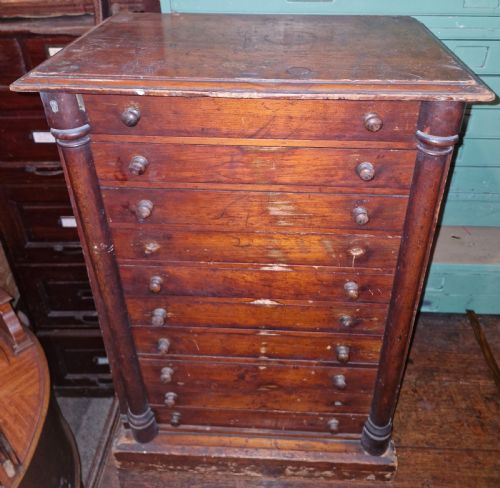
One twenty-eight drawer specimen cabinet is designated specifically for microscope slides.
What varies in quality
Quality rests in the density of the drawer configuration, the survival of original brass hardware and the crispness of the timber joinery. Finer pieces retain matching label holders, undamaged glass and untouched surface patination.
The distinction between utility shop fittings and higher cabinet-making lies in secondary woods, dovetail precision and the complexity of internal partitions designed for specialised instruments or specimens.
The Dark Wood Apothecary Cabinet Glossary
- Bank of drawers
- A chest featuring numerous small drawers arranged in a grid, typical of shop fittings and apothecary storage.
- Shell pull
- A stamped brass handle shaped like a scallop shell, frequently incorporating a slot for paper labels.
- Specimen chest
- A specialised cabinet built to house natural history samples, microscope slides or small instruments in shallow drawers.
- Deal
- A British term for softwood timber, particularly pine or fir, used in secondary framing and utilitarian furniture.
- Chemist shop fitting
- Heavy-duty commercial cabinetry designed for behind-the-counter storage in nineteenth-century pharmacies.
Dark Wood Apothecary Cabinet: Frequently Asked Questions
What were apothecary cabinets used for?
Apothecaries and chemists utilised these multi-drawer chests to store dried herbs, roots, powders, and prepared medicines securely. The numerous small compartments kept distinct ingredients separated and organised behind a counter.
Later adaptations served similar sorting purposes for watch repairers, seed merchants, and microscope slide collectors who needed systematic organisation for tiny items.
How do I date a dark wood cabinet?
Dating relies on construction methods, timber choice, and hardware styles visible on the piece. Eighteenth and nineteenth-century examples often display hand-cut dovetails and heavy mahogany or elm construction.
Twentieth-century iterations introduce standardised fixings, alternative softwoods, and simpler joinery patterns associated with Edwardian and later commercial environments.
Are all these cabinets English?
The selection includes pieces from British workshops alongside items originating in China, Japan, and France. Regional variations appear in the choice of local timbers such as Chinese elm or teak.
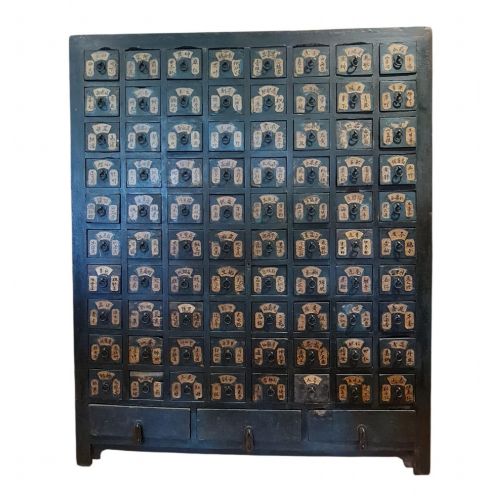
Each geographic origin dictates specific construction traits, from Shanxi Province medicine chests to Victorian chemist shop fittings.
Can I hang a wall cabinet?
Several formats include wall-mounted cupboards and glazed display cabinets designed to attach directly to vertical surfaces. These units typically feature hanging fixings integrated into the backboards.
Heavier banks of drawers require countertop placement or floor standing support due to the substantial weight of dense hardwood and multiple contents.