


Antique Merchant Cabinet
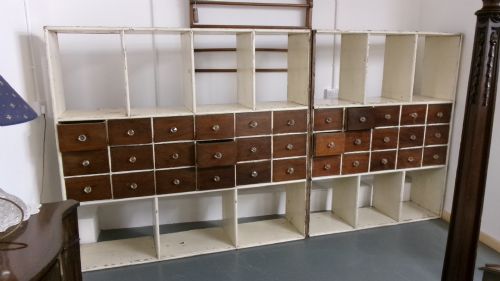
An antique merchant cabinet gathers the multi-drawer banks and specialised storage units that once served traders, apothecaries and workshops.
Antique Merchant Cabinet
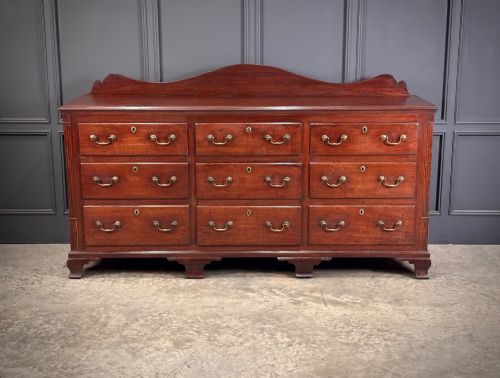
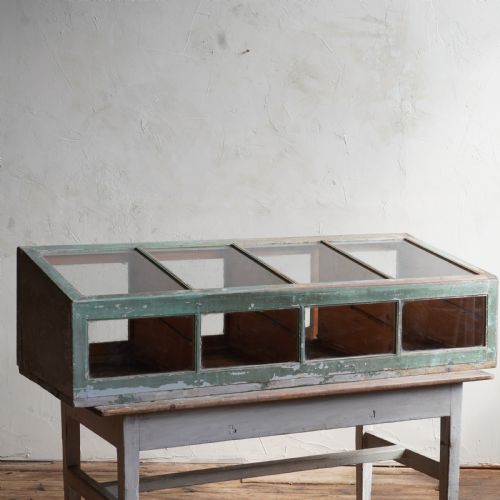
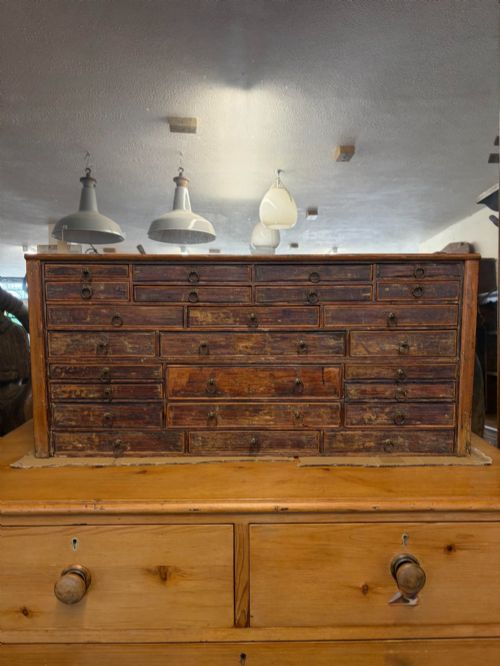
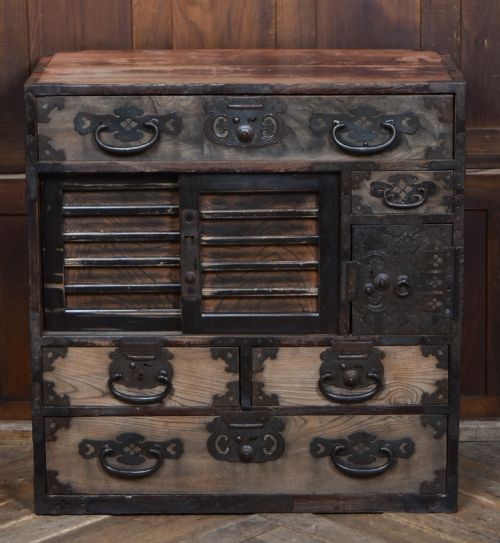
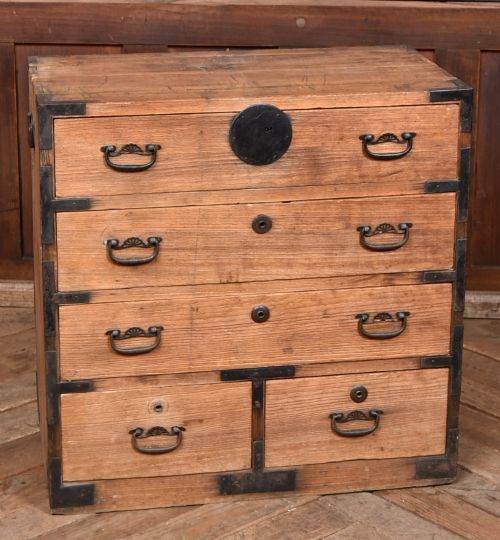
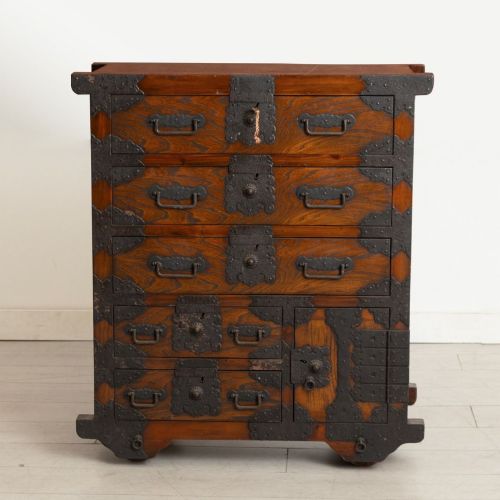
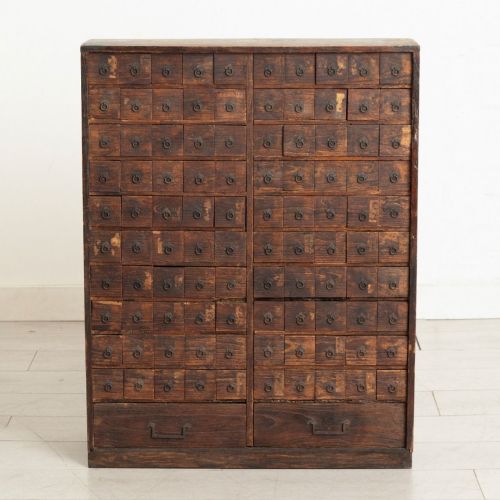
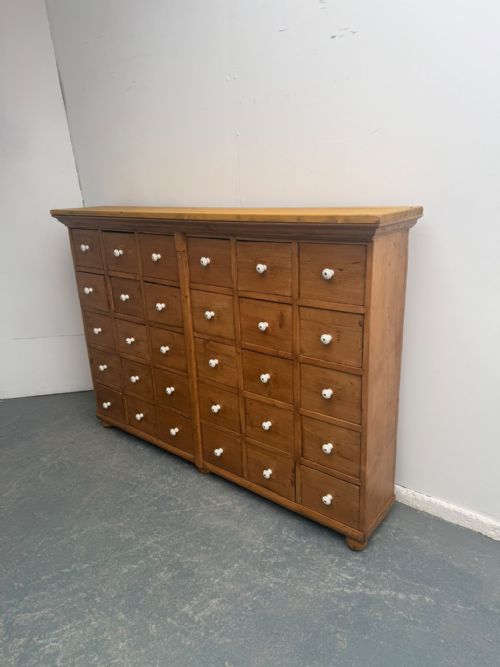
When you search for an antique merchant cabinet, you find functional multi-drawer units and storage pieces created for commercial, domestic or institutional use. The selections here include banks of drawers, apothecary chests, shop fittings, and Japanese tansu chests spanning several centuries.
How they were made
Construction relies heavily on dense hardwoods and sturdy softwoods, utilising mahogany, walnut, pine, elm, cedar, and teak. Metal and brass hardware frequently appear as drop handles, straps, and label holders on drawer fronts.
Joinery techniques serve heavy daily use, incorporating dovetailed drawer boxes and panelled frames. Surface finishes vary from natural polished walnut and waxed pine to painted shop fittings and red lacquered wood.
Materials span brass, pine, iron, glass, metal, mahogany, cedar, elm, teak, walnut, and keyaki wood.
What varies in quality
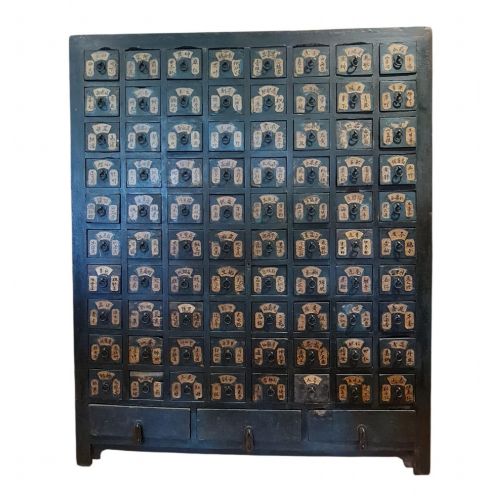
The degree of specialisation and scale sets examples apart, ranging from small countertop needle drawer cabinets to massive apothecary banks with dozens of drawers. The complexity of the internal configuration, such as eighty-drawer medicine chests or multi-tiered tansu systems, dictates the calibre of the piece.
Material selection and original hardware integrity define the standing of each item, with solid hardwoods like mahogany and keyaki occupying a different tier than standard pine utility pieces. Retaining original painted surfaces, shop signage, or maker attributions elevates the historical significance.
Luxmore's of Ilfracombe
The Antique Merchant Cabinet Glossary
- Bank of drawers
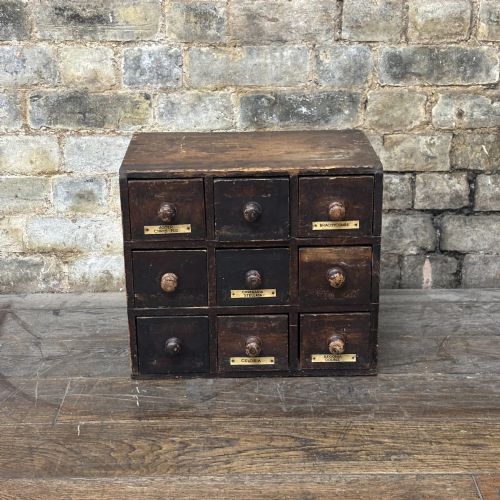
- A chest or cabinet featuring a large number of smaller drawers arranged in a grid, originally built for retail or storage utility. These pieces are common in Victorian shop fittings and apothecary furniture.
- Tansu
- A traditional Japanese mobile storage chest built with integrated iron hardware for transport and domestic use. Various regional types include kitchen mizuya and merchant chests.
- Apothecary chest
- A specialised multi-drawer cabinet designed to hold medicinal herbs, powders, or remedies. They often contain dozens of small, uniform drawers.
- Shop fitting
- Fixtures and cabinetry built specifically for commercial retail environments, including counters and drawer banks. These frequently display painted finishes or later sign-writing.
- Draper's cabinet
- Low countertop cabinetry or drawer banks utilised in fabric and textile shops to organise needles, ribbons, and small goods. They typically feature shallow drawers for dry stock.
Antique Merchant Cabinet: Frequently Asked Questions
What is a merchant cabinet?
A merchant cabinet is a functional storage unit, often featuring numerous drawers, designed for commercial trade or specialised organisation.
Examples range from English drapers' counters and chemist shop fittings to Japanese merchant tansu chests.
How were apothecary cabinets used?
Apothecary cabinets stored medicinal ingredients, dried herbs, and powders in systematic rows of small drawers.
Each drawer kept specific remedies segregated and accessible for compounding prescriptions in shops.
What wood are tansu chests made from?
Tansu chests utilise regional Japanese timbers including elm, cedar, keyaki, and kiri wood.
Iron hardware and strapwork reinforce the wooden structure for durability and movement.
How to live with a shop counter?
Shop counters and large drawer banks provide substantial storage capacity and flat work surfaces for modern rooms.
Their industrial and utilitarian origins allow them to function as sideboards, kitchen islands, or hallway consoles.
How do I date a merchant cabinet?
Dating relies on construction methods, wood types, hardware styles, and the historical period of the piece.
Listings attribute items across the eighteenth, nineteenth, and early twentieth centuries through these physical characteristics.