
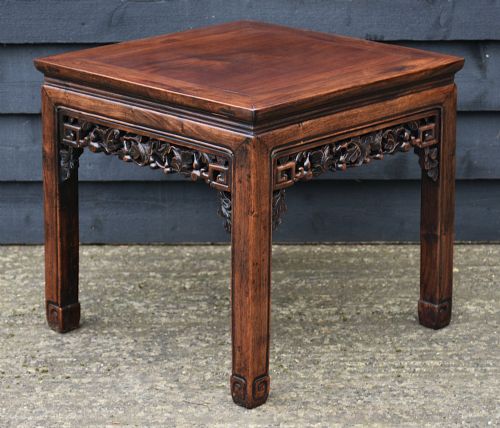
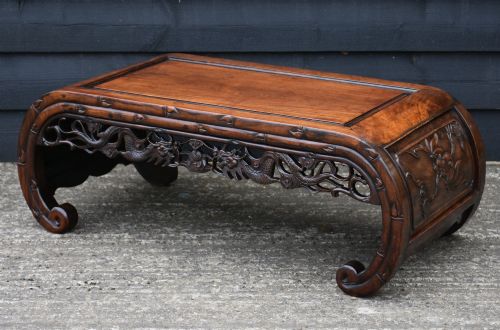


Oriental Kang Table
An oriental kang table is a low domestic platform designed for sitting or resting, bringing sculptural timber and ancient tradition straight into modern rooms.
Oriental Kang Table
An oriental kang table serves as a low surface for daily use, originally placed upon heated brick platforms in traditional homes. Buyers seeking an oriental kang table will discover low wooden forms adapted for contemporary living as coffee tables or side surfaces.
Regional Chinese styles and Qing Dynasty aesthetics shape the visual character of these listings. Artisans built them for practical floor-level tasks, resulting in compact silhouettes that anchor modern spaces with architectural presence.
How they were made
Joinery techniques define the construction of these tables, utilising dense timbers like rosewood, hongmu, and elm without relying on modern fasteners. Craftsmen shaped domestic hardwoods and figured woods to withstand centuries of structural movement.
Surface finishes include traditional red and black lacquer applications combined with mineral pigments and gilt detailing. Carved motifs such as scroll ends and dragon details emerge directly from the solid timber frame.
The furniture range includes red lacquer finishes and carved scroll-end designs originating across the nineteenth and early twentieth centuries.
What varies in quality
Depth of carving and sharpness of detail separate standard pieces from superior examples. Master carvers executed scroll ends and figurative motifs with crisp precision that maintains definition across the timber grain.
Patina and timber selection dictate the desirability of each surface. Dense rosewoods and well-preserved lacquers display a deep, lustrous warmth developed through age and regular handling.
The Oriental Kang Table Glossary
- Kang table
- A low platform table traditionally used on a heated brick bed in northern Chinese homes. These items functioned as writing desks, dining surfaces, or tea tables.
- Hongmu
- A translation meaning red wood, referring to dense and heavy tropical hardwoods used in fine Chinese furniture. This material takes a high polish and resists wear.
- Huali
- A prized hardwood variety belonging to the rosewood family, known for expressive grain patterns. Artisans selected huali for high-status scholarly items.
- Scroll-end
- A structural feature where the short ends of a table top curl upward in a graceful scroll. This design element prevents items from sliding off the low surface.
- Patina
- The surface sheen and texture developed on wood or lacquer through decades of use and polishing. A good patina shows rich depth rather than flat dullness.
Oriental Kang Table: Frequently Asked Questions
What is a kang table used for?
These low platforms served households as central surfaces for drinking tea, reading manuscripts, or sharing meals while seated on cushions or mats. Today, buyers adapt them easily as coffee tables in front of low modern seating.
Their compact height and sturdy proportions allow them to fit beneath windows or act as display stands for ceramic vessels and scholar objects.
How do I date an antique kang table?
Dating relies upon timber choice, joinery construction, and stylistic clues left by specific periods like the Qing Dynasty or the Republic era. Nineteenth-century examples often exhibit heavier rosewood construction and deeper hand-carved details.
Later pieces from the early twentieth century may show regional rustic influences or simpler elm frames without intricate figurative carving.
Are these tables solid hardwood?
Makers constructed the primary frames and tops using dense timbers such as rosewood, hongmu, elm, and padouk. These heavy woods provided the structural integrity needed for low tables subjected to daily domestic use.
Some decorative variants incorporate lacquer finishes over timber bases, combining mineral pigments and gilt work to achieve smooth coloured surfaces.
Where should I place a low table?
Low tables work effectively in living spaces as coffee tables where their horizontal lines contrast against taller upholstered sofas. They also function well as display surfaces in hallways or bedrooms.
Keeping them away from direct heat sources helps protect the antique timber and lacquer from drying out or splitting.