





Oriental Jar Table Lamp
An oriental jar table lamp brings weight and colour to a room, turning antique ceramics into functional household lighting.
Oriental Jar Table Lamp
When you search for an oriental jar table lamp, you encounter ceramic vessels converted into lighting fixtures, mostly originating from China and Japan across the eighteenth and nineteenth centuries. These pieces take the form of ginger jars, lidded vases, and spill vases, mounted as lamps to suit modern interiors.
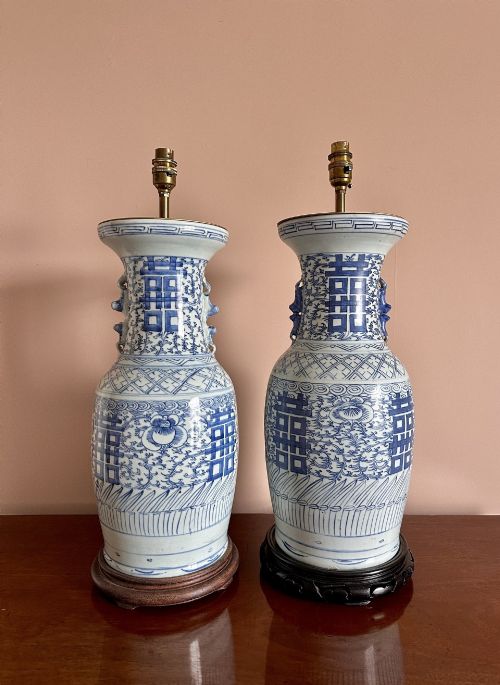
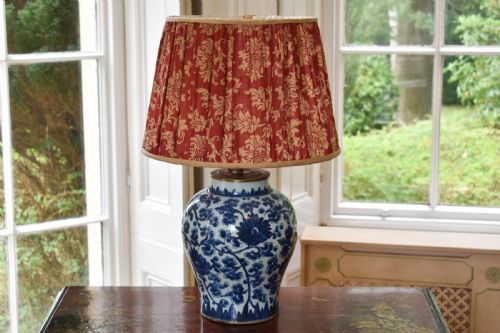
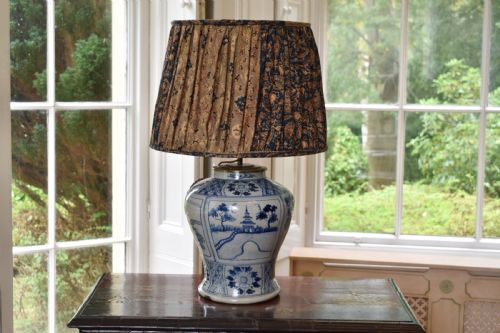
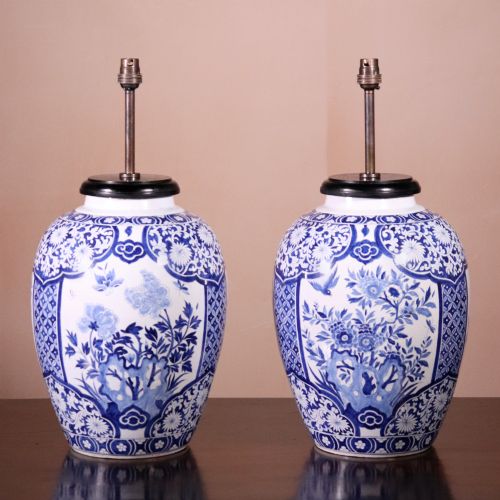
The version you are most likely to meet on this page is a nineteenth-century blue and white porcelain jar or vase, often decorated with prunus blossoms or traditional floral motifs. Pairs of ginger jars also appear frequently, alongside examples finished in Famille Rose, Famille Verte, and crackleware.
Originating styles span Chinese export and Qing Dynasty work alongside Japanese Meiji and Edo period pieces, occasionally filtered through French Chinoiserie or Paris porcelain interpretations. Each vessel carries the characteristic palette and glaze work of its period, adapted for electrical wiring while retaining the original ceramic body.
Materials and construction
The primary material is porcelain, shaped into jars and vases and finished with hand-painted underglaze blue or polychrome enamel palettes such as Famille Rose and Famille Verte. Makers also utilised crackleware glazes and applied decorative elements.
Metal mounts in brass and ormolu frequently secure the porcelain bodies, providing stability and structural support for the lamp fittings. Fabric and silk shades complete the construction, paired with wooden components where required for the base or mount.
Oriental Jar Table Lamp Retail Price Guide 2026
Typical asking prices for oriental jar table lamp among the pieces listed under this phrase on Sellingantiques today, from the lower quarter to the upper quarter. They describe what is for sale here now, not the wider market.
Spicy beginnings: ginger jars once held preserved ginger before finding a second life as stately living room illumination.
Quality and execution
The distinction between tiers rests upon the fineness of the hand-painted detail on the porcelain body and the crispness of the glaze application. Finer examples display precise brushwork in blue and white or rich polychrome enamels, whereas simpler versions show broader, more repetitive patterns.
The integration of metal mounts in brass or ormolu influences the character of the piece, with heavier, more bespoke mountings elevating the presentation of the jar. The condition and integrity of the underlying ceramic body, free from extensive restoration, govern the overall standing of the lamp.
Samson Porcelain
The Oriental Jar Table Lamp Glossary
- Ginger jar
- A storage vessel with a broad shoulders and a rounded body, originally used for spices and later adapted into lamp bases. These jars provide a stable, symmetrical silhouette.
- Famille Rose
- A palette of opaque enamel colours dominated by pink or rose hues, introduced in the eighteenth century. This style allows for subtle shading in floral and figural designs.
- Famille Verte
- A classification of porcelain decoration featuring a dominant green enamel palette alongside other contrasting colours. It is typical of Qing Dynasty export ware.
- Imari
- A style of Japanese porcelain decorated in underglaze blue, iron red, and gold, produced in Arita. These pieces present dense, colourful geometric and floral patterns.
- Crackleware
- A type of ceramic glaze characterised by a network of fine cracks intentionally formed during the cooling process. This finish adds tactile depth to the surface of the jar.
- Ormolu
- Gilded bronze used for mounts and decorative fittings on furniture and porcelain. It provides a bright metallic contrast to the ceramic body.
Oriental Jar Table Lamp: Frequently Asked Questions
How do I choose the right shade?
Select a fabric or silk shade that complements the scale of the ceramic jar without overwhelming its painted motifs.
Neutral tones allow the blue and white or polychrome patterns of the porcelain to remain the focal point of the room.
Are these lamps recently rewired?
Many antique jar lamps have been updated with modern electrical wiring to meet contemporary safety standards while preserving the vintage ceramic body.
Check individual descriptions to confirm the specific wiring status of each piece.
How do I clean the porcelain base?
Dust the ceramic surface gently with a soft, dry cloth to prevent the accumulation of dirt within the glaze crevices.
Avoid harsh chemical cleaners that might damage painted enamel details or metallic mounts.
Can I use these in pairs?
Symmetrical pairs of ginger jar lamps provide a balanced look when placed on matching sideboards, mantelpieces, or bedside tables.
Matching pairs share similar floral motifs or glaze styles from the nineteenth century.