




Oriental Hardwood Plant Pedestal
An oriental hardwood plant pedestal holds a heavy ceramic vessel or bronze urn in a drawing room.
Oriental Hardwood Plant Pedestal
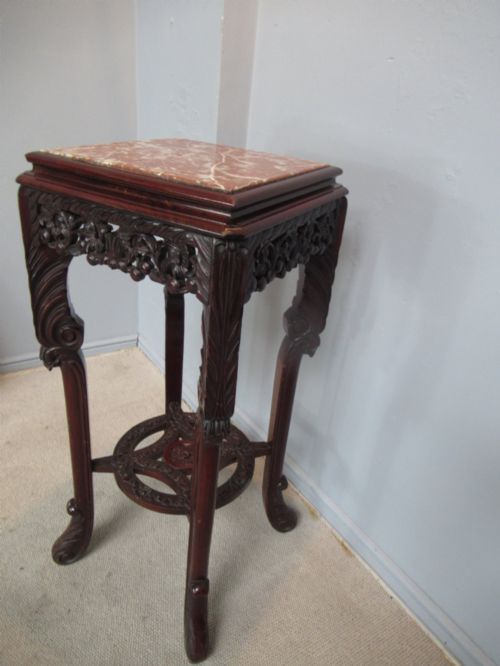
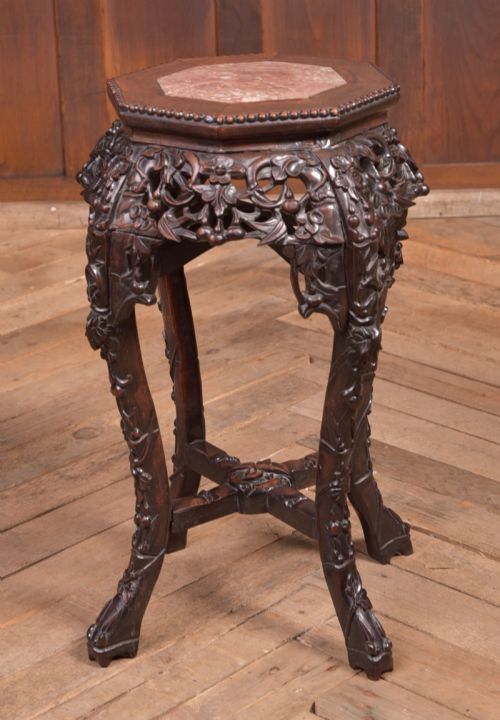
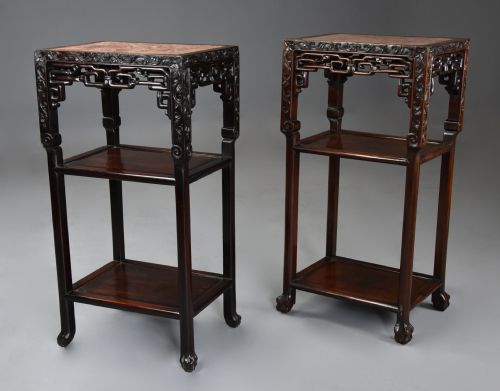
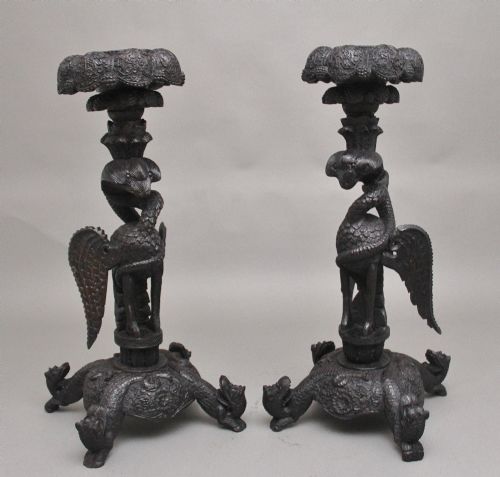
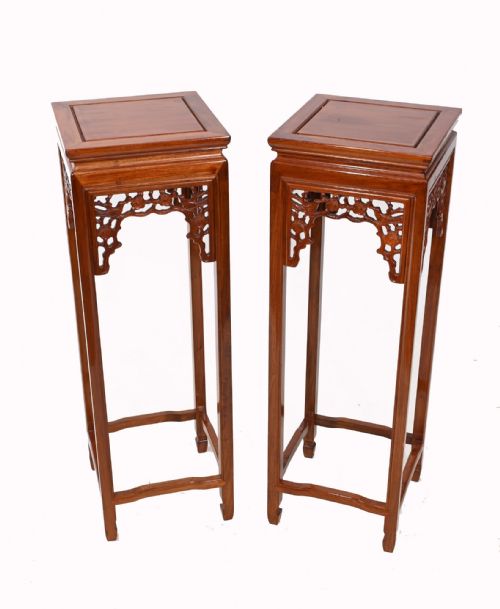
When you search for an oriental hardwood plant pedestal, you find raised display surfaces designed for heavy planters, jardiniere bowls and vases. The objects on this page span the nineteenth century into the early twentieth century, drawing on Chinese Qing dynasty traditions, Japanese Meiji craftsmanship and Anglo-Indian workshop practices.
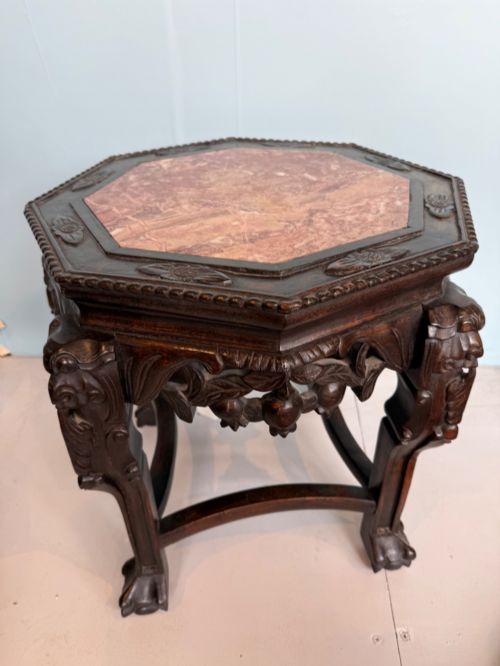
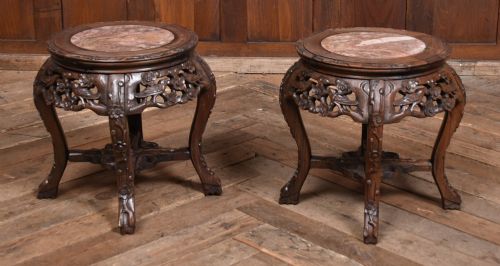
The most common survival is the Chinese hardwood pot stand or jardiniere stand, frequently paired with inset rouge marble tops. These items function equally as side tables, occasional tables and torchères within nineteenth-century domestic interiors.
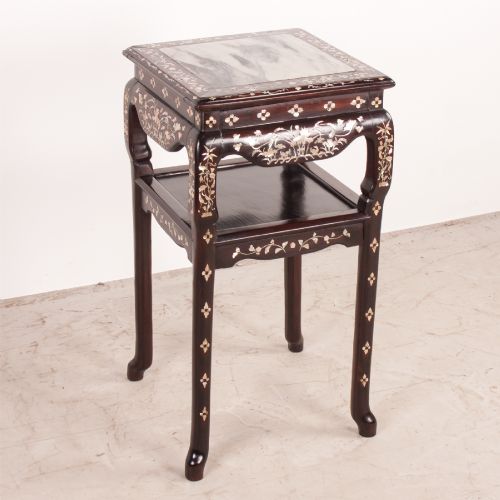
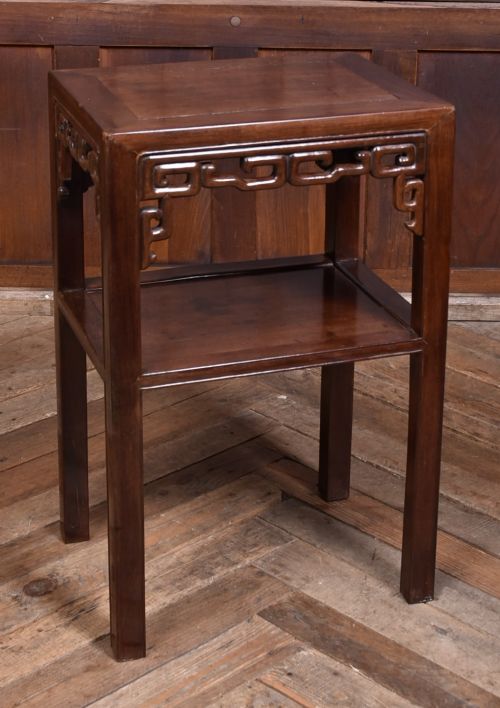
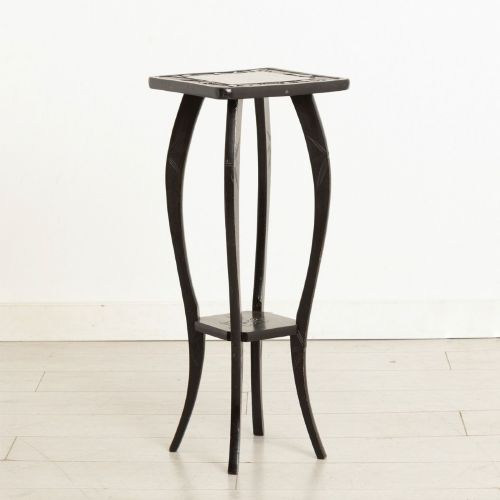
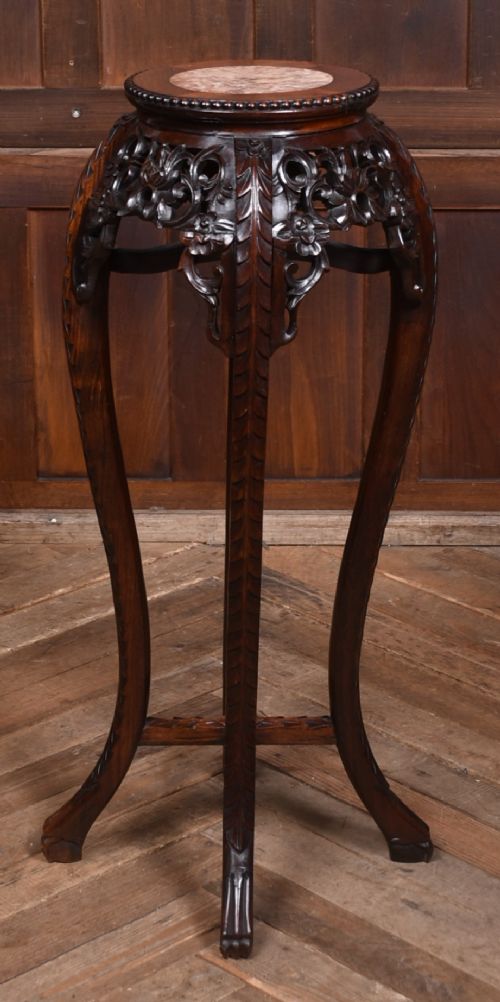
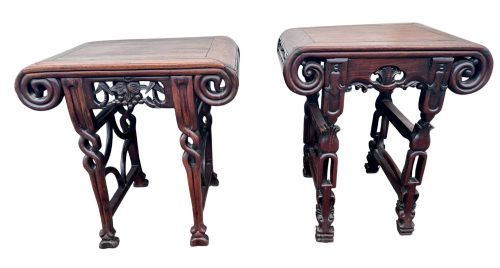
Design vocabulary shifts from traditional Chinese carving through export adaptations to ebonised wood finishes and mother-of-pearl inlay. Forms range from low rectangular tables to tall cylindrical pedestals intended for elevated display.
Craftsmanship and Proportion
Quality rests in the crispness of the hand-carving and the choice of primary timber, where dense padouk and huali wood outrank softer substitutes. Superior examples display deep relief work that remains sharp and well-defined across intricate joints.
The integration of the marble insert dictates the standard of the piece, requiring a flush, secure fit within the surrounding timber frame. Balance and structural rigidity in tall pedestals separate master craftsmanship from ordinary utility stands.
Listings feature 19th-century Victorian, Edwardian and Qing Dynasty periods alongside materials like marble, rosewood, padouk and huali wood.
Liberty of London
The Oriental Hardwood Plant Pedestal Glossary
- Jardiniere stand
- A tall or low table specifically constructed to support a decorative ceramic flower pot or plant bowl. These stands often feature water-resistant marble tops to protect the underlying timber.
- Torchère
- A tall ornamental stand or candlestick holder adapted in the nineteenth century for displaying large vases or sculptural lamps. They provide vertical accent points within a room layout.
- Padouk
- A heavy, durable tropical hardwood prized for its rich colour and dense grain structure. It serves as a primary material for high-status Chinese export furniture.
- Huali wood
- A traditional Chinese hardwood valued for its distinctive grain patterns and robust structural qualities. Cabinetmakers utilised this timber for elite Qing dynasty tables and display stands.
- Ebonised wood
- Timber treated with a dark finish to imitate the appearance of expensive ebony. This technique appeared frequently on nineteenth-century aesthetic movement and export pieces.
Oriental Hardwood Plant Pedestal: Frequently Asked Questions
What were oriental hardwood plant pedestals used for?
These pieces served primarily as elevated platforms for heavy ceramic jardiniere bowls, potted palms and large decorative vases in Victorian and Edwardian reception rooms.
By lifting plants off the floor, households protected carpets from moisture while displaying botanical specimens at eye level near windows.
How can I tell the age of a plant pedestal?
Examine the timber construction, tool marks and joinery methods visible underneath the platform or inside the apron. Nineteenth-century pieces typically exhibit hand-cut joinery and dense tropical hardwoods with natural patination.
Cross-reference the decorative motifs, such as Qing dynasty carving styles or ebonised Victorian finishes, to narrow down the decade of production.
Are these stands sturdy enough for daily use?
Most oriental hardwood pedestals possess robust mortise and tenon frames designed to support substantial weight without wobbling. Dense timbers like rosewood and padouk provide inherent structural stability.
Placed on level flooring, they easily function as stable side tables or lamp stands in modern living spaces.