


Oriental Hall Console
An oriental hall console brings architectural presence and distinct regional character to an entrance, spanning altar forms to lacquer side tables.
Oriental Hall Console
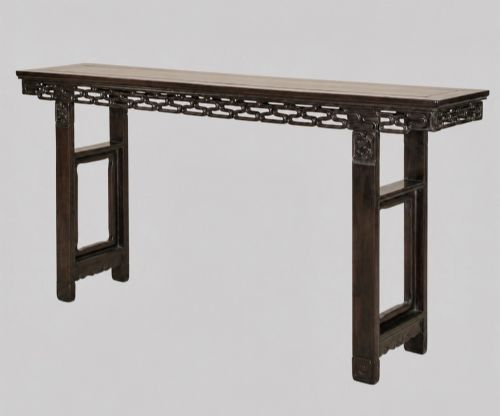
An oriental hall console encompasses a diverse group of tables designed for placement against a wall, frequently appearing in the form of altar tables, side tables, and demi-lune pieces. When searching for an oriental hall console, buyers encounter forms originating from China and Burma, spanning the eighteenth century through the Edwardian period and the mid-century.
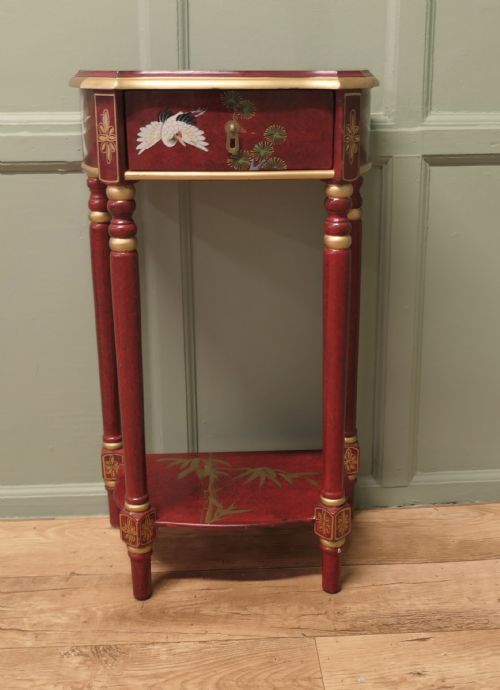
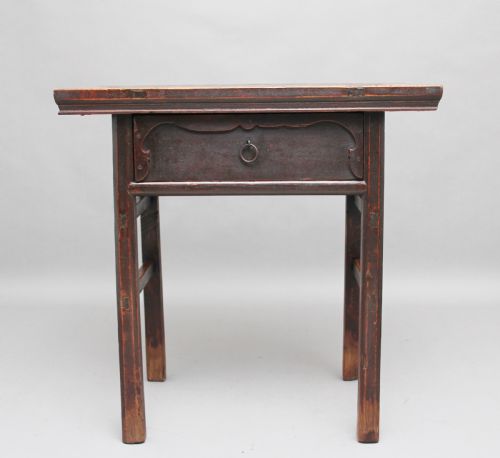
The material palette of these pieces relies heavily on elm and dense hardwoods such as rosewood and hongmu, alongside lacquered wood finishes. Structural variations include traditional altar proportions with upturned ends, three-drawer configurations, and half-moon formats suited for compact hallways.
Stylistic influences range from Qing Dynasty pieces and Chinese provincial designs to European interpretations in the Chinoiserie taste. These tables function practically as surfaces for lamps or mirrors while serving as focal points in domestic interiors.
Assessing quality and execution
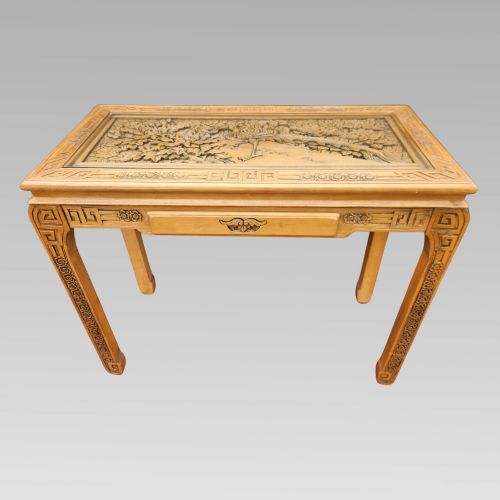
The standard of carving and the crispness of detail separate standard provincial pieces from finely worked examples. Deeply articulated dragon motifs or complex relief panels indicate superior workshop output.
Material selection significantly influences the standing of a console, with dense rosewoods and well-preserved original lacquer surfaces commanding greater regard than softer, plain elm alternatives. The integrity of the original finish and the balance of proportions ultimately define the piece.
Listings for this phrase feature materials ranging from elm and glass to marble and lacquered wood, spanning the eighteenth to the twentieth centuries.
The Oriental Hall Console Glossary
- Altar table
- A traditional Chinese table form characterised by a rectangular top, often with upturned flange ends, originally designed for ritual use. These pieces now serve as narrow console tables in domestic hallways.
- Chinoiserie
- European decorative style reflecting Chinese artistic influences, popular in furniture design during the eighteenth and Edwardian periods. It appears on half-moon and card tables adapted for Western interiors.
- Demi-lune
- A half-moon shaped furniture form designed to sit flush against a wall. These tables frequently occur as pairs in oriental hall settings.
- Hongmu
- A translation meaning red wood, used to describe various dense and heavy tropical hardwoods utilised in Chinese furniture making. It provides durable surfaces with rich natural colouration.
- Lacquer
- A durable finish made from processed tree resin applied in multiple coats to wooden surfaces. It often appears in red or black variants on side tables and consoles.
Oriental Hall Console: Frequently Asked Questions
Where should I place an oriental hall console?
These tables suit narrow entranceways, hallways, and living spaces where a shallow surface is required against a wall. Their slender proportions allow them to fit into transitional areas without obstructing movement.
Pairing a console with a mirror or placing a lamp upon the surface creates a functional focal point. The architectural lines of altar tables work particularly well against plain walls.
How do I identify a Qing Dynasty console?
Qing Dynasty pieces often feature dense hardwoods, traditional joinery, and specific structural markers such as recessed leg placement or carved spandrels. The proportions tend to reflect classical Chinese architectural principles.
Examine the underside and joints for signs of age and traditional construction methods. Survailing examples frequently display patination accumulated over generations of use.
What is the difference between an altar table and a side table?
Altar tables typically feature longer, narrower proportions and occasionally include upturned flanges at the short ends of the top board. They derive from ritual furniture adapted for domestic display.
Standard side tables and console tables generally feature flat, square, or half-moon tops designed purely for utility and display in domestic rooms.
How do I care for a lacquered console?
Lacquered surfaces require gentle maintenance using a soft, dry cloth to remove dust. Avoid placing them in direct sunlight or areas with extreme humidity fluctuations to prevent finish degradation.
Keep wooden and lacquered surfaces away from direct heat sources. Using coasters or protective pads helps preserve the integrity of the top surface.