


Oriental Guardian Lion Statues
Oriental guardian lion statues stand as powerful cultural protectors, bringing traditional forms and centuries of craftsmanship into domestic spaces.
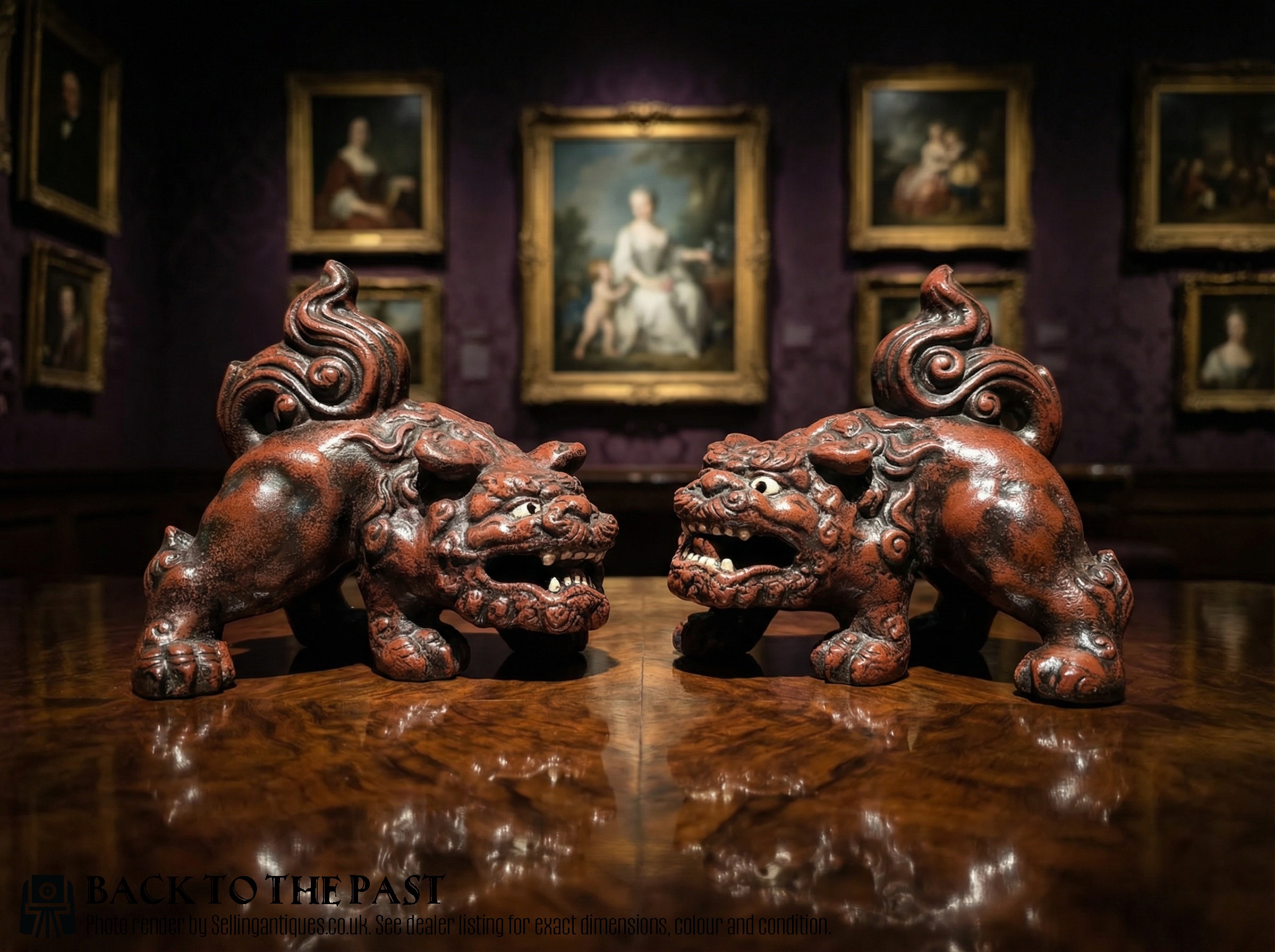
Oriental Guardian Lion Statues
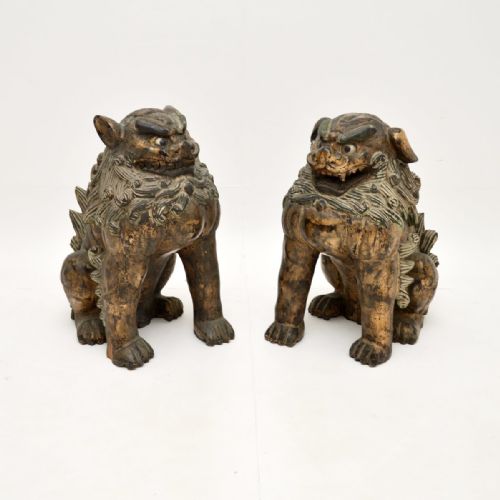
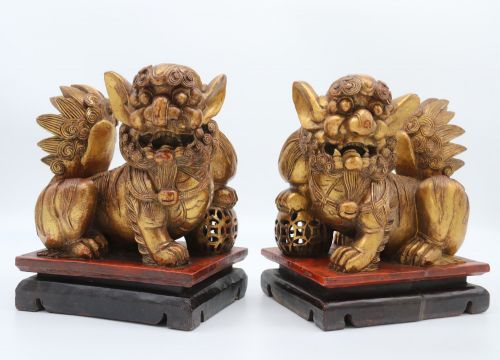
Oriental guardian lion statues represent the traditional mythical beasts known variously as foo dogs, shishi, or karashishi, serving historically as protective figures for temples and homes. These sculptural forms appear frequently as pairs designed to guard entryways or sit upon mantelpieces.
The selections span Chinese Qing Dynasty works, Tibetan bronze temple figures, and Japanese Meiji period ceramic models. Buyers encounter everything from small boxwood carvings and bookends to heavy bronze temple lions weighing dozens of kilograms.
Most examples originate from the nineteenth century, utilising traditional iconography such as open mouths and paw-held spheres. These figures combine spiritual symbolism with decorative appeal, reflecting diverse Asian artistic traditions across multiple eras.
How oriental guardian lion statues were made
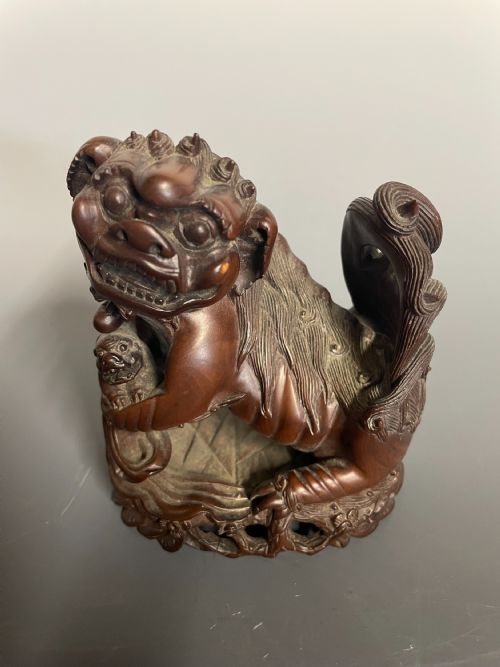
Carvers shaped these figures from natural media including boxwood, root wood, soapstone, and jade marble, utilising hand chisels to define the muscular forms and curling manes. Wood sculptors often applied gilt or lacquer finishes to enhance decorative presence.
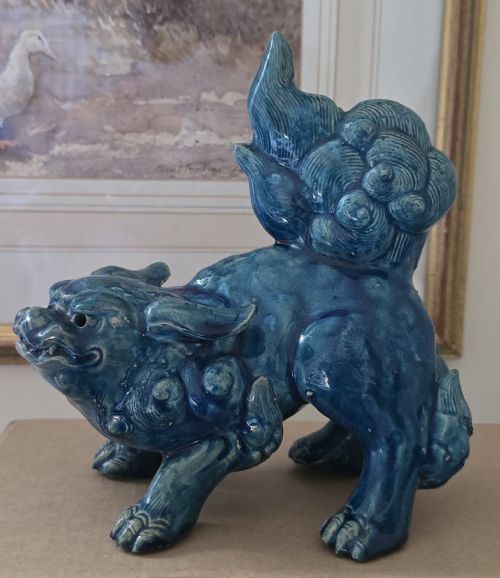
Ceramic and pottery versions involved earthenwares, stoneware, and porcelain, finished with turquoise, sancai, or pale green glazes before high-temperature firing. Metal examples demanded complex bronze casting techniques, frequently finished with rich patination or gilding.
The selection includes pieces originating from nineteenth-century China, Japan, and Tibet.
What varies in quality in oriental guardian lion statues
Material selection and surface preservation separate exceptional examples from standard ones, whether evaluating the rich grain of root wood or the smooth application of coloured ceramic glazes. Original patination on bronzes and intact gilding on wood enhance the integrity of the object.
The Oriental Guardian Lion Statues Glossary
- Shishi
- A Japanese term for stone lion or Buddhist lion, depicting guardian figures derived from Chinese tradition. These sculptures often display distinct regional styling associated with the Meiji period.
- Foo dog
- A colloquial Western descriptor for Chinese guardian lions, which actually represent mythical lions rather than dogs. They typically appear in matched pairs flanking a threshold.
- Sancai
- A traditional three-colour Chinese glaze technique often seen on pottery figures from earlier periods. The amber, green, and cream tones melt together during the firing process.
- Meiji period
- An era of Japanese history spanning from 1868 to 1912, known for refined porcelain and bronze artistic production. Pieces from this time show meticulous attention to surface detail.
- Qing dynasty
- The final imperial dynasty of China, lasting from 1644 until 1912, which produced numerous ceramic and carved wood guardian figures. Workmanship from this era reflects established imperial iconography.
Oriental Guardian Lion Statues: Frequently Asked Questions
What are oriental guardian lion statues?
Oriental guardian lion statues are traditional sculptural representations of mythical lions intended to guard spaces and ward off negative influences. They derive from ancient temple architecture across China, Japan, and Tibet.
These figures appear in materials ranging from carved wood and stone to cast bronze and glazed ceramic. They are collected today for their historic craftsmanship and symbolic presence.
How were temple lions used?
Temple lions stood traditionally as pairs outside sacred buildings, palaces, and tombs to provide spiritual protection. The male typically guards a ball while the female restrains a cub.
In domestic settings, smaller versions function as decorative objects, mantelpiece ornaments, or bookends. Their traditional placement remains paired to balance energy within a room.
How do I identify the material?
Close visual inspection reveals the distinct characteristics of wood, bronze, brass, soapstone, or ceramic glazes. Weight, surface texture, and temperature help differentiate metals from stones and earthenwares.
Pottery and porcelain pieces display specific glaze types such as sancai or turquoise finishes. Wood carvings often exhibit natural grain patterns or remnants of gilt lacquer.
How do I date these statues?
Dating relies on stylistic markers associated with specific periods such as the Qing Dynasty or the Meiji Period. Wear patterns, tool marks, and material composition offer further clues to age.
Documentation or stylistic parallels with dated museum pieces help narrow down the decade of creation. Nineteenth-century examples frequently display traditional hand-finishing techniques particular to their region of origin.