



Oriental Glass Art
Oriental glass art brings together centuries of delicate hand-painted mirrors, reverse paintings, and glass panels designed to catch the light.
Oriental Glass Art
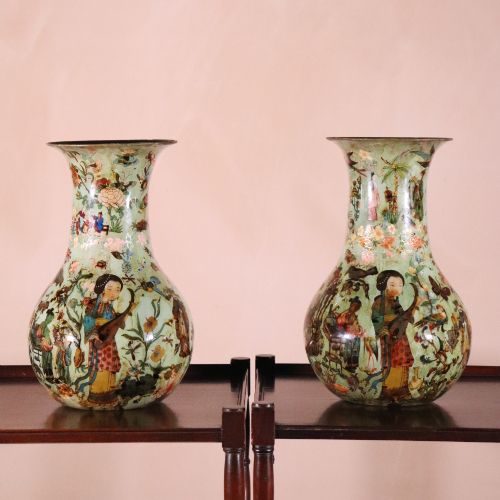
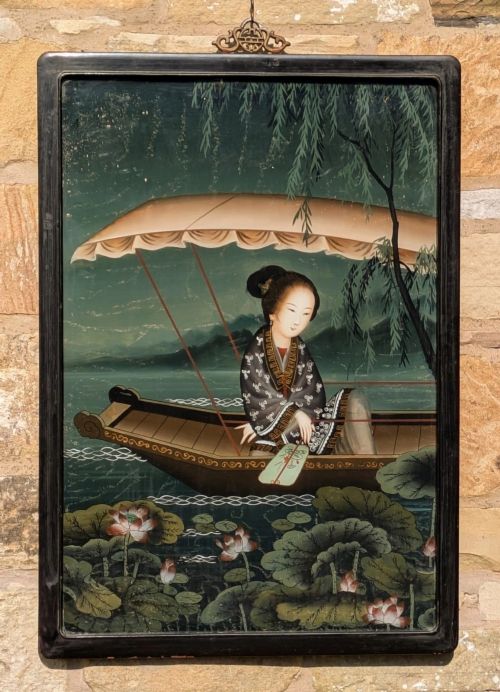
Oriental glass art encompasses decorative objects and wall pieces created across the nineteenth and twentieth centuries, originating from Chinese, Japanese, and Burmese traditions. When exploring oriental glass art, buyers frequently encounter reverse paintings on glass, wall mirrors, and small painted snuff bottles.
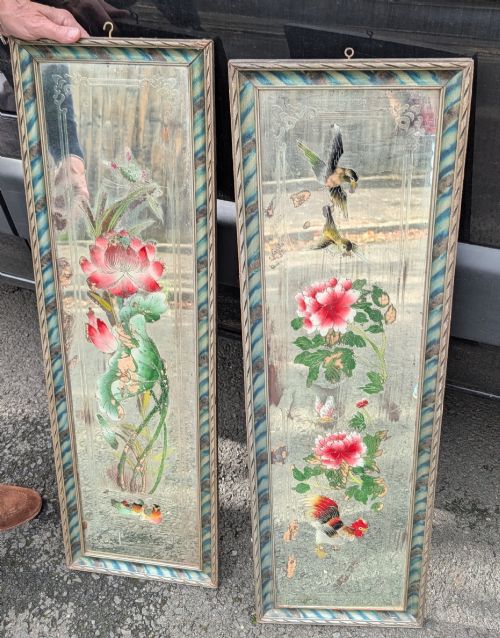
The selection ranges from nineteenth century Chinese export pieces to Edwardian chinoiserie mirrors and Japanese glass paintings. These items reflect distinct cultural aesthetics, incorporating traditional motifs such as figures, dragons, trees, and flowers.
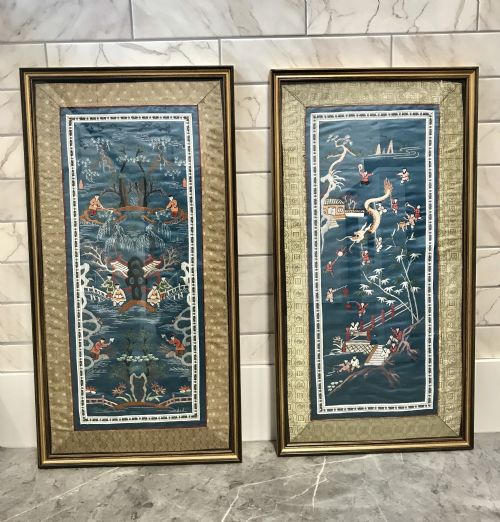
Forms vary from large wall art and textile art panels under glass to coffee tables and sculptures. The pieces bridge decorative utility and fine artistry, designed to adorn interiors with polished surfaces and intricate colour.
How they were made
Makers utilised glass, mirror glass, and oil paint, often applying paint directly to the reverse side of the glass panel so the image appears correct when viewed from the front. This technique demands immense precision because errors cannot be corrected once applied to the surface.
Many works incorporate secondary materials such as wood, brass, lacquer, and gold leaf to frame or support the glass elements. Silk embroidery and hand-sewn panels are occasionally placed beneath glass protection, combining textiles with transparent panes.
Oriental Glass Art Retail Price Guide 2026
Typical asking prices for oriental glass art among the pieces listed under this phrase on Sellingantiques today, from the lower quarter to the upper quarter. They describe what is for sale here now, not the wider market.
Listings feature items spanning the nineteenth and twentieth centuries, utilising glass, wood, paint, brass, lacquer, gold leaf, and mirror glass.
What varies in quality
Quality rests upon the execution of the brushwork and the clarity of the underlying glass or mirror plate. Fine examples display meticulous detail in figures and natural scenes, whereas lesser pieces show rushed or simplified application.
The integration of supporting materials, such as carved wood frames, lacquered mounts, or gilded details, dictates the overall refinement of the piece. Preservation of the original paint layer without significant flaking or modern repainting also determines distinction.
Takabatake Kasho
The Oriental Glass Art Glossary
- Reverse painting on glass
- A technique where an artist paints directly onto the back of a glass sheet, viewing the finished image through the front. This method creates a glossy, vibrant finish that protects the pigment from atmospheric wear.
- Chinoiserie
- A European artistic style reflecting Chinese and East Asian artistic influences, prevalent in furniture, mirrors, and decorative objects. It reinterprets traditional oriental motifs through Western design sensibilities.
- Autochrome
- An early colour photography process invented by the Lumière brothers, producing luminous images on glass plates. These transparent photographs capture subtle hues and tones.
- Snuff bottle
- A small container used for holding powdered tobacco, frequently decorated with intricate painting applied to the interior surface. Artisans used specialised bent brushes to paint through the tiny neck of the bottle.
Oriental Glass Art: Frequently Asked Questions
How do I hang a heavy reverse painted glass mirror?
Heavy glass mirrors and reverse paintings require secure wall fixings suited to the weight of the wood frame and glass plate. Professional picture hangers should be consulted to ensure the wall structure safely supports the piece.
Position the art away from direct, strong sunlight to protect the pigments and any underlying silk embroidery from fading over time.
What is the difference between Chinese export glass and domestic pieces?
Chinese export art was specifically produced for Western markets, often combining traditional Eastern techniques with shapes and subjects that appealed to European buyers. Domestic pieces adhered more strictly to local aesthetic traditions and patronage.
Both categories share high standards of craftsmanship, though export items frequently appear in frames and mirror formats popular in nineteenth-century European interiors.
How should I clean antique oriental glass art?
Dust the surfaces gently with a soft, dry cloth to prevent accumulation without disturbing the glass or painted areas. Avoid using harsh liquid cleaners or ammonia-based products, which can seep behind the glass and damage reverse paint layers or foil.
Keep the items in stable environmental conditions with moderate humidity to preserve both the glass and any wooden or lacquered mounts.
How can I tell the age of a glass painting?
Examining the type of glass, the composition of the pigments, and the construction of the frame provides clues to the period of origin. Older glass often exhibits minor imperfections, bubbles, and oxidation on the silvered backing of mirrors.
Stylistic elements, subject matter, and signature styles characteristic of specific decades help narrow down the date of creation.