



Green Reverse Painted Glass
Green reverse painted glass works offer delicate portraits and landscapes executed directly upon the rear of the panel, creating a luminous depth that captivates collectors.
Green Reverse Painted Glass
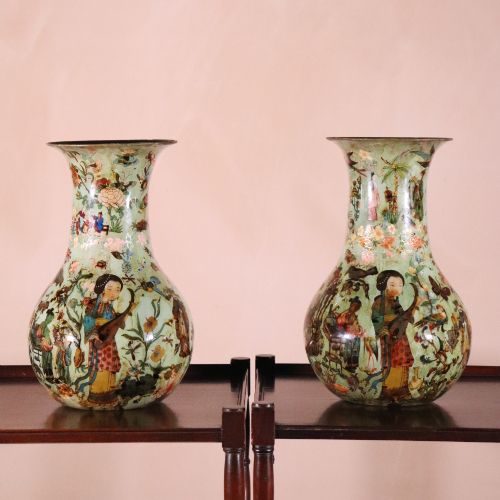
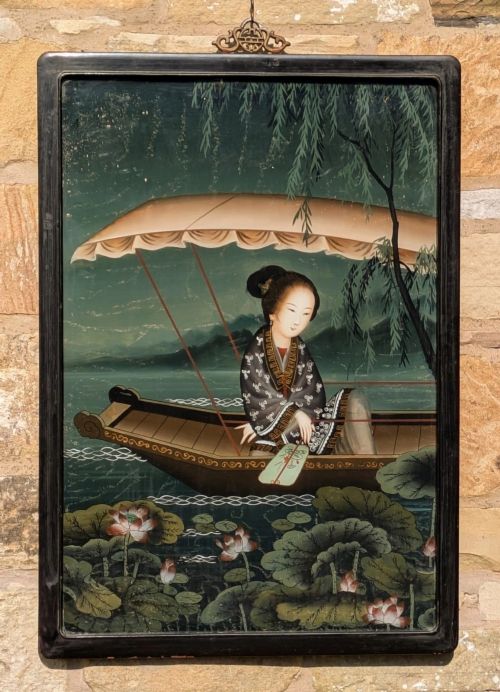
When you search for green reverse painted glass, you encounter a specialised category of wall art and pictures spanning several centuries. The selections available encompass eighteenth-century Georgian prints, nineteenth-century Chinese export works, and Regency engravings.
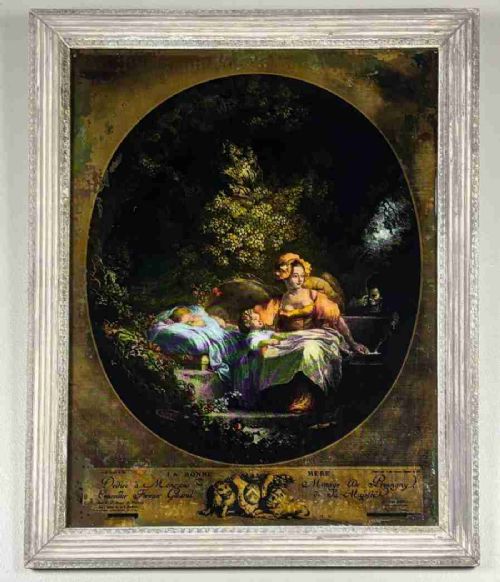
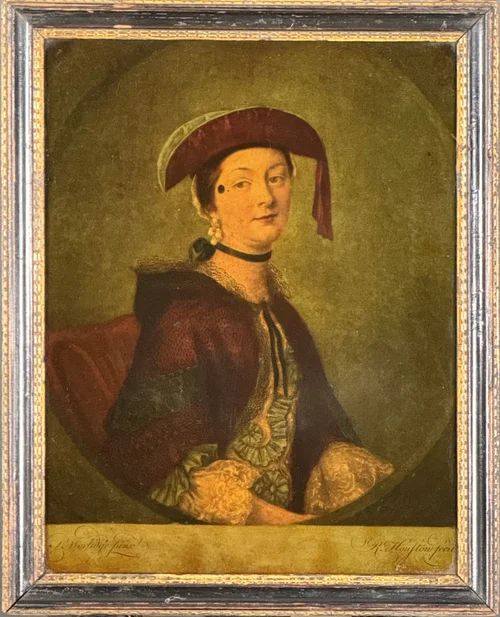
Portraits of notable figures, such as Mrs Brooks or Queen Anne, sit alongside literary or allegorical subjects like La Bonne Mere and The Match Boy. These items function primarily as decorative wall art, captured within wood or brass frames.
Materials and methods
Makers applied oil paint, pigment, and gilt directly to glass substrates, often combining prints with hand-colouring to achieve rich detail. The reverse technique requires the artist to paint foreground elements first before working backwards to the background.
Subsequent framing utilised timber, paper backing, and occasional brass components to secure the delicate glass panels. Later nineteenth-century examples occasionally incorporate chrystoleum techniques to build layered photographic and painted effects.
Green Reverse Painted Glass Retail Price Guide 2026
Typical asking prices for green reverse painted glass among the pieces listed under this phrase on Sellingantiques today, from the lower quarter to the upper quarter. They describe what is for sale here now, not the wider market.
Antique gypsy mirrors offer a cheerful domestic glint, proving that even modest glass panels knew how to catch the light.
Assessing quality
The sophistication of the brushwork and the clarity of the underlying print dictate the visual success of each piece. Finer examples display meticulous control in the flesh tones and drapery, whereas lesser works rely on heavier, less defined applications of pigment.
The preservation of the original gilt and the integrity of the glass panel separate superior specimens from those with heavy flaking or modern reglazing. The harmony between the subject matter, such as distinct Georgian portraiture or large Chinese export panels, influences the overall appeal.
Charles Spooner·W Bishop
The Green Reverse Painted Glass Glossary
- Reverse glass painting
- An artwork created by applying pigment and oil paint to the rear side of a glass sheet so the finished image is viewed through the front. This method protects the paint layer from atmospheric dust and surface damage.
- Mezzotint
- A printmaking process where the copper plate is roughened to produce dark tones, allowing subtle gradations of light to be scraped out. When adapted for reverse glass work, the print is transferred face down and coloured from behind.
- Chrystoleum
- A Victorian technique where a colourless photographic print is pasted face down to convex glass, made transparent with oils, and hand-painted from the rear. This creates a dimensional, painted appearance from a flat photograph.
- Georgian
- A design period spanning the reigns of the first four Georges, noted in these listings for refined portrait prints and classical subjects. Pieces from this era often feature delicate hand-tinted details.
- Chinese Export
- Goods manufactured in China specifically for Western markets, frequently encompassing large landscape and figural glass paintings created during the nineteenth century. These items blend traditional Asian motifs with European framing tastes.
Green Reverse Painted Glass: Frequently Asked Questions
How do I hang a glass painting safely?
These fragile panels require secure picture hooks fixed directly into solid wall studs rather than hollow drywall.
Ensure the hanging wire and original frame construction remain sturdy enough to support the weight before mounting.
Where were these glass paintings made?
The pieces originate from both British workshops and Chinese export centres during the eighteenth and nineteenth centuries. European makers focused largely on portrait prints, while Chinese artisans produced larger decorative scenes.
Each region employed distinct framing materials and pigment combinations suited to local tastes.
How should I clean the glass surface?
Wipe the front of the glass gently with a dry or very slightly dampened microfibre cloth. Avoid spraying liquids directly onto the frame edges, as moisture can seep behind the glass and damage the delicate painted layer.
Keep the panels away from direct sunlight to prevent the oil paints and pigments from fading.
What is the difference between a print and a painting?
A reverse glass print incorporates a paper engraving or mezzotint transferred to the glass before hand-colouring takes place. A painting relies entirely on direct brushwork applied to the glass without an underlying printed matrix.
Both methods achieve a characteristic glossy depth when viewed from the front.