


Oriental Gallery Carpet
An oriental gallery carpet brings historic Persian and Caucasian weaving traditions into grand hallways and spacious rooms with durable wool and natural dyes.
Oriental Gallery Carpet
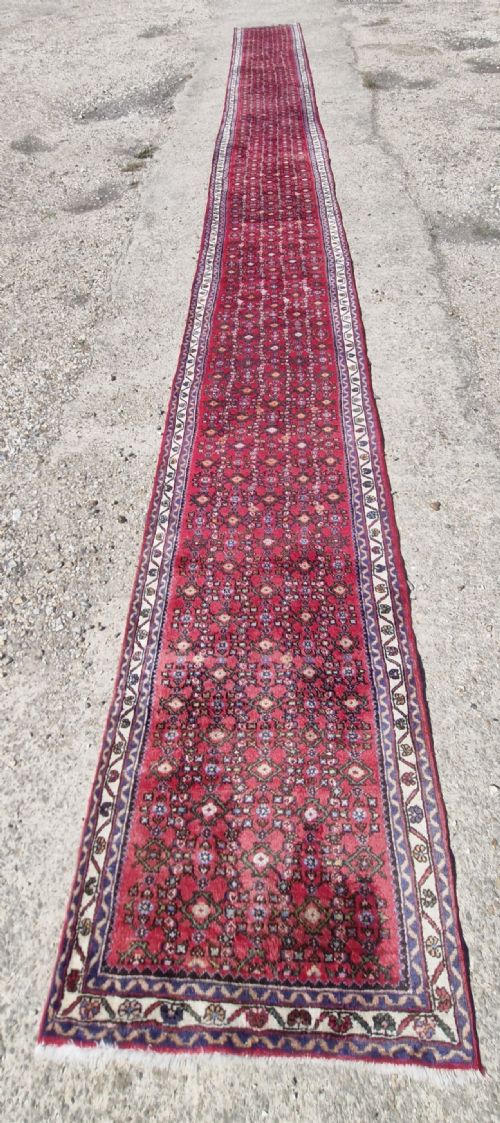
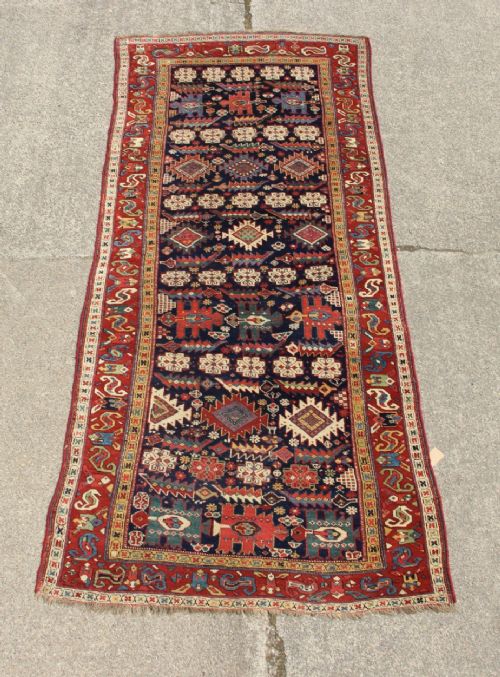
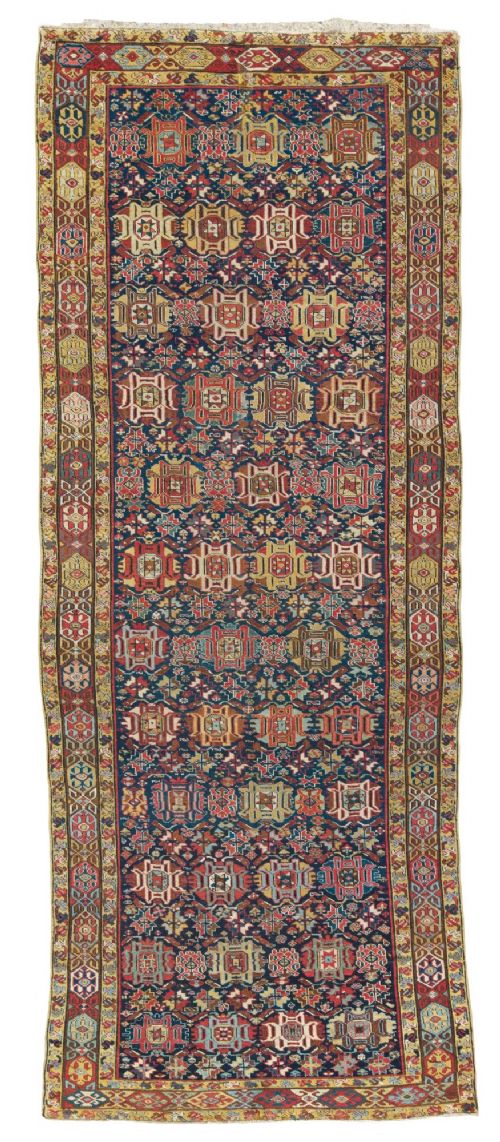
When searching for an oriental gallery carpet, buyers encounter substantial room-sized carpets and elongated runners designed for corridors and expansive floors. These pieces originate from distinct weaving traditions including Persian tribal, Kurdish, Serapi, Bidjar, and Caucasian workshops.
The pieces listed on this page span the mid-nineteenth century through the mid-twentieth century, showcasing formats such as the traditional kelleh, long rugs, and narrow hall runners. Buyers most frequently meet large format floor coverings that display complex geometric or curvilinear borders and field patterns.
Regional styles dictate the visual structure, from the crab patterns of Zanjan to the bold medallion and geometric layouts of Kurdish and Bidjar carpets. Each format serves a functional purpose in domestic architecture, providing heavy floor insulation and distinct decorative focus.
What varies in quality
Quality in these carpets rests upon the density of the knotting, the precision of the tribal designs, and the depth of the natural dye palette. Finer knots allow for intricate rendering of borders such as the harshang or crab pattern, while coarser weaves lean into robust tribal geometries.
The condition of the wool pile and the structural stability of the cotton foundation determine the longevity of the piece in heavy-traffic areas like halls and landings. Variations in scale also influence quality, particularly where exceptionally long narrow proportions or large kelleh formats maintain structural symmetry.
The listings span weaving traditions from the mid-nineteenth to the mid-twentieth century, utilising wool, hand-spun wool, and natural dyes across formats like kelleh and long runners.
The Oriental Gallery Carpet Glossary
- Kelleh
- A traditional Persian format describing a carpet that is longer than it is wide, typically suited for reception rooms or galleries.
- Gul
- A medallion or repeating octagonal motif frequently found in tribal and nomadic weaving traditions.
- Harshang
- A classic Persian border and field design often referred to as the crab pattern, featuring stylized floral and botanical elements.
- Natural Dyes
- Colourants derived from plant, insect, and mineral sources rather than synthetic chemistry, yielding complex and stable hues.
Oriental Gallery Carpet: Frequently Asked Questions
Where should I place a gallery carpet?
These large carpets and long runners suit wide hallways, grand landings, and spacious reception rooms where their extended proportions command the floor.
They protect high-traffic wooden flooring while anchoring the surrounding furniture within the space.
How do I identify a Kurdish carpet?
Kurdish pieces often feature sturdy construction, bold geometric motifs, and distinctive tribal borders executed in resilient hand-spun wool.
Their heavy structure reflects the mountainous origins of the weavers in western Persia.
What is a kelleh format?
A kelleh is a rectangular format traditionally proportioned to fit specific room layouts, offering a middle ground between a square carpet and an elongated runner.
These pieces provide substantial floor coverage without overwhelming narrower interior spaces.
How do natural dyes age?
Natural dyes mellow over time, developing a soft patina and subtle tonal variations known as abrage across the wool pile.
This gradual softening enhances the visual depth of traditional Persian and Caucasian motifs.