
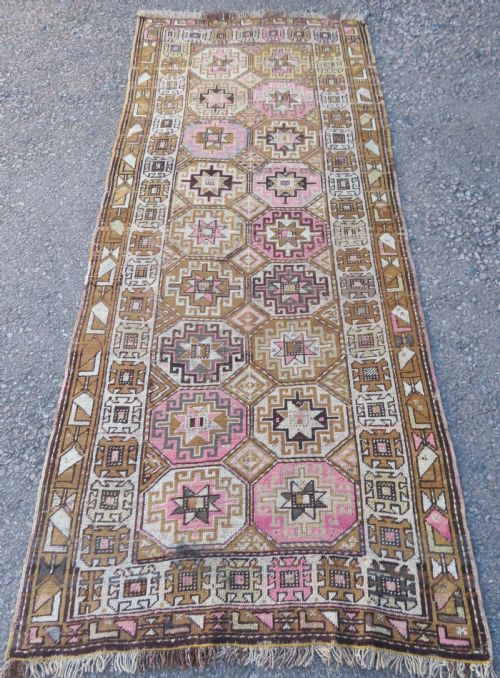
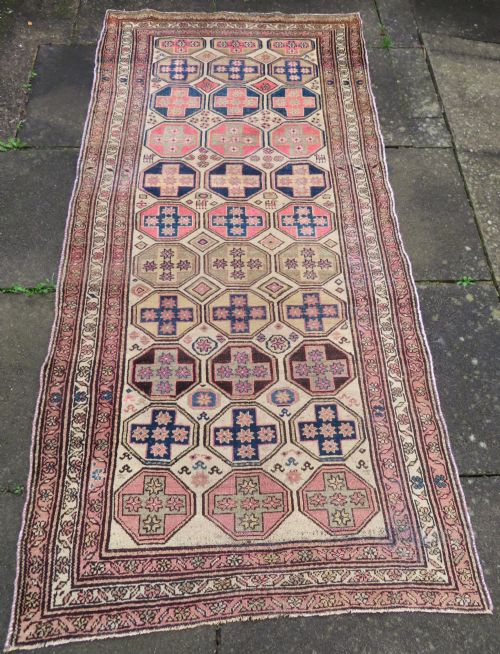
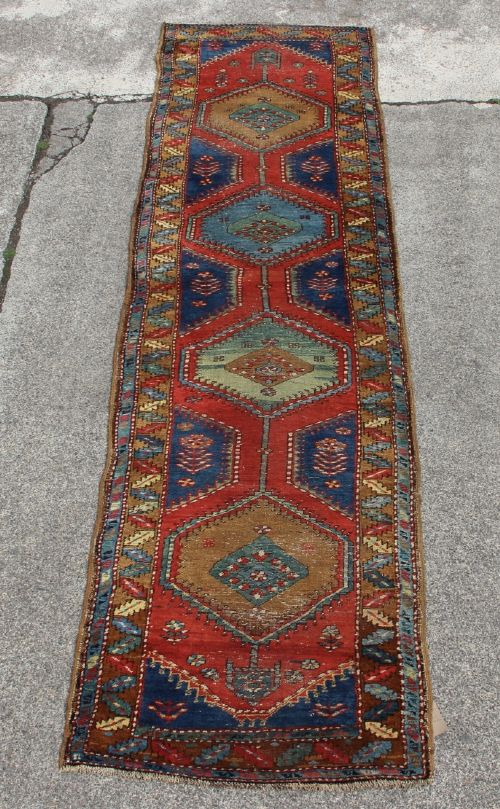

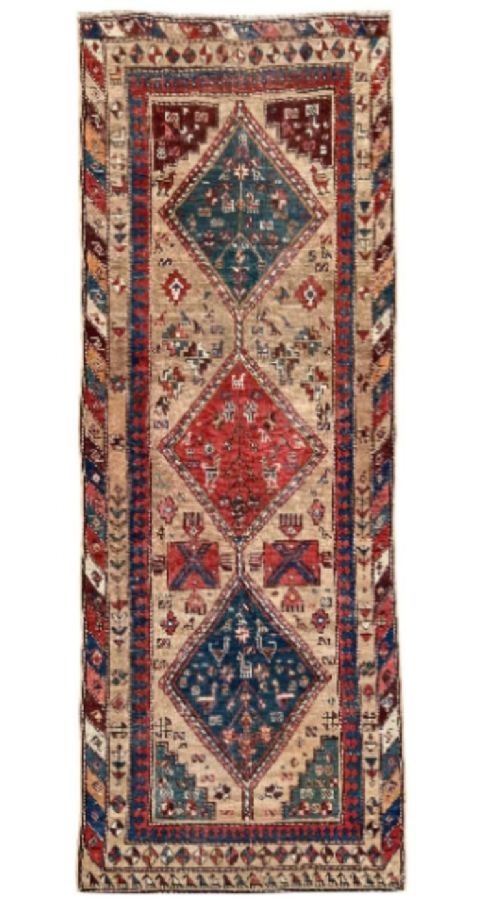
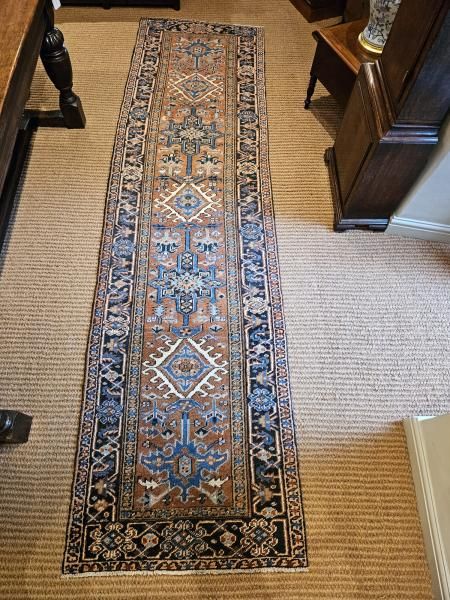
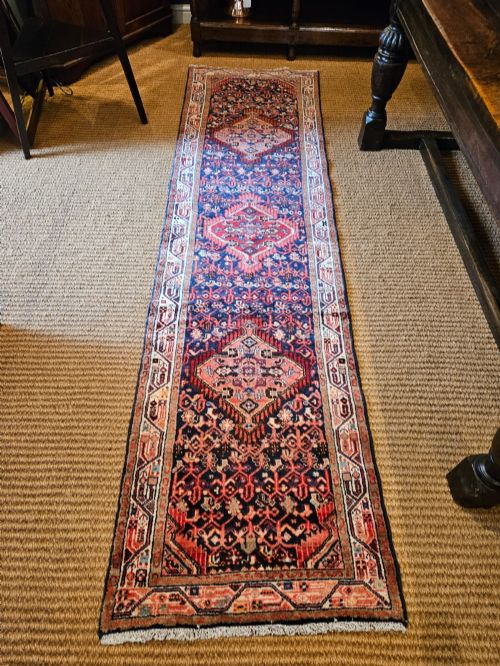
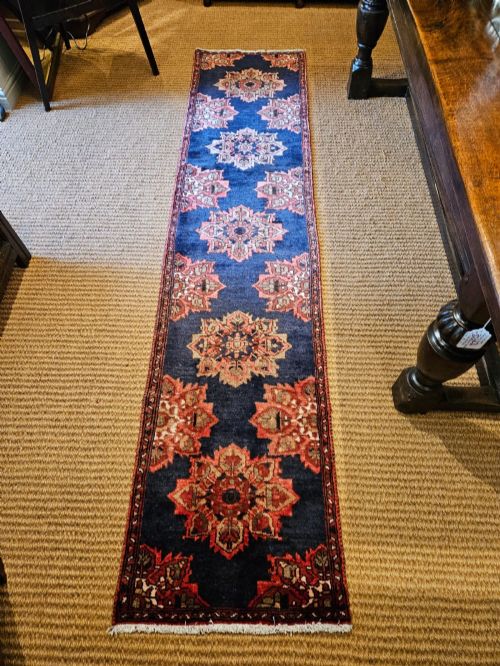
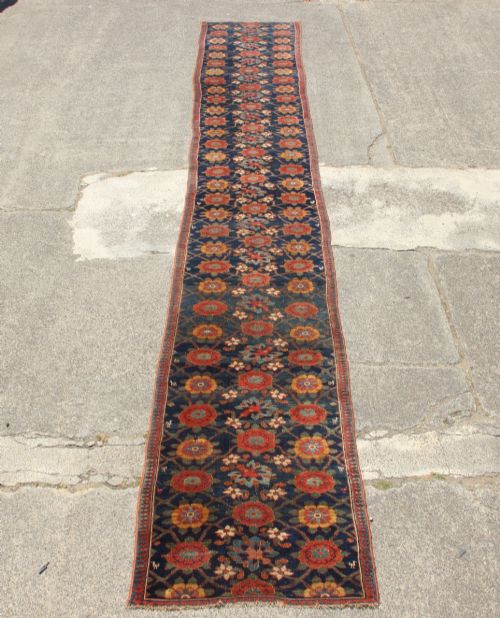
Tribal Persian Hallway Rug
A tribal persian hallway rug brings geometric energy and dense wool pile to narrow floors, grounding long spaces with village character.
Tribal Persian Hallway Rug
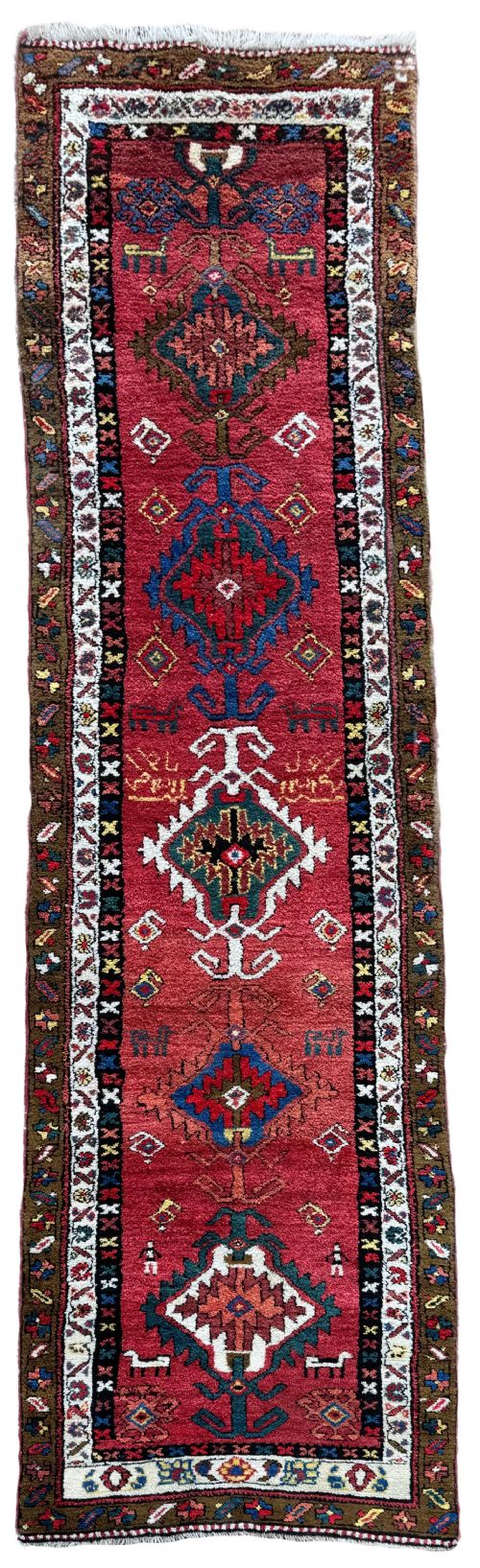
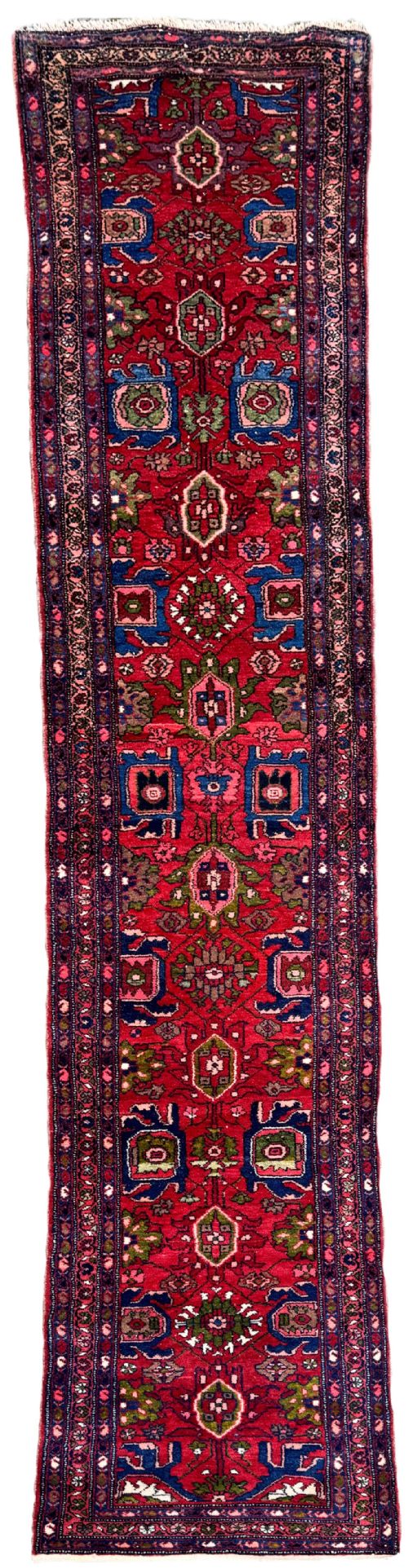
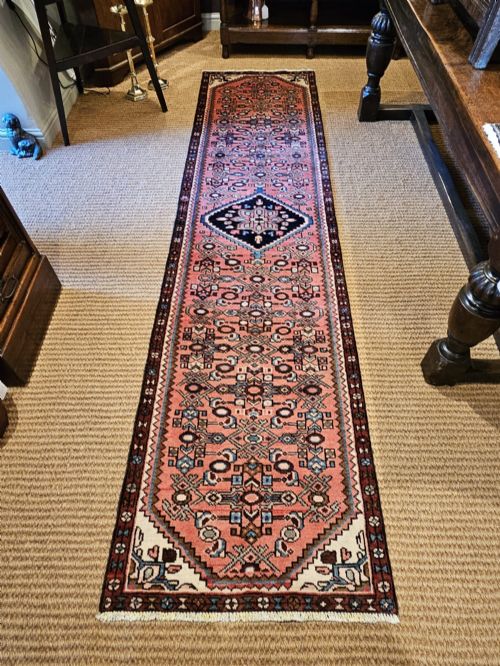
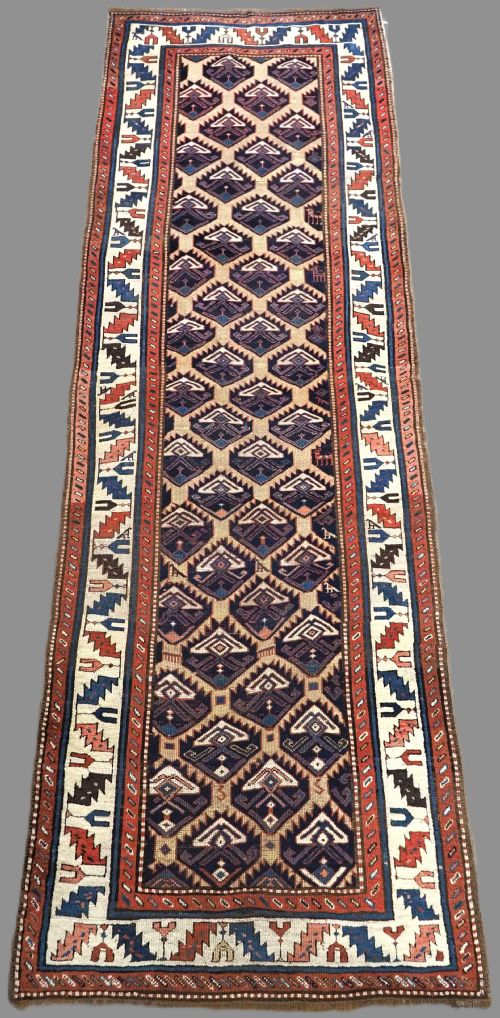
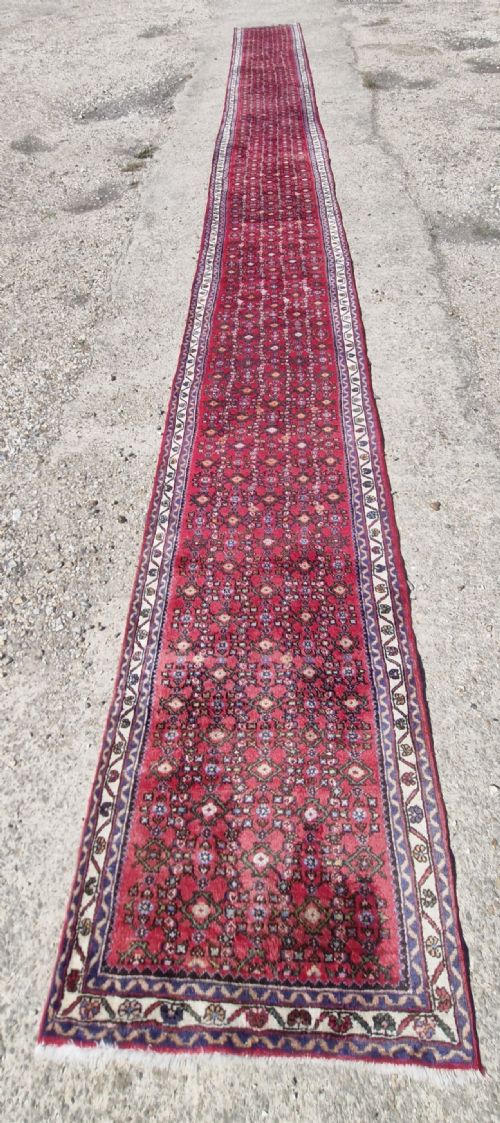
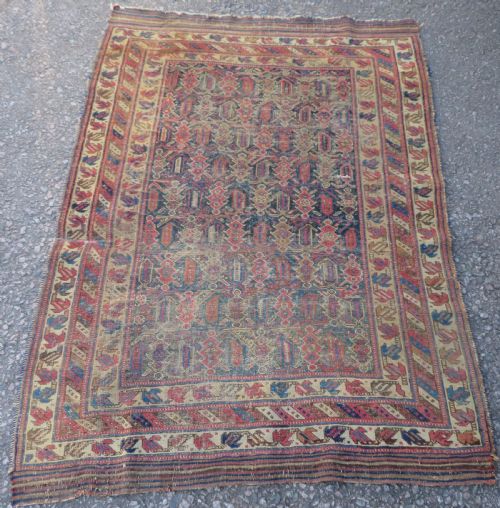
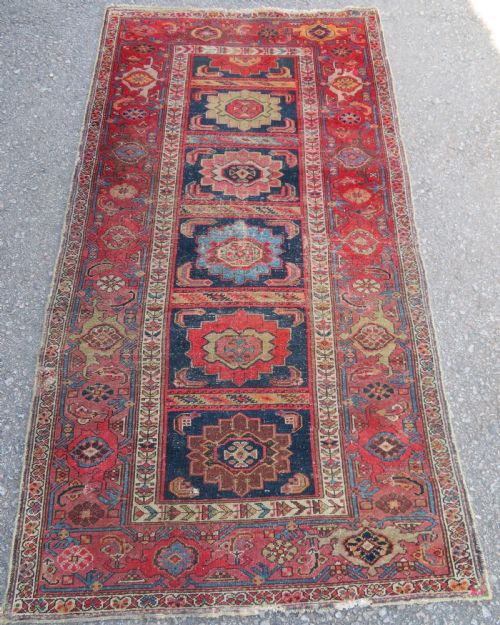
A tribal persian hallway rug is a long, narrow floor covering created by nomadic or village weavers in Iran and surrounding regions. These pieces span the nineteenth and twentieth centuries, featuring geometric medallions, repeated motifs, and asymmetrical layouts tied to specific tribal traditions. Hallway runners on this page mostly arrive from production centres such as Heriz, Hamadan, and Kurdistan.
The format serves utilitarian needs in corridors, landings, and narrow passages while displaying the vernacular artistry of village makers. Unlike formal court carpets, these items prioritise robust construction and direct expression over symmetrical precision. Buyers encounter formats ranging from concise hallway lengths to expansive long runners exceeding several metres.
Materials and construction
Materials rely upon natural sheep fleece, including hand-spun wool for resilient pile and cotton foundations for structural warp and weft threads. The utilisation of local fleeces gives these floor coverings their characteristic weight and dense handle.
Weavers knotted the wool pile onto vertical looms by hand, producing dense textiles designed to withstand generations of foot traffic in busy hallways. Natural dye baths yielded deep indigo, madder red, and earthy olive tones that age gracefully with wear.
Some antique village runners display charming irregularities, including slightly crooked geometries where the weaver adjusted the pattern mid-loom.
Indicators of quality
Quality rests upon knot density, the integrity of the wool, and the crispness of the geometric drawing. Finer examples display meticulous handling of complex lattice patterns and well-balanced dye palettes that hold visual depth across the entire length.
Structural preservation also governs merit, as even uneven village weaving benefits from intact original selvedges and steady side cords. The strength of the wool pile dictates longevity under everyday use in high-traffic corridors.
Kurdish tribal weavers·Shahsavan nomadic workshops·Heriz village looms·Hamadan weaving centres
The Tribal Persian Hallway Rug Glossary
- Runner
- A long, narrow carpet format designed specifically for hallways, staircases, and corridors. These proportions require specific weaving techniques to maintain straight sides over extended lengths.
- Knot density
- The count of individual knots per square unit, which influences the definition of geometric patterns and the durability of the pile. Higher counts allow for sharper rendering of tribal motifs.
- Warp
- The stationary vertical threads stretched across the loom upon which the pile knots are tied. Cotton and wool serve as the primary materials for these structural foundations.
- Weft
- The horizontal threads passed between rows of knots to secure the pile in place. Beating the weft tightly creates a firm, stable textile structure.
- Selvedge
- The finished side cords of a rug that prevent the edges from fraying. Original selvedges indicate careful preservation by past owners.
Tribal Persian Hallway Rug: Frequently Asked Questions
How do I choose the correct length?
Measure your hallway while leaving a uniform border of exposed floorboards around the edges to frame the textile properly.
Take into account door clearance paths so the rug does not obstruct movement when entering or leaving adjacent rooms.
Are these runners durable for heavy corridors?
Wool pile combined with dense hand-knotting provides natural resilience against constant footsteps in busy household thoroughfares.
Using a quality underlay beneath the textile prevents slipping and absorbs impact to protect the foundation threads over time.
How do I identify a Kurdish runner?
Kurdish pieces frequently feature repeated geometric medallions, powerful lattice designs, and saturated indigo or red wool backgrounds.
Local village methods often produce slightly irregular formats with robust handling and thick hand-spun pile.
How should I clean my runner?
Gentle surface brushing and careful professional washing maintain the lanolin content within the natural wool pile.
Avoid harsh chemical treatments or soaking, which can damage natural dyes and weaken the cotton foundation.