



Oriental Export Paintings
Oriental export paintings offer a window into historic cross-cultural exchange, combining traditional techniques with Western tastes.
Oriental Export Paintings
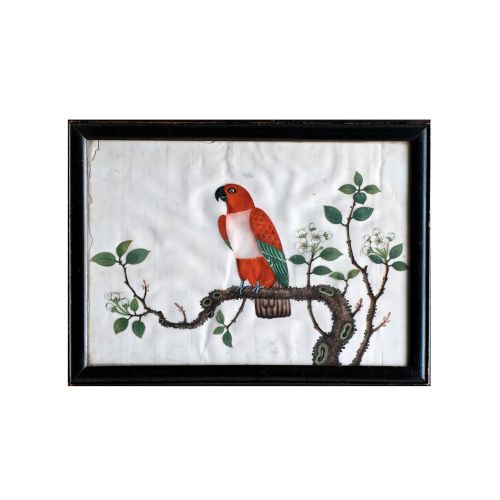
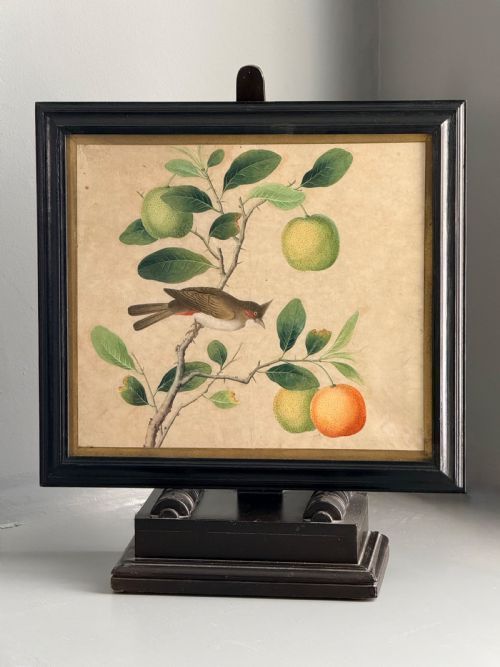
Oriental export paintings encompass watercolours, gouache works, and reverse glass pieces created in Asia for Western markets. Buyers exploring oriental export paintings will frequently encounter delicate works on pith paper and vibrant paintings on glass dating from the eighteenth and nineteenth centuries.
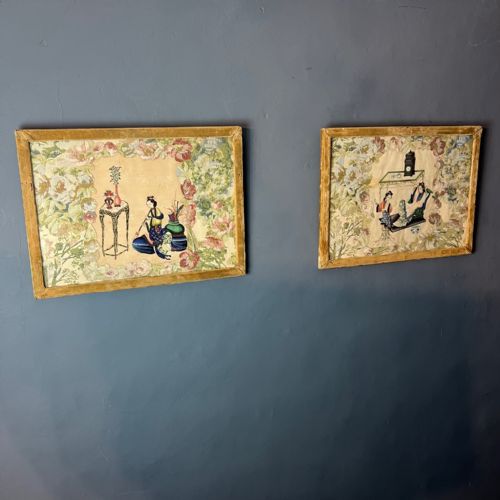
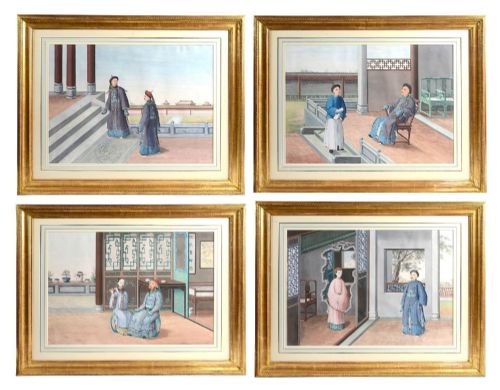
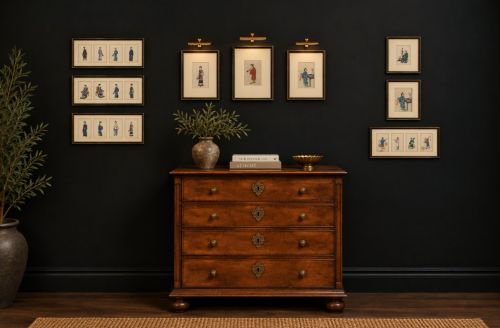
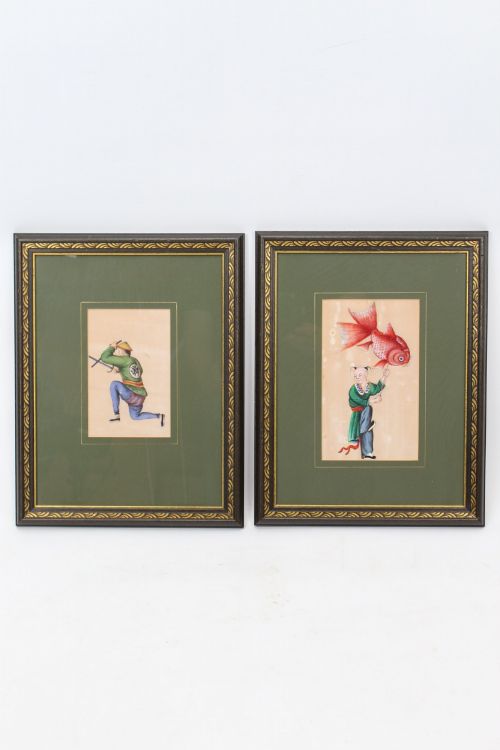
The selection ranges from single framed watercolours to expansive sets of pith paper paintings depicting figural scenes, butterflies, and insects. These works capture Chinese export art styles from the Qing dynasty alongside Regency and Edwardian interpretations.
Framed artwork and wall mirrors frequently integrate reverse painting techniques, housed within wooden, brass, or gilt wood frames. The variety spans small pairs of antique watercolours up to large wall art pieces.
Materials and Techniques
Makers utilised delicate pith paper, often mistakenly called rice paper, as a sensitive surface for opaque gouache and watercolour pigments. This botanical material yields a distinctive velvety texture that absorbs vibrant colour.
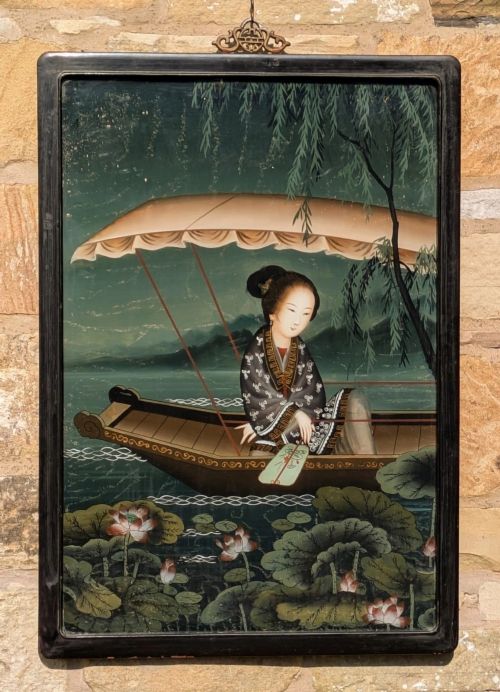
Reverse painting on glass requires artists to apply pigments directly to the rear of the pane, working in reverse so the final image appears correctly oriented from the front. Glass and mirror panels provide a lustrous, reflective ground for these detailed compositions.
Mounting and framing often involved traditional woods, brass accents, and gilt wood surrounds to secure fragile silk, paper, and glass components for export transport.
Oriental Export Paintings Retail Price Guide 2026
Typical asking prices for oriental export paintings among the pieces listed under this phrase on Sellingantiques today, from the lower quarter to the upper quarter. They describe what is for sale here now, not the wider market.
Recorded object types span framed watercolours, wall mirrors, and botanical pith paintings of butterflies and insects.
Assessing Quality and Execution
Execution of detail separates routine trade items from finer studio productions, particularly in the rendering of facial expressions, flora, and insect anatomy. Superior pith paintings display steady brushwork and stable pigments that retain their intensity.
The preservation of fragile materials heavily influences the standing of a piece, especially regarding foxing on paper or flaking on reverse glass panels. Original framing, whether in period wood or gilt mounts, adds historical integrity to the artwork.
The Oriental Export Paintings Glossary
- Pith paper
- A delicate, spongy material sliced from the pith of the Tetrapanax papyrifer plant, used extensively for nineteenth-century Chinese watercolours.
- Reverse glass painting
- An artistic technique where the image is painted directly onto the back of a glass panel and viewed from the front.
- Gouache
- An opaque water-based medium composed of ground pigments and a binding agent, offering rich colour saturation on paper and silk.
- Chinoiserie
- A European artistic style reflecting Chinese motifs and aesthetic traditions, frequently intersecting with genuine export production.
- Export art
- Goods manufactured in one country specifically for commercial sale and consumption in foreign markets.
Oriental Export Paintings: Frequently Asked Questions
What is pith paper?
Pith paper is a porous, fragile plant material harvested from the pith of a Chinese shrub. It accepts watercolour and gouache with a unique velvety depth.
Artists used it extensively during the nineteenth century for export sets depicting trades, figures, and fauna.
Where were these paintings made?
Most pieces originated in major Chinese port cities such as Canton, which catered to European and American merchants. Workshops produced these items specifically to satisfy Western demand for exotic art.
Traders brought them back aboard ships as souvenirs or luxury home decorations.
How should I hang these artworks?
Export paintings on paper and glass are sensitive to direct sunlight and high humidity. Positioning them away from bright windows prevents the fading of gouache and watercolour pigments.
Stable indoor environments protect fragile pith mounts and wooden or gilt frames from warping.