


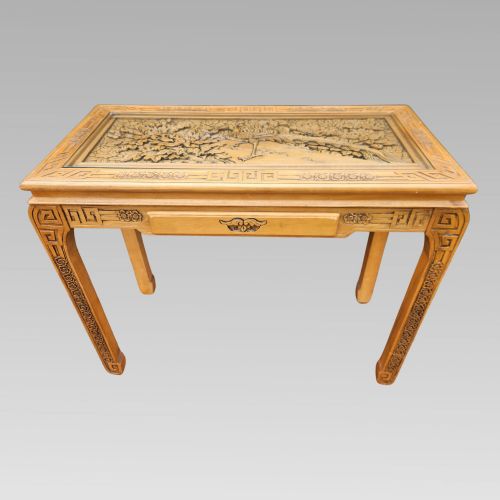


Oriental Entry Hall Table
An oriental entry hall table anchors a passage with character, offering surface space and distinct regional design.
Oriental Entry Hall Table
An oriental entry hall table encompasses console and altar forms originating from Chinese regional, provincial, and export traditions, alongside Burmese colonial works. These tables serve narrow spaces, traditionally positioned against walls in hallways, reception rooms, and living areas.
Stylistic influences range from the Qing Dynasty and Chinoiserie to traditional Chinese and Burmese colonial aesthetics. Some items integrate mirrors or multiple drawers, adapting traditional furniture formats for functional modern entryways.
How they were made
Carpenters utilised dense timbers such as elm, rosewood, camphorwood, and general hardwood to construct durable frames capable of supporting ritual objects or daily items. Joinery relied on traditional methods that accommodated wood movement without relying on modern fixings.
Surface treatments included layered red lacquer applied to wood, alongside intricate hand-carved motifs depicting traditional Chinese designs. Metal hardware, particularly brass mounts and drawer pulls, added functional and decorative accents to console tables.
Oriental Entry Hall Table Retail Price Guide 2026
Typical asking prices for oriental entry hall table among the pieces listed under this phrase on Sellingantiques today, from the lower quarter to the upper quarter. They describe what is for sale here now, not the wider market.
Listings span the nineteenth century, nineteen-hundreds, and nineteen-twenties, showcasing elm, rosewood, lacquer, and brass materials.
What varies in quality
The depth and crispness of hand-carved detailing distinguish superior examples from simpler provincial pieces. Carvings on aprons, legs, and panels demonstrate the artisan's skill and the workshop's investment of time.
The choice of primary timber influences both weight and visual presence, with dense rosewood and well-figured elm representing the upper tiers of production. Original surface finishes, such as aged red lacquer, retain a patina that alters the visual depth of the piece.
The Oriental Entry Hall Table Glossary
- Console table
- A table designed to be fixed against a wall, supported by console brackets or legs at the front. These tables provide a narrow surface suitable for entryways and hallways.
- Altar table
- A traditional rectangular table featuring upturned flanged ends, originally used in temples or ancestral halls for ritual offerings. Their elongated proportions suit narrow passage spaces.
- Elm
- A resilient hardwood utilised extensively in traditional Chinese furnituremaking for its distinct grain pattern and structural stability. It takes a smooth finish while maintaining durability.
- Lacquer
- A durable glossy coating applied in multiple layers to wooden furniture surfaces, frequently coloured in red or black. This finish protects the timber while providing a reflective sheen.
- Qing Dynasty
- The final imperial dynasty of China, spanning from sixteen-forty-four to nineteen-twelve, known for diverse regional furniture styles and refined carving techniques.
Oriental Entry Hall Table: Frequently Asked Questions
Where should I place an oriental entry hall table?
These tables fit naturally in narrow hallways, passage spaces, and entryways against flat walls. Their shallow depth allows them to sit without obstructing foot traffic.
They also function effectively in living rooms or dining spaces as side tables or display surfaces for lamps and decorative objects.
How do console tables differ from altar tables?
Console tables are built primarily for domestic placement against walls, often featuring drawers or flat tops. They offer versatile surface utility for everyday entry storage.
Altar tables typically feature distinctive upturned ends on the top surface and originate from ritual contexts, providing a more architectural silhouette.
What woods were used for these tables?
Makers utilised native Asian timbers, most commonly elm, rosewood, camphorwood, and general dense hardwoods. Elm provides visible grain, while rosewood offers deep colour and heavy weight.
Some pieces incorporate mixed woods or secondary timbers beneath lacquer finishes.
How do I date a nineteenth-century Chinese table?
Dating relies on construction methods, timber patination, and stylistic markers associated with the nineteenth century and the Qing period. Hand-cut joinery and signs of age in the wood grain indicate historical manufacture.
Specific design traits, such as regional carving styles or traditional brass hardware, help narrow the production era.