
Oriental Carved Wood Statue
When you handle an oriental carved wood statue, you hold centuries of figurative tradition in dense timber.
Oriental Carved Wood Statue
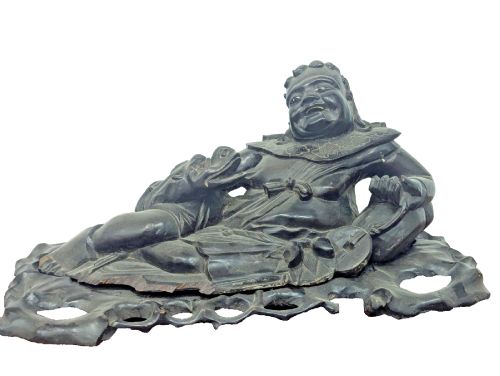
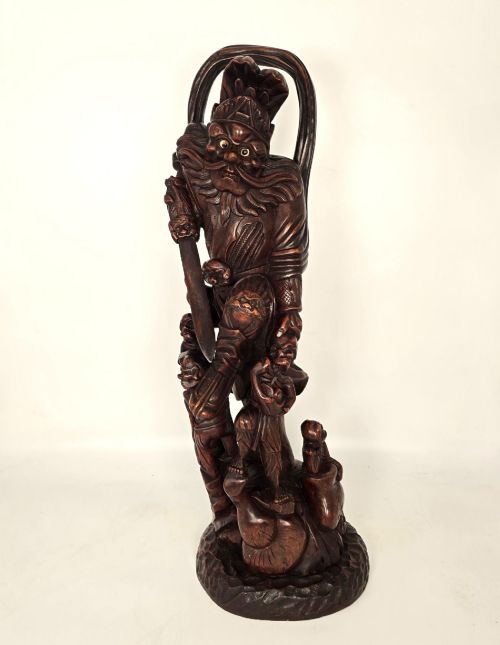
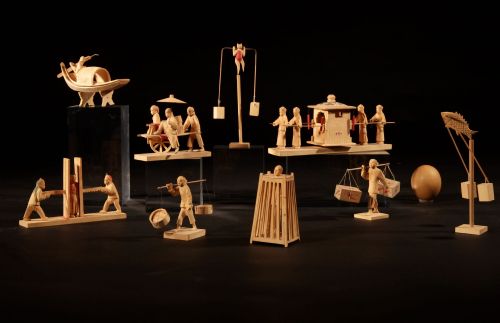
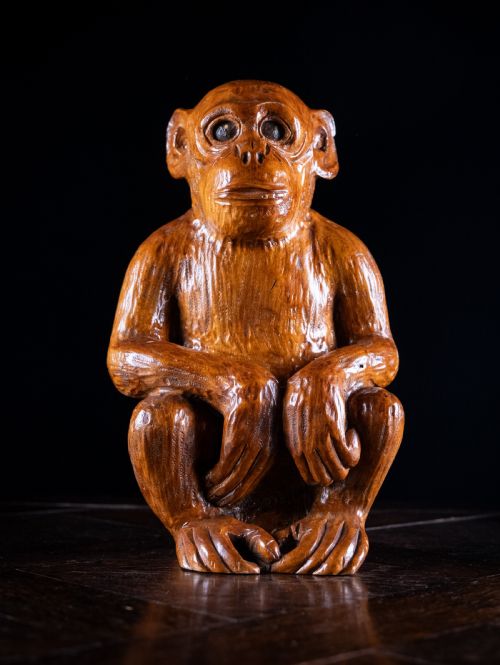
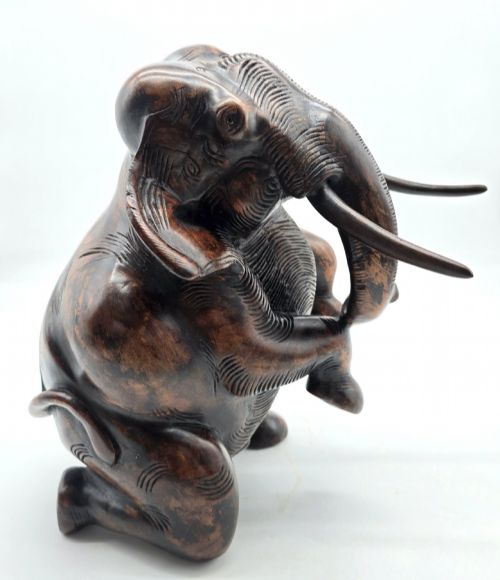
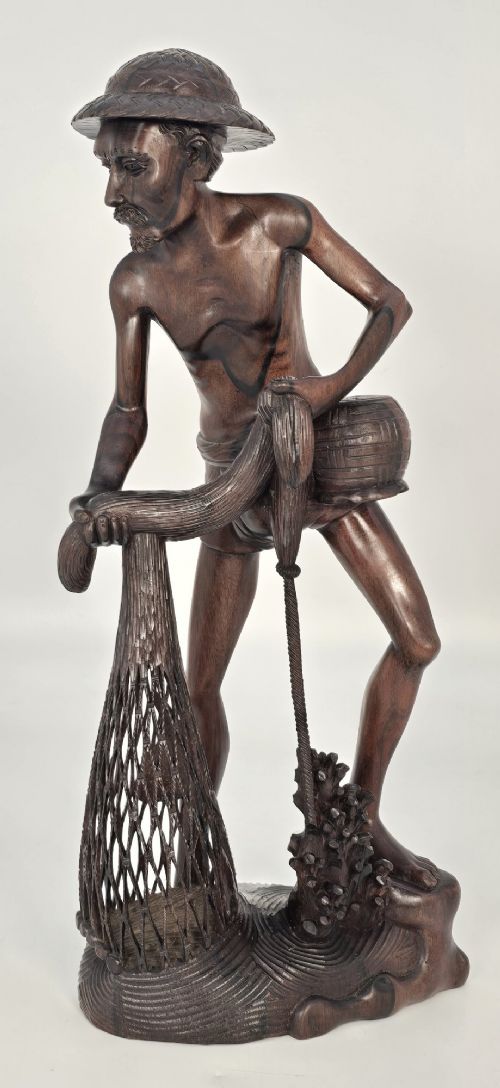
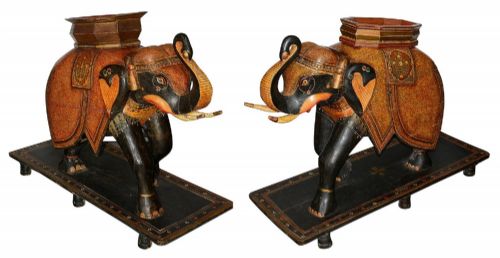
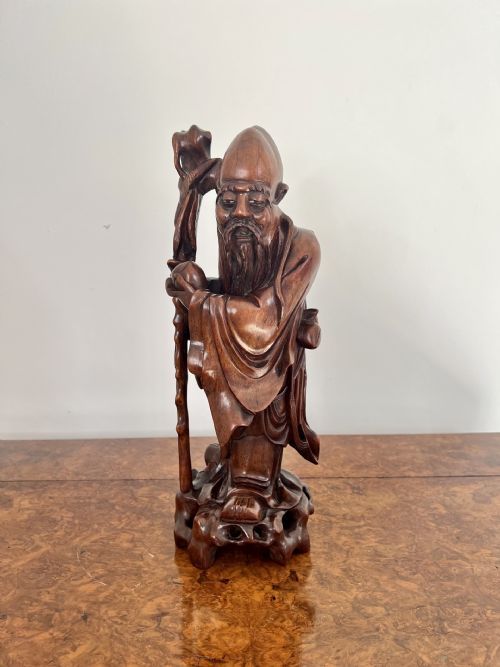
An oriental carved wood statue takes the form of deities, animals, scholars and labourers shaped from timber across the nineteenth and early twentieth centuries. When searching for an oriental carved wood statue, buyers encounter figures originating from Chinese, Japanese, Indian, Kashmiri and Indonesian traditions.
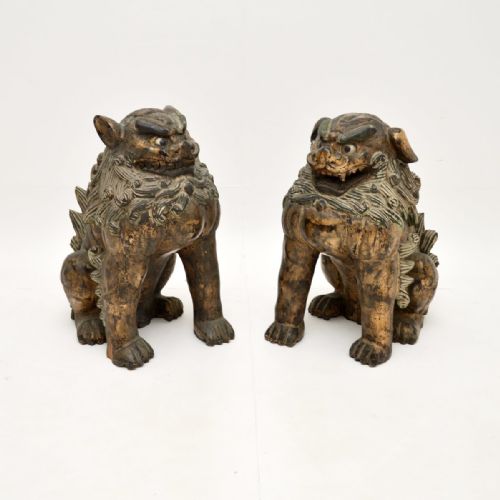
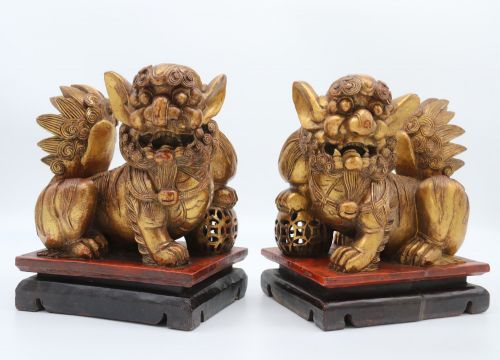
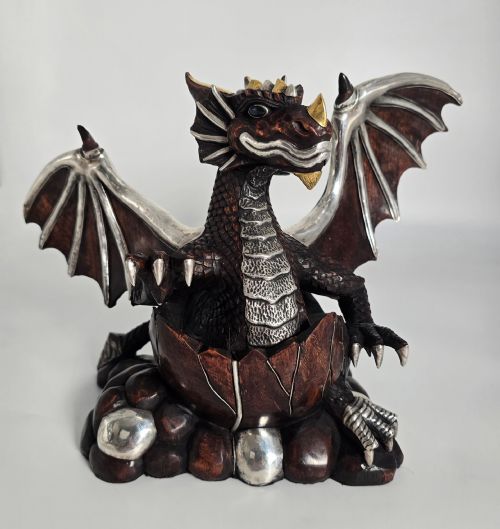
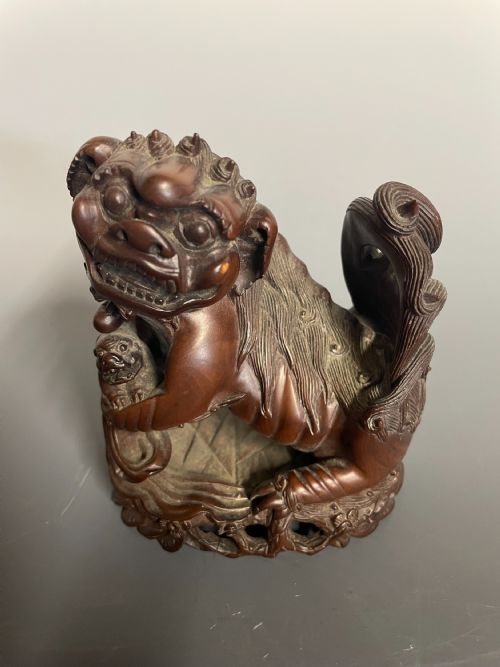
The objects span temple guardians, mythical beasts such as foo dogs and dragons, and domestic figures carved from dense woods. Chinese Qing Dynasty pieces and Japanese Meiji period examples dominate the selections found on this page.
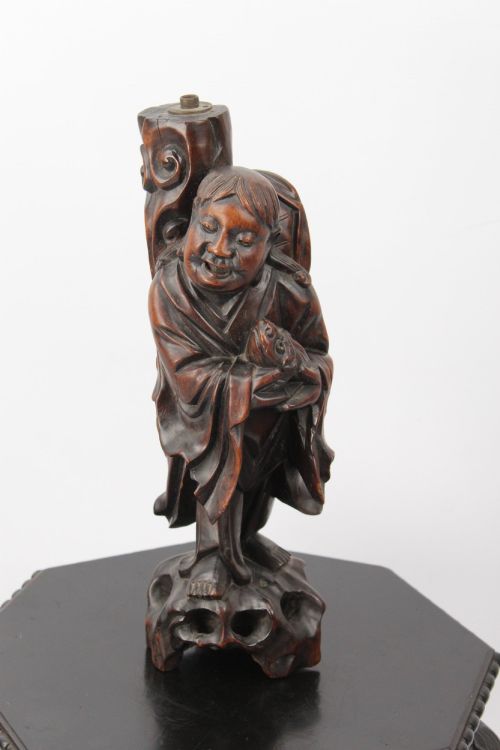
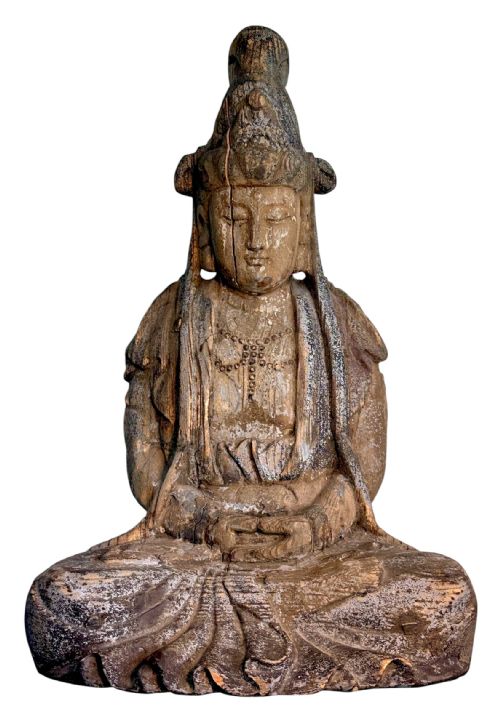
Makers utilised specific regional iconography, rendering Buddhist immortals, Daoist deities and figures of daily life with distinct cultural attributes. These sculptures range from small boxwood okimono to monumental temple figures.
What varies in quality
Depth of relief and anatomical control separate standard work from superior sculpture. Master carvers exploited the natural twists of root wood or the tight grain of boxwood to create dynamic posture.
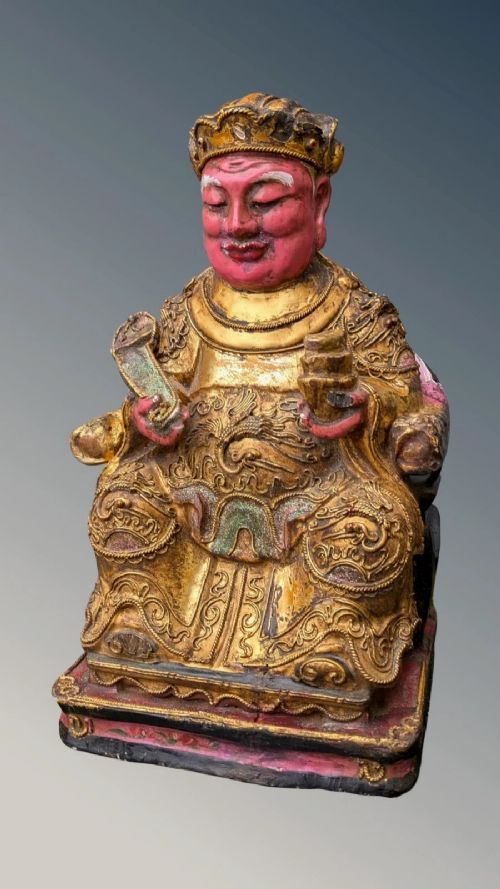
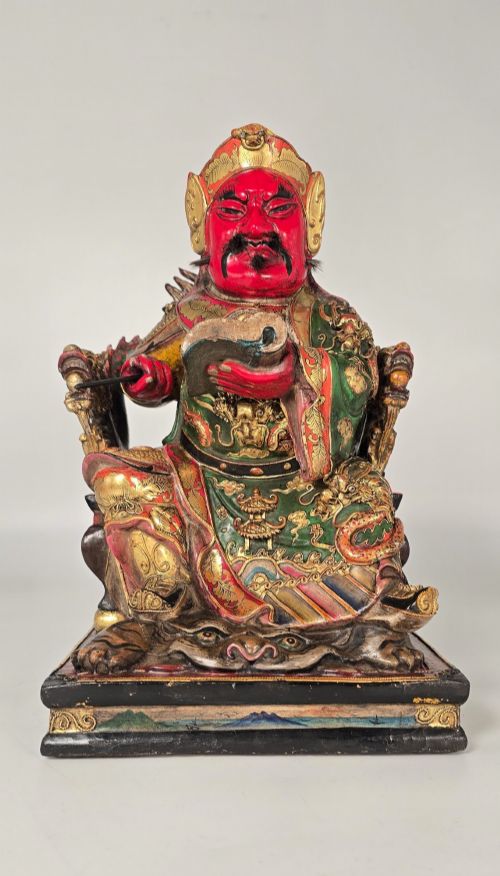
The preservation of original surface finishes, such as gilded layers and polychrome pigments, dictates the integrity of the piece. Subtle hand-painted details on scholarly robes or temple garments indicate higher workshop standards.
Some nineteenth-century carvers transformed stubborn tree roots into grinning dogs of fo and contemplative scholars without losing a single knot.
The Oriental Carved Wood Statue Glossary
- Foo Dog
- A mythical guardian lion originating in Chinese tradition, typically depicted protecting sacred spaces. Pairs often flank temple entrances or domestic thresholds.
- Okimono
- A Japanese decorative statue designed for display in a home alcove during the Meiji period. These carvings frequently represent deities, animals or figures from daily life.
- Root Wood
- Timber taken from the root mass of a tree, prized for its gnarled and twisting natural forms. Carvers incorporated these organic shapes into the silhouettes of scholars and mythical beasts.
- Qing Dynasty
- The final imperial dynasty of China, spanning from sixteen forty-four to nineteen twelve. Many figurative wood sculptures originate from this extended period of craft production.
Oriental Carved Wood Statue: Frequently Asked Questions
Where did these statues originally stand?
Many sculptures served sacred functions within temples, serving as altarpieces, guardian figures or representations of Buddhist and Daoist deities.
Others occupied domestic spaces, placed within scholar studios or reception rooms as symbols of status, learning or protection.
How do I care for a wooden sculpture?
Keep wooden figures away from direct sunlight and sudden temperature shifts to prevent the timber from drying out or cracking.
Dust the carved surfaces gently with a dry, soft brush and avoid applying modern polishes to lacquered or painted finishes.
What is the difference between Chinese and Japanese carvings?
Chinese pieces often depict mythological guardians, temple officials or Daoist immortals rendered in substantial hardwoods with rich polychrome or gilt layers.
Japanese works from periods like the Meiji era frequently focus on highly detailed boxwood okimono representing genre figures, local wildlife or specific deities.
How are different periods identified?
Stylistic shifts in costume, facial carving and finishing techniques help distinguish late eighteenth-century ritual figures from early twentieth-century export pieces.
Tool marks, the choice of timber such as boxwood versus heavy root wood, and the application of gold leaf provide further chronological clues.