
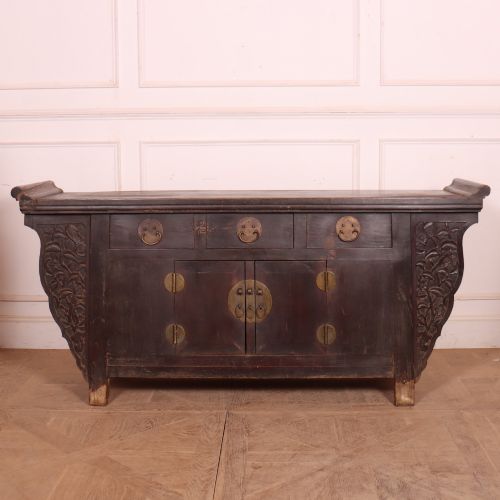
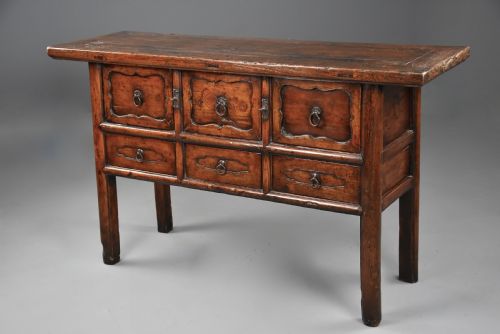
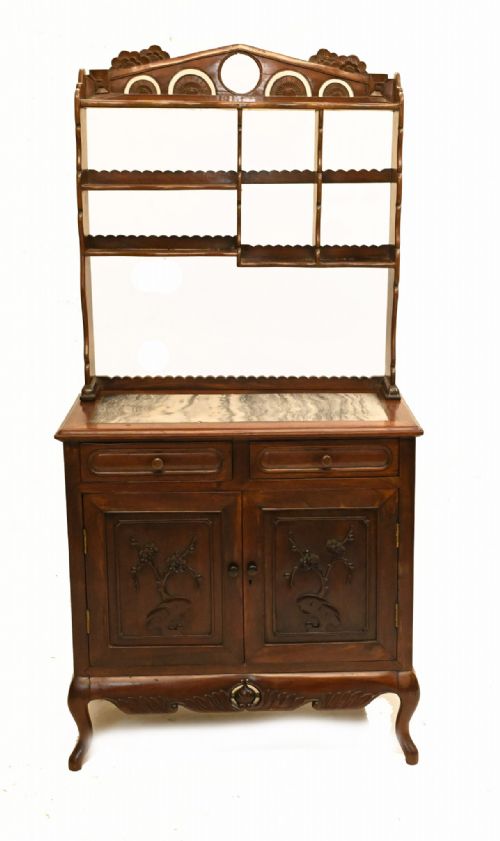


Oriental Carved Sideboard
An oriental carved sideboard brings heavy timber and intricate relief work into a room, offering deep storage with distinct regional character.
Oriental Carved Sideboard
An oriental carved sideboard encompasses substantial pieces designed for storage and display, originating from Chinese, Burmese, and Indian workshops during the nineteenth and early twentieth centuries. These forms include console tables, side cabinets, and cupboards that feature deep relief carving and structural utility.
The version most commonly met on this page is the nineteenth-century Chinese elm or hardwood sideboard, often displaying regional styles from Shanxi province or Qing dynasty influences. Buyers frequently encounter lacquered finishes in red or black alongside natural wood grains showing aged patina.
Makers utilised native timbers such as elm, padauk, and camphor wood to construct heavy sideboards and cabinets built to withstand daily use. Forms range from rustic dressers to refined altar tables and console tables fitted with marble tops.
Materials and construction methods
Construction relies heavily on dense native hardwoods including elm, padauk, and camphor wood, selected for their strength and ability to hold fine detail. Cabinetmakers joined structural elements using traditional joinery techniques that accommodated seasonal timber movement.
Surface decoration frequently involves layers of red or black lacquer, sometimes gilded or inlaid to create contrasting panels and figurative scenes. Carved relief work is executed directly into the solid timber or applied in distinct panels across doors and drawer fronts.
Listings feature pieces spanning the nineteenth and early twentieth centuries, constructed from elm, padauk, walnut, and lacquered wood.
Assessing quality in carved furniture
Quality rests in the crispness of the hand-carved relief work and the stability of the timber frame. Superior pieces display deep, undercut carving with well-defined motifs rather than shallow, mechanical stamping.
The integrity of the surface finish dictates much of the visual success, distinguishing original lacquer showing natural craquelure from later repaint work. Heavier, dense hardwoods like padauk and old elm also indicate higher grade construction than lighter utility timbers.
Gabriel Viardot
The Oriental Carved Sideboard Glossary
- Padauk
- A dense tropical hardwood prized for its reddish-brown colour and durability in carved furniture. Makers in Burma and India utilised this heavy timber for intricate cabinetwork.
- Chinoiserie
- European decorative style reflecting Chinese artistic motifs and scenic designs. This aesthetic appears on cabinets and tables produced in the West during the nineteenth century.
- Elm
- A tough domestic timber common in Chinese provincial furniture. This wood develops a rich patina over decades of domestic use.
- Lacquer
- A durable resin finish applied in multiple layers to wood surfaces. Chinese workshops used red and black lacquer to create smooth, protective coatings on sideboards and cabinets.
Oriental Carved Sideboard: Frequently Asked Questions
Where were oriental carved sideboards placed?
These large storage pieces traditionally stood against dining room or hallway walls to hold porcelain, linens, and provisions. Their substantial presence suited principal reception rooms.
Today they function effectively in modern living spaces as primary credenzas or media consoles, anchoring a room with dark wood and heavy relief work.
How do I care for lacquered wood?
Lacquer requires stable indoor humidity away from direct sunlight to prevent cracking or fading over time. Dusting with a dry, soft cloth maintains the surface.
Avoid chemical polishes and water moisture, which can damage aged finishes and lift delicate gilding from the carved panels.
What is the difference between elm and padauk?
Elm is a fibrous, durable domestic wood found frequently in regional Chinese furniture, developing a pale brown patina with visible grain patterns. It offers a rustic texture suitable for daily domestic storage.
Padauk is a much denser tropical timber with a deep reddish hue that accepts exceptionally sharp, intricate carving. Burmese and Indian cabinets made from this material are notably heavier.
How do I date a nineteenth-century sideboard?
Dating relies on examining construction marks, timber shrinkage, and the wear patterns within internal drawers and shelves. Hand-cut joinery and aged patination point to the nineteenth century.
Comparing decorative motifs against established Qing dynasty or colonial design periods helps narrow the decade of manufacture.