

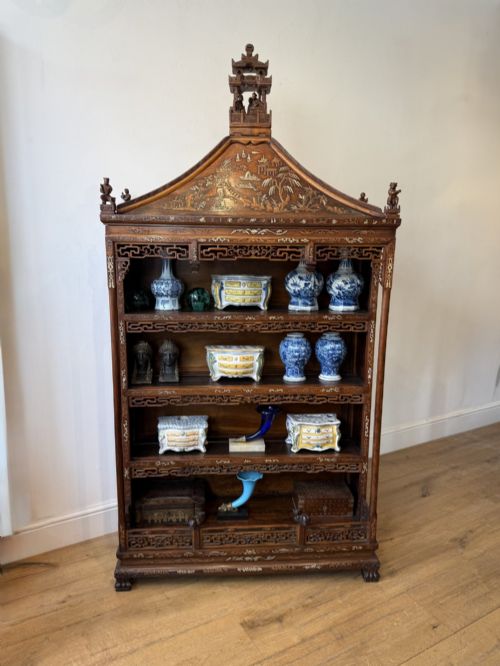
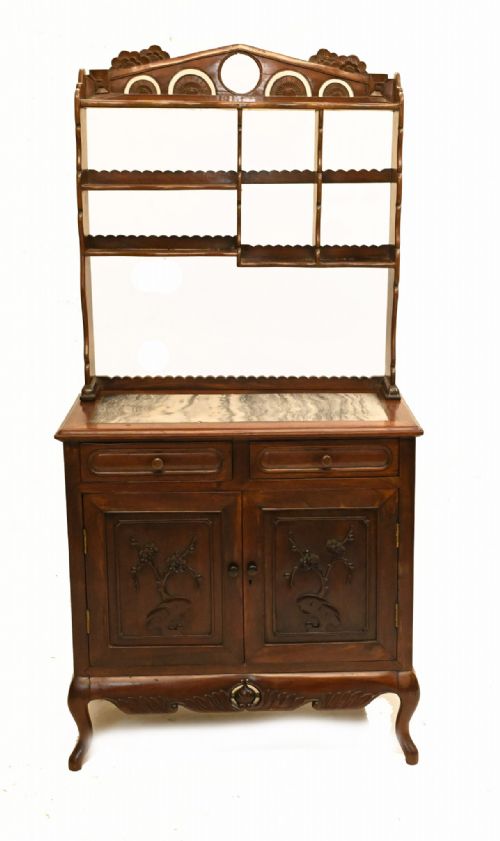


Oriental Carved Bookcase
An oriental carved bookcase brings intricate craftsmanship into a room, offering both display space and deep historical character.
Oriental Carved Bookcase
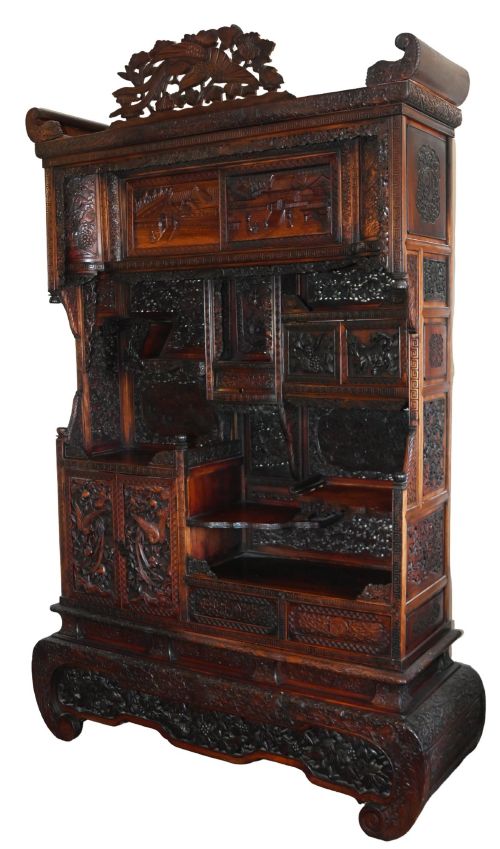
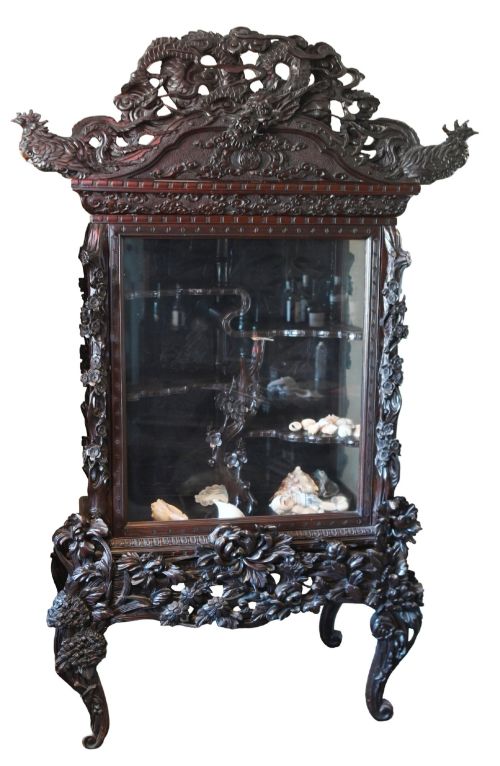
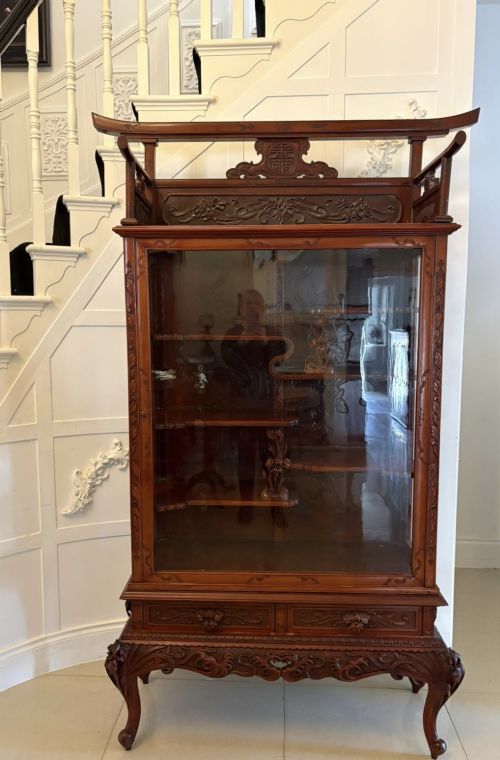
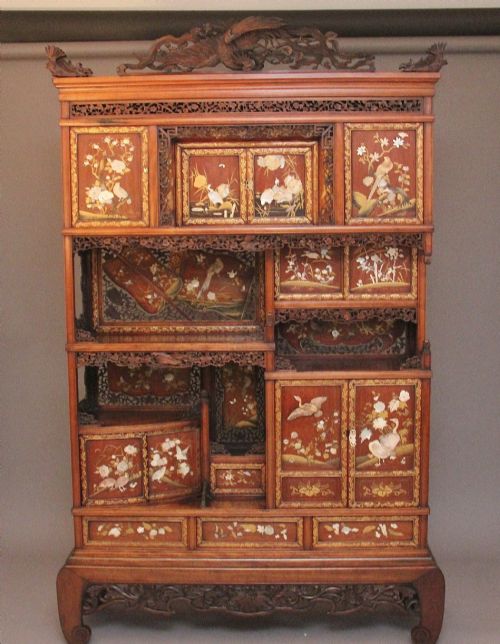
When you search for an oriental carved bookcase, you encounter heavily ornamented storage furniture spanning the nineteenth century. These pieces range from Chinese hardwood cabinets and dwarf side-cabinets to French Japonisme shodona display cabinets.
The most common examples on this page are nineteenth century Chinese carved hardwood cabinets and Japanese Meiji period shodona display cabinets. Makers such as Gabriel Viardot also appear, blending European cabinet-making with Asian design motifs.
How they were made
Cabinet-makers constructed these pieces from dense timbers including hardwood, rosewood, walnut, and cherrywood. Skilled artisans carved these materials with profuse detail, often integrating glass panels for display purposes.
Many examples incorporate decorative elements such as mother of pearl, bone, and lacquer work. French interpretations of the nineteenth century also utilise gilt bronze mounts alongside traditional woodcarving techniques.
Some nineteenth century French makers added gilt bronze mounts to Japanese shodona shelves, creating an eclectic cross-cultural dialogue that leaves modern admirers smiling.
What varies in quality
The distinction between ordinary and exceptional pieces lies in the depth and crispness of the carving. Profusely carved surfaces require meticulous handwork, separating standard production from master-level execution.
Material selection also dictates overall quality, with dense rosewood and finely figured hardwoods commanding greater regard than softer alternative timbers. The integration of delicate inlays like bone and mother of pearl further elevates a piece.
Gabriel Viardot
The Oriental Carved Bookcase Glossary
- Shodona
- A Japanese style of small display cabinet featuring staggered shelves and cupboards. These pieces were highly influential on European designers during the late nineteenth century.
- Japonisme
- A Western artistic movement inspired by Japanese art and design. This aesthetic heavily influenced French cabinet-makers working in the late nineteenth century.
- Hongmu
- A category of dense, dark Chinese hardwood prized for traditional furniture construction. Artisans utilised this heavy timber for intricate, deep-relief carving.
- Chinoiserie
- A European style reflecting Chinese artistic influences. It appears frequently in decorative furniture and display cabinets from the nineteenth century.
- Meiji Period
- A Japanese historical era lasting from eighteen sixty-eight to nineteen twelve. Pieces from this time often reached European markets through international exhibitions.
Oriental Carved Bookcase: Frequently Asked Questions
What is an oriental carved bookcase?
An oriental carved bookcase is a piece of nineteenth century storage furniture featuring detailed woodwork, originating either from Asian export workshops or European makers influenced by Eastern design.
These cabinets often include open shelves, glazed doors, and compartments designed for displaying porcelain and curiosities alongside books.
How were these cabinets used?
In nineteenth century homes, these cabinets served as principal display pieces in reception rooms and parlours. Collectors used them to exhibit valuable ceramics, small sculptures, and bound volumes.
The combination of glass doors and open shelving allowed owners to keep delicate items protected from dust while maintaining high visibility.
How do I style one at home?
These cabinets work effectively as focal points in studies, living rooms, or hallways where their rich timber tones can anchor the room. Pair them with neutral walls to let the deep carving and intricate details stand out without visual competition.
Balance the interior shelving with a mix of books and ceramics, mirroring the original purpose of displaying curated collections.
How do I distinguish periods?
Distinguishing periods involves examining the convergence of materials and stylistic influences, such as the distinct aesthetic of the Japanese Meiji period or Chinese Qing Dynasty carving. European adaptations often feature French cabinet-making marks or hybrid styles like Japonisme.
Closer inspection of joinery techniques and hardware also helps differentiate nineteenth century export pieces from later twentieth century reproductions.