
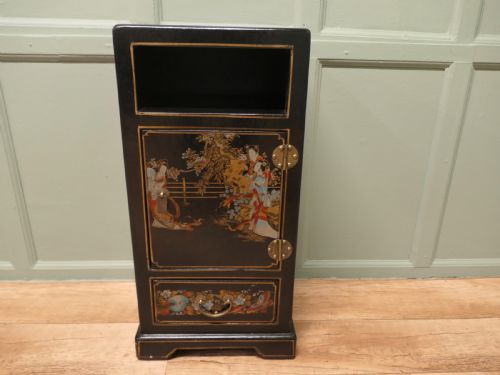
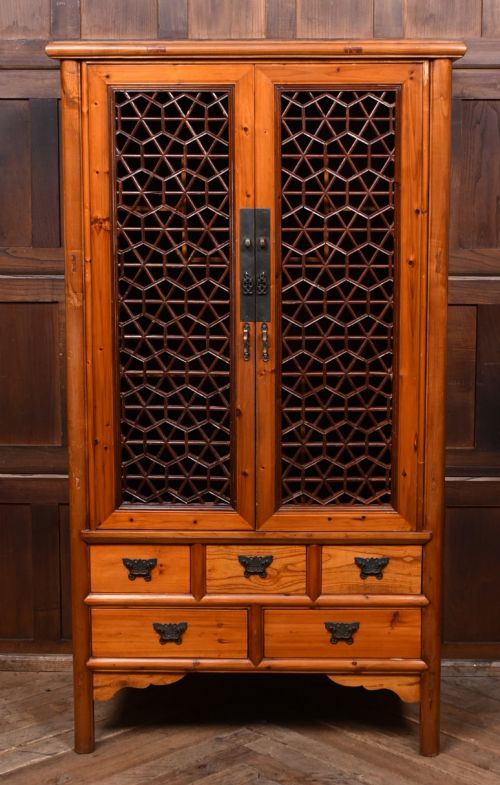


Japanese Style Cupboard
A Japanese style cupboard brings distinct cabinet work and decorative lacquer into a room, offering both storage and strong visual character.
Japanese Style Cupboard
When you search for a Japanese style cupboard, you encounter a range of forms from the nineteenth and early twentieth centuries, including side cabinets, display cabinets, wardrobes, and wall cabinets. These pieces often merge European cabinet making with Eastern decorative motifs, reflecting the Victorian and Edwardian fascination with imported design.
The versions most frequently met on this page span the Aesthetic Movement, Japonisme, and various Chinoiserie revivals, alongside pieces from the Japanese Meiji period. Makers such as Maples and Co. and makers working in the style of Gabriel-Frederic Viardot or Beurdeley produced these works in walnut, mahogany, and lacquered wood.
The structural forms vary from hanging wall cabinets and cabinets on stands to larger wardrobes and larder cupboards. Each piece shows how late nineteenth and early twentieth century workshops interpreted foreign aesthetics for Western domestic interiors.
Materials and construction
These cupboards rely on solid carcases of walnut, mahogany, and pine, often finished with detailed layers of lacquer and gilding. Cabinet makers shaped wood to support hanging doors and open display shelves, sometimes incorporating brass hardware to accent the dark surfaces.
Surface decoration involves red lacquer, cinnabar lacquer, and Chinoiserie painting applied over wood. Workshops utilised traditional joinery alongside applied panels to create relief ornament and flat pictorial scenes on the doors and sides.
Several cupboards hide their contents behind layers of red lacquer, daring you to guess what secret collection of tea caddies rests inside.
Judging quality in Japanese style cupboards
Quality rests in the depth and preservation of the lacquer work and the crispness of any applied carving or gilding. Superior examples display tightly fitted joinery and well-balanced proportions across stands, cornices, and panel doors.
The attribution to known firms like Maples and Co. or specific makers such as Gabriel Viardot elevates a piece above standard commercial production. Lesser pieces show simpler painted decoration and more utilitarian carcase construction without the refined surface work of the better workshops.
Maples and Co.·Gabriel-Frederic Viardot·Beurdeley
The Japanese Style Cupboard Glossary
- Aesthetic Movement
- A late nineteenth century design style that emphasised art for art's sake and drew heavy inspiration from Japanese art and culture. This movement produced furniture with clean lines and exotic surface decoration.
- Japonisme
- A Western term for the craze of collecting and imitating Japanese art and decorative objects, particularly prominent in late Victorian design. It influenced the forms of cabinets, screens, and wall units.
- Chinoiserie
- A European interpretation and imitation of Chinese and East Asian artistic traditions, often blended with Japanese motifs in late nineteenth century revival pieces. It appears frequently in lacquered furniture.
- Cinnabar lacquer
- A technique involving many brushed layers of red lacquer carved into intricate patterns once hardened. It provides a dense, tactile surface on specialist cabinet doors.
- Cabinet on stand
- A freestanding storage section raised on a separate support frame with legs. This configuration lifts the main decorative surfaces closer to eye level.
Japanese Style Cupboard: Frequently Asked Questions
What is an Aesthetic Movement Japanese style cupboard?
An Aesthetic Movement cupboard combines British or French cabinet construction with Japanese artistic motifs, reflecting the late Victorian interest in Asian design. These pieces often feature walnut or ebonised wood with contrasting brass hardware.
They stand apart from standard period furniture through their explicit use of Japonisme and Chinoiserie decoration, making them central visual elements in a room.
How do I care for a lacquered wood cabinet?
Lacquered surfaces require gentle cleaning with a dry or slightly damp soft cloth to protect the delicate finish and gilding. Avoid chemical polishes and keep the wood away from direct heat sources and strong sunlight.
Maintaining stable room humidity prevents the timber base from shifting, which protects the brittle lacquer layers from cracking over time.
Where were these cupboards placed in a home?
Wall cabinets and hanging cupboards served to display smaller decorative objects or store precious items in reception rooms. Larger side cabinets and wardrobes operated as primary storage in bedrooms and drawing rooms.
Their decorative front panels made them suitable for prominent display in entertaining spaces rather than hidden utility areas.
How do I tell Meiji period work from European Japonisme?
Meiji period items typically originate directly from Japanese workshops using native construction methods and regional timbers. European Japonisme pieces use Western carcase woods like walnut or mahogany adapted to local cabinet making standards.
Examining the internal drawer construction and timber backing boards usually reveals whether a piece was made in Europe or imported directly from Japan.