





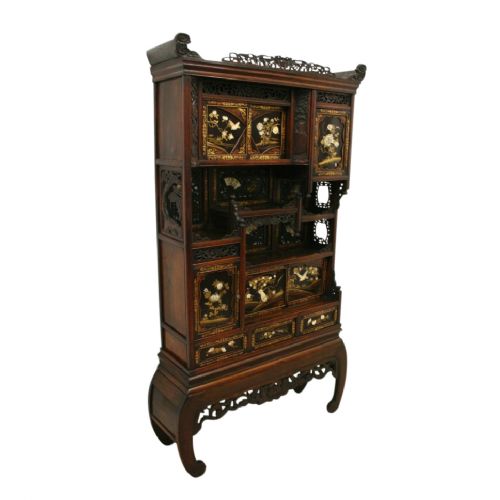
Meiji Period Carved Cabinet
A meiji period carved cabinet brings intricate woodwork and traditional craftsmanship into a room.
Meiji Period Carved Cabinet
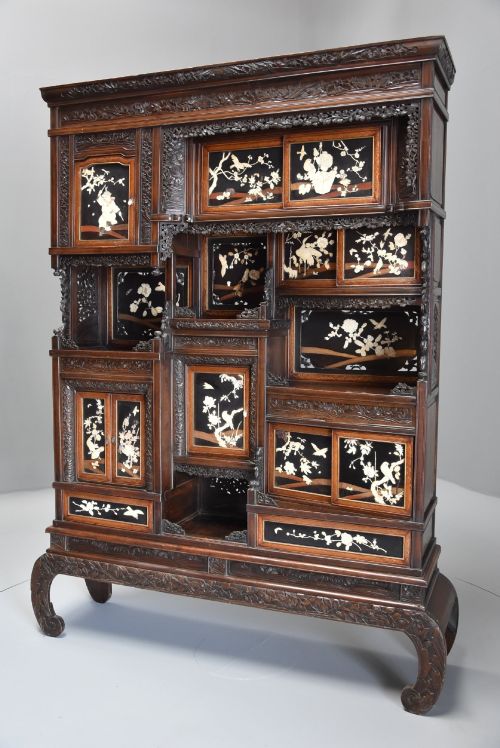
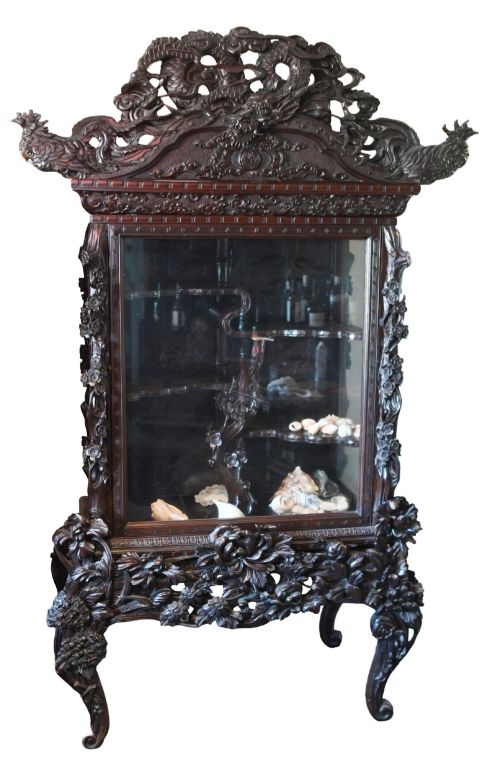
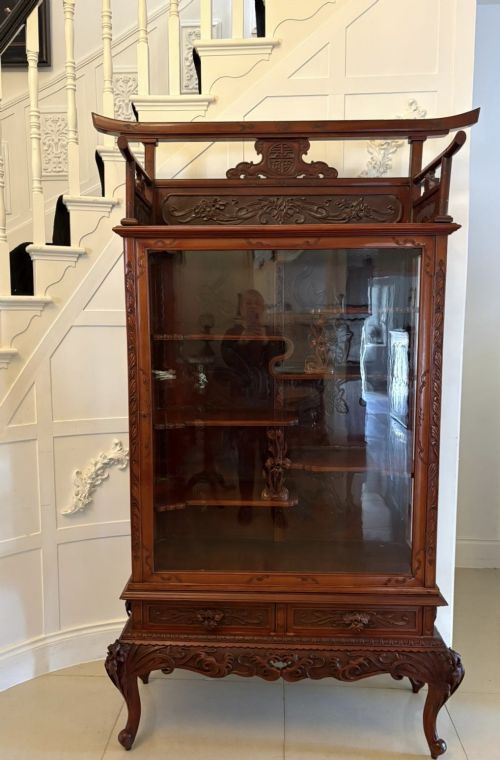
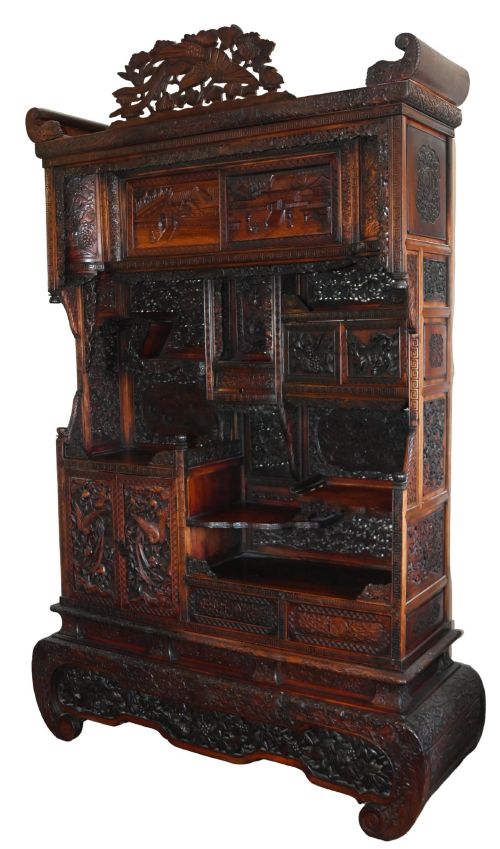
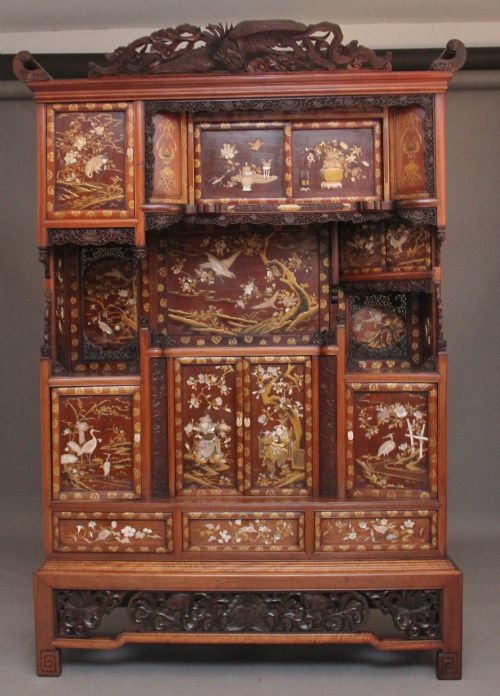
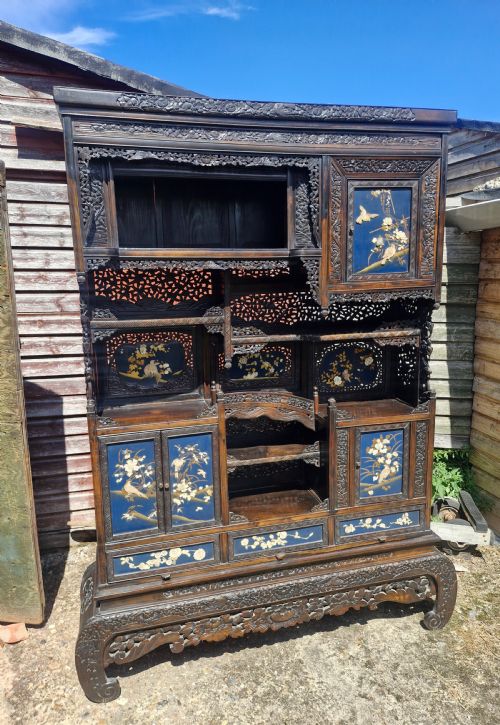
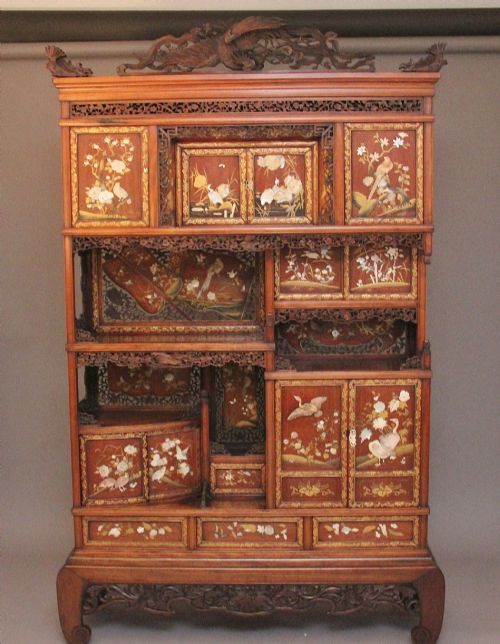
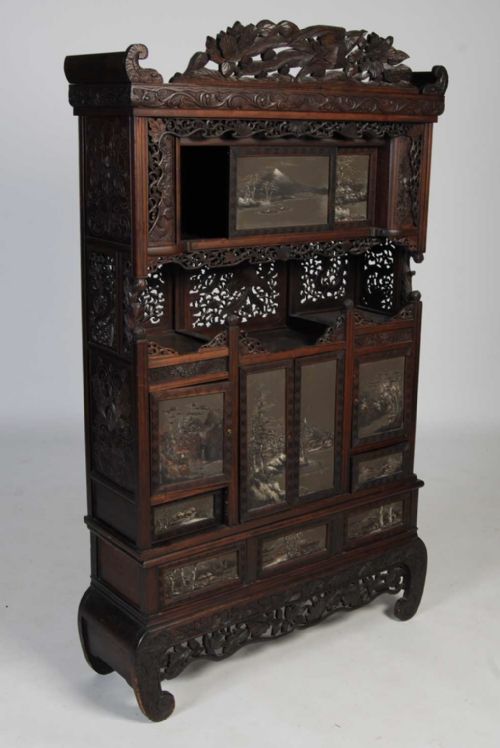
A meiji period carved cabinet represents the ornate furniture created in Japan during the late nineteenth century, encompassing forms such as display cabinets, bookcases, and shodona. These pieces showcase the intricate carving traditions developed during the Meiji period, serving as focal points for interior decoration.
The selections available here range from traditional shodona display cabinets to cylinder desks and larger storage pieces. Hardwood forms the structural basis for most examples, often detailed with carving that reflects Asian export styles of the era.
Buyers encountering this group will find items dated across the late nineteenth century, including specific years like 1880, 1890, 1900, and 1860. The predominant style identity across these listings remains firmly rooted in Japanese Meiji Period craftsmanship.
Materials and construction
Construction relies heavily on hardwood, which provides a sturdy structural framework for deep carving and substantial cabinetry. Makers utilised this dense timber to support elaborate architectural elements within display cabinets and shodona.
Decoration incorporates contrasting materials such as mother of pearl, bone inlay, and lacquer finishes, particularly red lacquer on specific display cabinets. Metal details and glass panels also appear across the listings to complement the primary woodwork.
Meiji Period Carved Cabinet Retail Price Guide 2026
Typical asking prices for meiji period carved cabinet among the pieces listed under this phrase on Sellingantiques today, from the lower quarter to the upper quarter. They describe what is for sale here now, not the wider market.
One exceptional desk manages to pack both a cylinder top and intricate Yosegi mosaic work into a single nineteenth-century workspace.
Evaluating quality and execution
Quality reveals itself in the depth and precision of the carving across the hardwood surfaces. Finer examples display rigorous control in rendering intricate motifs, while simpler pieces rely on basic form rather than intensive surface ornamentation.
The integration of decorative elements like mother-of-pearl and bone inlay distinguishes standard production from more ambitious works. The presence of specialised forms, such as cylinder desks or exhibition quality pieces, indicates higher ambition from the maker.
The Meiji Period Carved Cabinet Glossary
- Shodona
- A traditional Japanese display cabinet or shelving unit designed for decorative objects. These pieces typically feature asymmetrical compartments and sliding doors.
- Meiji Period
- The era in Japanese history spanning from 1868 to 1912, characterised by modernisation and the production of elaborate export arts.
- Mother of Pearl
- An iridescent inner layer of a shell used for inlay work on furniture surfaces. It provides a luminous contrast against dark hardwood.
- Yosegi
- A traditional Japanese technique of mosaic marquetry using different natural wood colours and grains to create geometric patterns.
- Shibayama
- A style of Japanese decoration utilising inlaid materials such as shell, ivory, and bone to form pictorial scenes in high relief.
Meiji Period Carved Cabinet: Frequently Asked Questions
How do I date a Meiji cabinet?
Dating relies on stylistic markers, materials, and documented production periods within the late nineteenth century. Many pieces bear stylistic traits typical of the 1880 to 1900 decades.
Examining the construction methods and the integration of decorative elements like bone inlay helps place the cabinet within the Meiji era.
Where were these cabinets made?
These cabinets were produced in Japan during the late nineteenth century, specifically for both domestic use and the expanding export market. Workshops employed traditional woodworking techniques adapted for international buyers.
The inclusion of Asian export styles reflects the aesthetic exchange between Japan and the West during the Meiji period.
How should I clean hardwood furniture?
Maintenance requires gentle dusting with a soft, dry cloth to prevent accumulation on intricate carvings. Avoid chemical polishes that might damage lacquer or traditional finishes.
Keep the cabinet away from direct sunlight and extreme temperature fluctuations to protect the hardwood and delicate inlay materials.